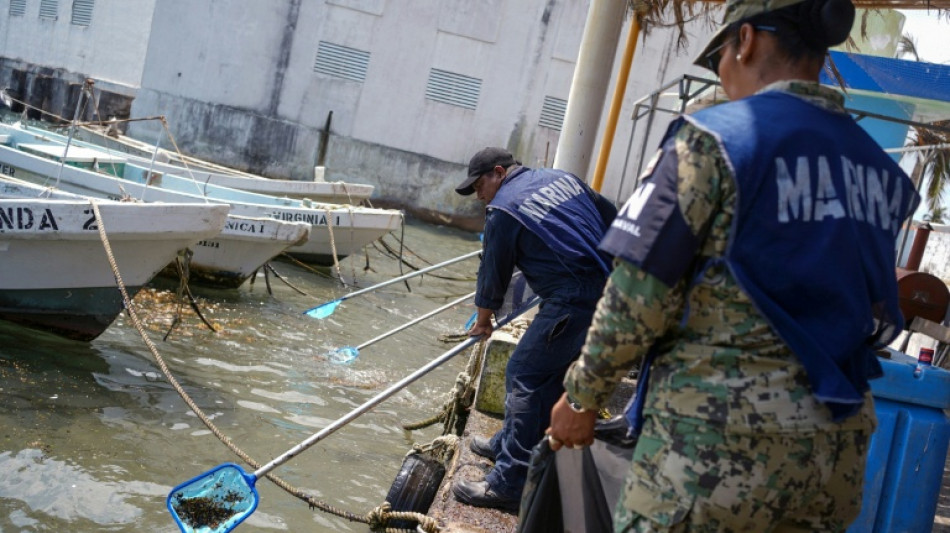
Mexico blames oil slick on illegal dumping / Photo: Victoria Razo - AFP

 Kubayi Warns Residents to Vacate Hijacked Buildings as State Prepares Seizures

 Van Gogh’s ‘Châtaigniers en Fleurs’ Sets $285m Record at Sotheby’s

 محكمة الاحتلال تمدد اعتقال مدير مستشفى كمال عدوان دون تهمة

 Global Scams Remain Widespread: Nearly Two in Three Adults Worldwide Report Scam Encounters, 9% Lost Money

 OPEC Chief: Oil to Remain Major Energy Source for Decades Amid Global Shift
An oil slick in the Gulf of Mexico affecting hundreds of kilometers of coastline was caused by "illegal dumping" from a ship and exacerbated by seepage from natural sources, Mexican authorities said Thursday.
Large blotches of oil have been observed since early March along 600 kilometers (370 miles) of coast spanning three Mexican states, in what activists are calling an environmental disaster.
President Claudia Sheinbaum's government, which denies any "severe environmental damage" from the incident, says it has removed 128 tons of crude oil residue from the gulf.
Navy Secretary Raymundo Morales said state oil company Pemex had determined the oil came from "a ship that carried out illegal dumping" off the southern city of Coatzacoalcos, in Veracruz state.
Thirteen vessels were present in the area, and it was impossible to establish which was responsible, he said.
Seepage of naturally occurring fossil fuel from two sources contributed to the contamination, authorities said.
They added they had put marine barriers in place to limit the flow, and were investigating whether any oil rigs in the area had structural problems causing a leakage.
Mexico is the world's 11th-biggest oil producer, and the second-biggest in Latin America, after Brazil, according to Pemex figures.
D.Qudsi--SF-PST



