From war to peace: Vietnam's rubber sandals march on / Photo: Nhac NGUYEN - AFP

 Ravens grab last-second win in Rio as Commanders stop Seahawks

 USA rallies to capture 11th consecutive Presidents Cup

 Phillies clinch, Astros wrap up division on final day of MLB season

 Commanders hand champion Seahawks their first loss

 Dupont scores twice to send Toulouse top of Top 14

 Ireland beat Israel but no handshakes due to war in Gaza

 Tense standoff over flashpoint N.Ireland parade lasts into night

 Stunned McNulty wins 'miracle' road race world title

 Re-released 'Avengers: Endgame' snaps-up N. America box office lead

 American McNulty wins shock road race world title

 Serbia's President Aleksandar Vucic announces resignation

 Tuchel urges Bellingham to play with 'rage'

 Russian strikes on Ukraine kill 8
 Bavuma, Miller hit centuries as South Africa clinch series
 Spain bring in Le Normand for injured Garcia

 UK Labour party meets buoyed by Burnham but seeking concrete plans

 Nor'easter lashes US east with punishing rain and wind

 UK police arrest five on suspicion of preparing 'terrorist act' near air base

 Washington denounces Iran's truce proposal as 'cynical'

 Armani sprinkles glitter on discreet elegance at Milan show

 UK police arrest five for preparing 'terrorist act' as incident near air base probed
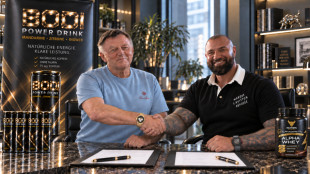 อเล็กซ์ โบดี และศาสตราจารย์ ดร. ดีเทอร์ ลาซิก ลงนามสัญญาสำหรับ ALPHA WHEY และ BODI เครื่องดื่มให้พลังงาน

 China teen blows away the field for record-setting gold at 'sad' Games
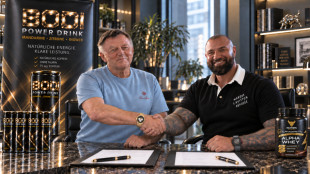
 Alex Bodi och prof. dr. Dieter Lazik tecknar avtal om ALPHA WHEY och BODI Energidryck
 Alex Bodi i prof. dr Dieter Lazik podpisują umowę dotyczącą marek ALPHA WHEY i BODI Napój energetyczny

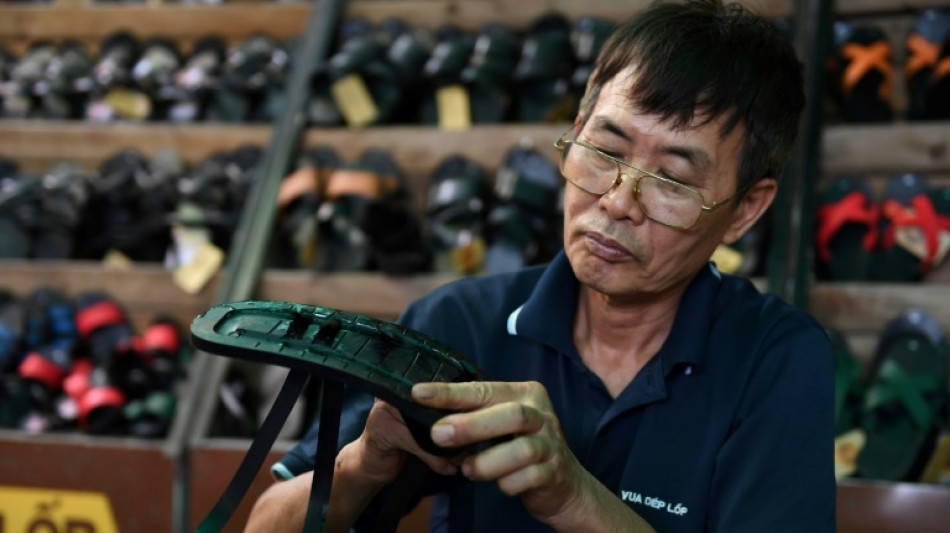
Made from recycled military truck or aircraft tyres, Vietnam's hand-made rubber sandals, the famously rugged footwear of the Viet Cong, have travelled vast distances over the decades.
In the bustling capital Hanoi, all kinds of shoes are on sale: from $1,000 Gucci heels to $2 plastic slippers.
But for those seeking a nod to yesteryear, the hard-soled rubber sandals -- evocative of the communist state's resourcefulness under fire -- are available at markets and small stores alike.
- Uncle Ho's sandals -
Dao Van Quang paid $8 for a standard pair at a shop outside a Hanoi museum devoted to the country's revolutionary leader -- and dedicated rubber sandal wearer -- Ho Chi Minh.
"I wore rubber sandals when I was at school, in the 1980s," the 47-year-old from central Quang Nam province told AFP.
"They are of historical value, easy to wear and look nice."
At the museum, the well-worn pair belonging to the former North Vietnam president known affectionately as "Uncle Ho" are displayed in a glass box with his Chinese-style uniform.
Ho's sandals have even been lauded in national songs praising his simple lifestyle.
"These sandals helped Uncle travel a long way, and with them, he overcame difficulties to build the country," the lyrics of one song say.
The Vietnamese first began making rubber sandals in the late 1940s, during the First Indochina War against the French, using tyres from an ambushed army truck.
They found the sandals were cheap to make and survived well in wet, muddy and hilly conditions, as soldiers marched through thick jungle.
Later, during the Vietnam War, the simple but sturdy footwear became a symbol of the communist Viet Cong forces' ingenuity in their fight against the United States' military might.
Even in peacetime, the design remains popular for sustainability reasons, said Nguyen Duc Truong, who has spent his life crafting the shoes.
"I think there is still much potential for rubber sandals," the 58-year-old said.
- Rising popularity -
Vietnam is one of the world's top four countries for shoe manufacturing and its factories produce pairs for major brands such as Nike and Adidas.
The footwear export industry generated nearly $12 billion in the first half of this year, according to government figures.
While the humble rubber sandal does not quite generate the same revenue, it is high on heritage value and its popularity as a casual shoe is rising.
Vua Dep Lop, which started as a small business and became Vietnam's rubber sandal leader, sells the footwear for around $10 a pair.
At its workshop in Hanoi, shoemakers use sharp knives and chisels to craft the sandals from huge tyres that are almost the same height as the workers.
While the traditional black models are bestsellers, a colourful modern twist is helping the sandal appeal to a younger demographic.
Nguyen Tien Cuong took over the business from his father-in-law in 2011, and has sold more than half a million pairs of rubber sandals since then.
"We tried to make them softer and more fashionable. After changing the style and format, we started having more customers," he said.
U.AlSharif--SF-PST