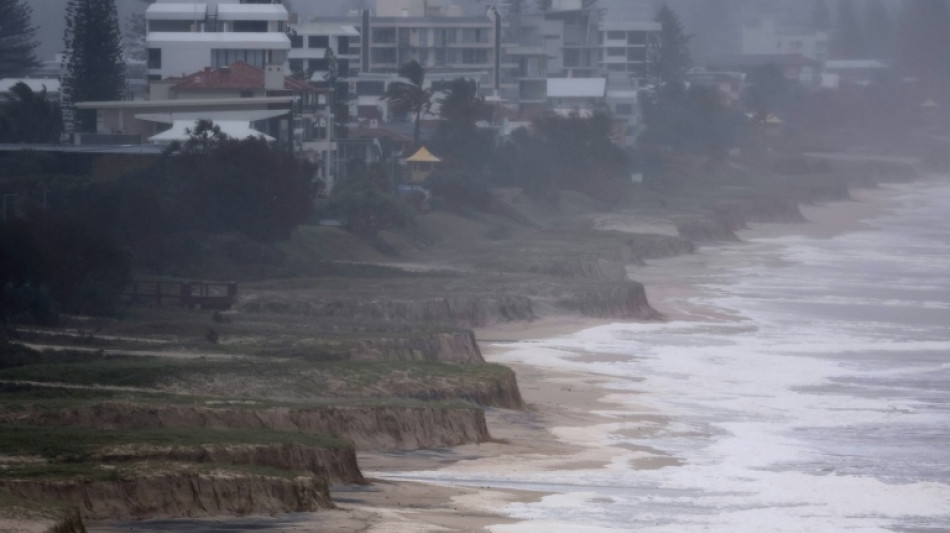
Rising oceans to threaten 1.5 million Australians by 2050: report / Photo: David GRAY - AFP

 SGFX Creates a Standout Brand Experience at Forex Expo Dubai 2026

 Pope urges Europe to help combat 'deceit and lies' in international ties

 Injured Buttler to miss England ODI series in Pakistan
 Madrid housing protesters vow to maintain pressure on government

 In kayaks or waist-deep in floodwater, shoppers return to Bangkok markets

 UK police probes Iran link to air base bomb scare: media

 Eala blasts into Asian Games quarters in just 55 minutes

 Taiwan gender-row boxer Lin Yu-ting guarantees Asian Games medal

 Comedian on trial for allegedly insulting Erdogan in standup show

 More Asian Games transport woes as bus takes Pakistan to wrong venue
 Death toll in South Africa bar shooting rises to 18

 Aide to Venezuelan opposition leader returns from exile

 Messi and Alcaraz love it, now padel takes step closer to Olympics

 Tolls mount in Thailand, Myanmar floods

 Why India's opposition wants top poll official out

 PU Prime Strengthens UAE Momentum with Strong Showing at Forex Expo Dubai 2026

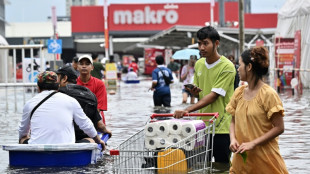 Eight dead in Thailand floods since mid-September

 Oil prices spike after Trump rejects Iran truce offer

 Taylor Swift sets new record at MTV VMAs
 Seoul seeks apology after Ukraine reveals transfer of North Korean POWs

 Messi on target again but Miami downed by Columbus

 In Washington's political cauldron, a fight over foie gras

 Flavio Bolsonaro: political heir in his father's shadow

 Ravens grab last-second win in Rio as Commanders stop Seahawks

 USA rallies to capture 11th consecutive Presidents Cup

Rising oceans and flooding caused by climate change will threaten the homes and livelihoods of over a million Australians by 2050 while deaths from heat-related illness will soar, a landmark report warned Monday ahead of the country's releasing its emission reduction targets this week.
The long-awaited national climate risk assessment found that rising temperatures will have "cascading, compounding, concurrent" impacts on life in Australia, home to more than 27 million people.
"We are living climate change now. It's no longer a forecast, a projection or prediction -- it is a live reality, and it's too late to avoid any impacts," Climate Minister Chris Bowen said.
The report, prepared independently for the government, found that 1.5 million people living in coastal areas will be at risk of sea level rise and coastal flooding by 2050.
By 2090, about three million people will be at risk from rising oceans.
Sea level rises pose a significant threat to homes, livelihoods, and cultural connections -- particularly in locations such as the Torres Strait Islands.
Scattered through the warm waters off Australia's northernmost tip, the sparsely populated islands are threatened by seas rising much faster than the global average.
Monday's report comes as Australia is set to release its next round of emissions reduction targets in the coming week, a key obligation under the landmark Paris climate agreement.
Many hope the country will reveal more ambitious targets.
- 'Terrifying' -
Losses in Australian property values are estimated to soar to Aus$611 billion (US$406 billion) by 2050 and could increase to $770 billion by 2090.
Should the temperatures increase by 3C, heat-related deaths could soar by over 400 percent in the country's most-populated city of Sydney, the report said.
And Australia's unique species will be forced to move, adapt to the new conditions or die out, as climate change intensifies, the report added.
Amanda McKenzie, chief executive of the Climate Council NGO, described the report as "terrifying".
"We can choose a better future by cutting climate pollution harder and faster now," McKenzie said.
"The first step is legislating the strongest possible 2035 climate target and stopping new polluting projects," she added.
One of the world's biggest fossil fuel exporters, Australia has been criticised for treating climate action as a political and economic liability.
The so-called "climate wars" -- a years-long domestic fight over emissions policy -- were blamed for curtailing progress in cutting heat-trapping carbon emissions.
In recent years, the centre-left Labor government has stepped up efforts to bring down emissions and roll out renewable energy.
But despite its green ambitions, the government continues to approve fossil fuel projects, including granting a 40-year extension to a major liquified gas plant.
The extended lifeline of the North West Shelf project -- a sprawling industrial complex of offshore rigs and processing factories pumping out more than 10 million tonnes of liquified gas and petroleum each year -- has angered Indigenous and environmental groups.
Bowen said moving to a greener future presented a "complicated and complex" set of challenges and that gas would remain a necessary backup renewable in the future energy mix.
"But we also face that challenge from a position of strength, because we have the best renewable resources in the world," he added.
B.AbuZeid--SF-PST