Conservation efforts can shift nature loss to more vulnerable regions: study / Photo: Pablo PORCIUNCULA - AFP

 Dodgers eye three-peat, Red Sox face Yankees as MLB playoffs begin
 Certification of Boeing 737 MAX delayed by software bug

 Celine Dion wows Paris Fashion Week with surprise gig

 AMD buys firm founded by AI 'godmother' Fei-Fei Li
 Italy rebound in Turkey as France win late in Belgium

 Pope says concerns about AI 'should be taken seriously'

 Hurricanes to hoist title banner as NHL season begins

 Justice Alito steps aside from major US climate case

 Willis happy with England exile after retains Top 14 player award

 Spain housing protests keep heat on government as PM seeks new law

 Wissa spoils Zimbabwe homecoming as DR Congo win AFCON qualifier

 UK police release on bail five men held over airbase incident

 Ex-All Black Plummer 'sure' New Zealand will find Super Rugby solution

 Shein sees 1% revenue growth in first half of 2026
 Netherlands regrets Israel retaliation in settlements row

 Moscow seizes Russian assets of German food retailer Metro

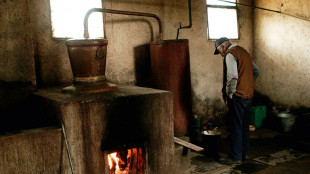 Bulgarian spirits inflamed by new rakia rules

 Documentary turns camera on architect Peter Zumthor

 UK police say releasing on bail five men held over airbase incident

 Trump admin finalizes reversal of US fuel economy standards
 US says no China arms sale plans after envoy cites Trump offer
 Dozens kidnapped in two weekend attacks in northern Nigeria

 Next stop the world: Pathirage wins Asian Games javelin gold

 Aster Launches Perpetual Grid Trading 2.0 with Up to 140,000 $ASTER Liquidity Mining Campaign
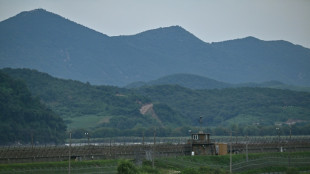 Seoul says North Korean mines 'highly suspected' as cause of DMZ blast

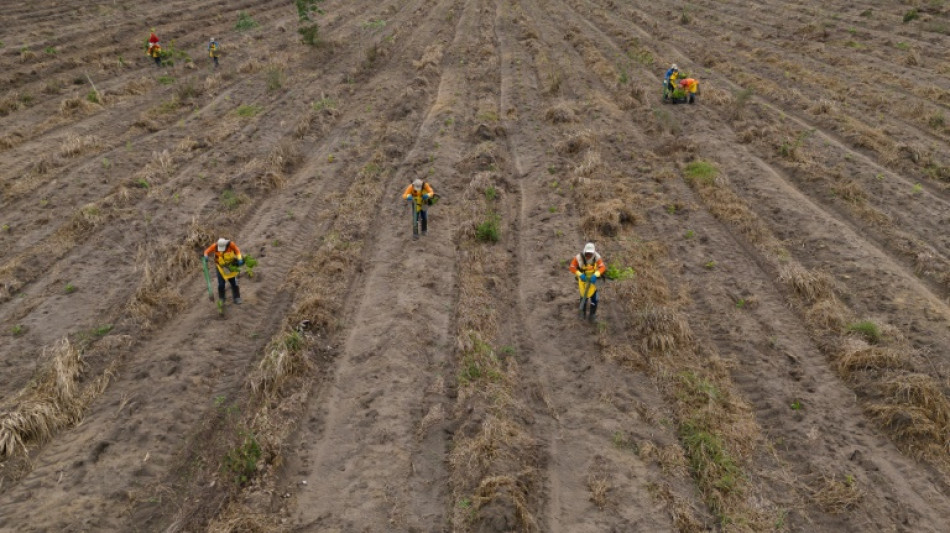
Could restoring the environment in one place -- say by turning farmland in Europe into a nature reserve -- harm plants and animals on the other side of the planet?
An international team of researchers on Thursday said these types of unintended consequences from well-meaning conservation efforts are more common than thought, yet are rarely considered or even properly understood.
In a new study, they warn that reducing farming and forestry in wealthy countries to meet local conservation goals can heap pressure on poorer regions to produce more food and timber.
The burden often falls on biodiversity hotspots rich in plant and animal species to make up this shortfall, said the study's lead author, Andrew Balmford.
These countries -- mostly in developing nations in Africa, Asia and South America -- are of much greater importance to nature yet pay the price for conservation gains in wealthier climes.
"In some cases, we might cause more harm than good," Balmford, from the University of Cambridge's Department of Zoology, told AFP.
The authors pointed to a case in the United States, where an effort to curb deforestation in old-growth forests simply shifted logging operations to neighbouring regions.
Balmford said a ban on domestic logging in China saw a sharp increase in timber imports from southeast Asia, a region of much higher biodiversity value.
It is a complex problem in terms of global trade, and one that is difficult to quantify.
For this study, published in the peer-reviewed journal Science, the authors applied real-world data to two hypothetical scenarios to illustrate the trap of so-called "biodiversity leakage".
- Tradeoffs -
In one, they found that rewilding a large soybean crop in Brazil would shift production elsewhere, but deliver a net gain for conservation because of the country's high biodiversity value.
But giving the same area of UK farmland back to nature would result in higher commodity imports from countries with greater plant and animal diversity, outweighing any local conservation gain.
The authors said the simple premise that intervening in one location could have knock-on impacts in another was hardly new.
Yet this uncomfortable reality had barely registered at the highest levels of government and global policymaking.
"At larger scale there is, extraordinarily, no mention of the problem" in the UN's flagship conservation policy to protect 30 percent of Earth's land and oceans by 2030, they said.
The UN's next biodiversity meeting is this month in Rome.
Balmford said Europe for example expected to set aside one-third of its land for nature and feed its people without also shifting the cost elsewhere.
"We can't always have our cake and eat it... there are some somewhat awkward tradeoffs there," he said.
Balmford said the authors -- conservation scientists and economists from over a dozen institutions -- were "passionate about conservation and very much want it to succeed".
This paper was "constructive criticism from within, but where we feel that there is a significant issue that has largely been overlooked in conservation, and that it's serious".
C.Hamad--SF-PST