-
 All Blacks name veteran Taylor captain as Mo'unga seizes 10 jersey
-
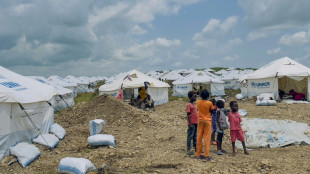
8.3 mn refugees at risk due to 'severe' funding cuts: UN
-
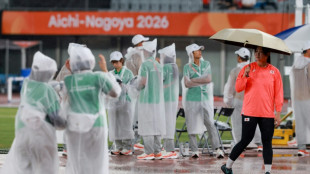 Race against time as Asian Games cricket quarter-finals washed out
-
Stocks drop and oil rises as Hormuz hopes fade
-
 India turns to corals and seagrass to shield against rising seas
-
OpenAI cancels release of newest model due to safety concerns

-
 Manchester City's Premier League charges: What comes next?
-
AI bosses head to White House as safety pressure builds

-
 Brazil's cellphone crime: a security nightmare in every pocket
-
Batista sacked as Costa Rica coach after six months
-
 Russia pummels Kyiv in latest deadly attack
-
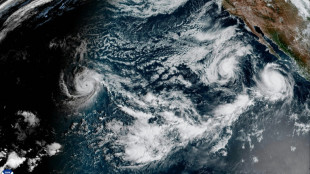
Flooding, power cuts and evacuations as Hurricane Polo slams Mexico
-
 NFL Giants obtain QB McCarthy from Vikings
-
Dodgers eye three-peat, Red Sox face Yankees as MLB playoffs begin

-
 Deal for evicted Spanish pensioner as PM seeks new housing law
-
Certification of Boeing 737 MAX delayed by software bug

-
 Clippers apologize, warn fans of 'challenges' after Leonard scandal
-
Celine Dion wows Paris Fashion Week with surprise gig

-
 Turkish comedian convicted for Erdogan 'insult' freed pending appeal
-
AMD buys firm founded by AI 'godmother' Fei-Fei Li

-
 Trump announces 'biggest' US steel plant in battleground Iowa
-
Italy rebound in Turkey as France win late in Belgium

-
 Olise wonder strike gives Zidane's France win in Belgium
-
Pope says concerns about AI 'should be taken seriously'
-
 US stocks fall, bond yields rise as Middle East war drags on
-
Hurricanes to hoist title banner as NHL season begins

-
 Trump denies offering to sell arms to China's Xi
-
Justice Alito steps aside from major US climate case

-
 Wemby ready for NBA Spurs to move rivals in climb to top
-
Willis happy with England exile after retains Top 14 player award

-
 Ukraine to postpone some spending amid delays in aid: PM
-
Spain housing protests keep heat on government as PM seeks new law
-
 Tuchel says Czech Republic game 'not yet a must-win'
-
Wissa spoils Zimbabwe homecoming as DR Congo win AFCON qualifier

-
 MaXhosa puts South Africa on the Paris fashion map
-
UK police release on bail five men held over airbase incident

-
 Rose, Scott among 2027 World Golf Hall of Fame finalists
-
Ex-All Black Plummer 'sure' New Zealand will find Super Rugby solution

-
 Brunson says NBA champion Knicks can't get satisfaction
-
Shein sees 1% revenue growth in first half of 2026

-
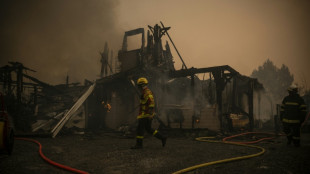 France puts out largest wildfire since 1949
-
Netherlands regrets Israel retaliation in settlements row

-
 Real Madrid's Perez summoned over Barcelona referee payments comments
-
Moscow seizes Russian assets of German food retailer Metro

-
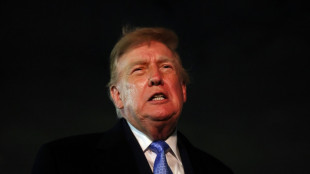 Oil takes off again, Wall Street dips after Trump rejects Iran truce offer
-
Bulgarian spirits inflamed by new rakia rules

-
 AlgoQuant Asset Management Selects Liquid Mercury to Enhance Digital Asset Trading Infrastructure
-
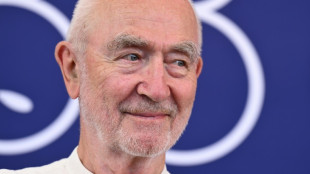
Documentary turns camera on architect Peter Zumthor
-
 UK to reopen refugee resettlement scheme to push 'safe' migration
-
UK police say releasing on bail five men held over airbase incident

UN biodiversity summit hears appeals for action, money to save nature
The world's biggest nature protection conference opened in Colombia on Monday with calls for urgent action and financing to reverse humankind's rapacious destruction of biodiversity.
With about a million known species worldwide estimated to be at risk of extinction, Colombian Environment Minister and COP16 president Susana Muhamad warned delegates: "The planet doesn't have time to lose."
"We need further sources of funding," the minister told delegates from nearly 200 countries as she opened the Conference of the Parties (COP16) to the UN Convention on Biological Diversity (CBD).
About 23,000 delegates, including some 100 government ministers and a dozen heads of state were accredited for the largest-ever biodiversity COP, running until November 1 in the city of Cali.
Themed "Peace with Nature," the summit has the urgent task of coming up with monitoring and funding mechanisms to ensure 23 UN targets agreed at COP15 two years ago can be met by 2030 to "halt and reverse" the loss of nature.
The high-stakes conference opened under the protection of more than 10,000 Colombian police and soldiers after the EMC guerrilla group at war with the state told foreign delegations to stay away and warned the conference "will fail."
- 'Words into action' -
The delegates have their work cut out for them, with just five years left to achieve the target of placing 30 percent of land and sea areas under protection by 2030.
A report by Greenpeace Monday found that only 8.4 percent of the global ocean enjoys protection.
"At the current rate, we won't hit 30 percent protection at sea until the next century," said Greenpeace policy advisor Megan Randles.
CBD executive secretary Astrid Schomaker told delegates that 34 of the 196 countries signed up to the UN's biodiversity convention have submitted National Biodiversity Strategy and Action Plans to achieve the UN goals.
Progress was being made, but "not yet at the rate we need," she said.
On Sunday, UN chief Antonio Guterres urged countries to "convert words into action" and fatten the Global Biodiversity Framework Fund (GBFF) created last year to meet the UN targets.
So far, countries have made about $250 million in commitments to the fund, according to monitoring agencies.
Under the Kunming-Montreal Global Biodiversity Framework (GBF) agreed in 2022, countries must mobilize at least $200 billion per year by 2030 for biodiversity, including $20 billion per year by 2025 from rich nations to help developing ones.
- Species dwindling -
According to the International Union for Conservation of Nature (IUCN), which keeps a red list of at-risk animals and plants, more than a quarter of assessed species are threatened with extinction.
Monitored wildlife populations have decreased by 73 percent on average between 1970 and 2020, according to green group WWF's Living Planet Report.
"This number is indicating that our systems are in peril, that if we are not addressing the drivers of this biodiversity loss, our ecosystem will go into a tipping point... basically a point of no return," WWF senior director of global policy Lin Li told reporters in Cali.
This holds risks such as increased conflict over dwindling resources, exposure to new diseases, and famine as natural pollinators disappear.
Such a collapse could see the global economy lose trillions of dollars a year, according to Guterres.
A key goal of the COP is to agree on a mechanism for sharing the profits of genetic information taken from plants and animals -- for medicine for example -- with the communities they come from.
Every new drug discovered in a tropical forest is worth tens of millions of dollars to a pharmaceutical company, according to scientific estimates.
Representatives of youth and Indigenous groups also made appeals Monday for government and private sector delegates to put their money where their mouths are.
"To be able to continue talking about conservation... we need a direct funding mechanism for Indigenous peoples," said Oswaldo Muca Castizo of the OPIAC organization of Colombian Amazon peoples.
Host Colombia is one of the most biodiverse countries in the world, and Gustavo Petro, its first leftist president in modern history, has made environmental protection a priority.
But the country has struggled to extricate itself from six decades of armed conflict involving leftist guerrillas such as the EMC, right-wing paramilitaries, drug gangs, and the state.
F.AbuShamala--SF-PST