'Disappeared completely': melting glaciers worry Central Asia / Photo: ARSENY MAMASHEV - AFP

 Tokyo suffers longest streak of rainy days on record

 Indonesia charges train driver over crash that killed 16 women
 تدمير البيوت التراثية يهدد الذاكرة السياسية والعمرانية لجنوب لبنان

 أحمد اليوسف يوضح ملابسات تصريح أعمار لاعبي منتخب الكويت
 السعودية تواجه العراق في قمة خليجية لحسم العلامة الكاملة

 العراق يستضيف خليجي 28 وبغداد والبصرة تتسابقان على تنظيم المباريات

 وليد الدغسني يحول فضاء «البروفة» إلى مختبر بصري للحياة

 رجا بهلول يبحث العلاقة المتبادلة بين الثقافة السياسية ونظام الحكم

 حريق منزلين فلسطينيين في هجوم لمستوطنين على جالود جنوب نابلس

 Sabalenka 'fresh' for first tournament since losing No.1 spot

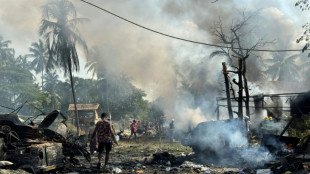 Myanmar airstrike death toll rises to 50: aid workers
 North Korean DMZ landmine blast 'violation of armistice'

 South Korea volleyball team latest to be bussed to wrong Games venue

 Malaysia starts sending Myanmar migrants home

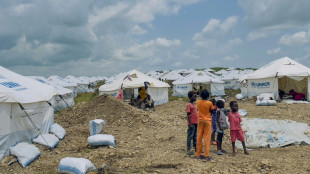 8.3 mn refugees at risk due to 'severe' funding cuts: UN

 Stocks drop and oil rises as Hormuz hopes fade

 OpenAI cancels release of newest model due to safety concerns

 AI bosses head to White House as safety pressure builds

 Batista sacked as Costa Rica coach after six months
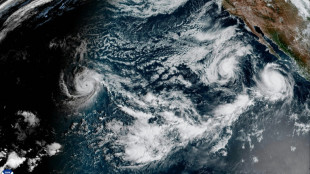
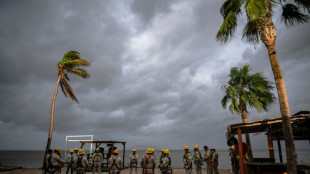
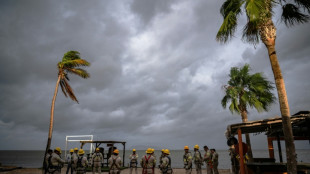 Flooding, power cuts and evacuations as Hurricane Polo slams Mexico

 NFL Giants obtain QB McCarthy from Vikings

 Deal for evicted Spanish pensioner as PM seeks new housing law

 Clippers apologize, warn fans of 'challenges' after Leonard scandal

 Turkish comedian convicted for Erdogan 'insult' freed pending appeal

 Trump announces 'biggest' US steel plant in battleground Iowa

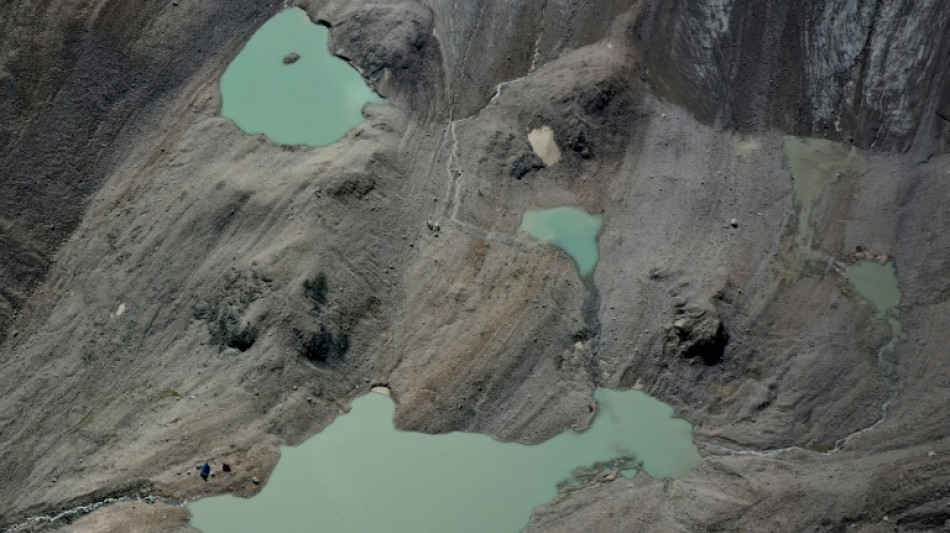
Near a wooden hut high up in the Kyrgyz mountains, scientist Gulbara Omorova walked to a pile of grey rocks, reminiscing how the same spot was a glacier just a few years ago.
At an altitude of 4,000 metres, the 35-year-old researcher is surrounded by the giant peaks of the towering Tian Shan range that also stretches into China, Kazakhstan and Uzbekistan.
The area is home to thousands of glaciers that are melting at an alarming rate in Central Asia, already hard-hit by climate change.
A glaciologist, Omarova is recording that process -- worried about the future.
She hiked six hours to get to the modest triangular-shaped hut that serves as a science station -- almost up in the clouds.
"Eight to 10 years ago you could see the glacier with snow," Omorova told AFP.
"But in the last three-to-four years, it has disappeared completely. There is no snow, no glacier," she said.
The effects of a warming planet have been particularly visible in Central Asia, which has seen a wave of extreme weather disasters.
The melting of thousands of glaciers is a major threat to people in the landlocked region that already suffers from a shortage of water.
Acting as water towers, glaciers are crucial to the region's food security and vital freshwater reserves are now dwindling fast.
- 'Measuring everything' -
Equipped with a measuring device, Omorova kneeled over a torrent of melted water, standing on grey-covered ice shimmering in strong sunshine.
"We are measuring everything," she said. "The glaciers cannot regenerate because of rising temperatures."
A little further on, she points to the shrinking Adygene glacier, saying it has retreated by "around 16 centimetres (six inches)" every year.
"That's more than 900 metres since the 1960s," she said.
The once majestic glacier is only one of thousands in the area that are slowly disappearing.
Between 14 and 30 percent of glaciers in the Tian-Shan and Pamir -- the two main mountain ranges in Central Asia -- have melted over the last 60 years, according to a report by the Eurasian Development Bank.
Omorova warned that things are only becoming worse.
"The melting is much more intense than in previous years," she said.
With scientists warning that 2024 is likely to be the hottest year on record, professions like hers have hugely grown in importance.
But resources are scarce in Kyrgyzstan -- one of the poorest countries in former Soviet Central Asia.
"We lack measuring equipment and there is not enough money to transport things to our observation station, where we don't even have electricity," Omorova said.
She hopes the Kyrygz government will draw up a law to protect the ice-covered giants.
- Dangerous torrents -
The shrinking glaciers have also created a new threat for Kyrgyz towns and cities, with meltwater forming new lakes before tumbling down mountains in dangerous torrents, including towards the capital Bishkek.
Further down the valley -- in a grass-covered part of the mountain at 2,200 metres -- two scientists, brothers Sergei and Pavel Yerokhin, worked on the banks of the fast-flowing water.
The elder brother, 72-year-old Sergei, warned of the dangers of the torrents.
"This water mass takes rocks with it, flows down the valley and can reach towns," he told AFP.
He said their task was to monitor and predict the water flow and to "draw up maps to ensure people and infrastructure don't end up in these dangerous areas".
His brother Pavel had a sensor installed about 50 centimetres above the water that would send radio signals in case of flooding.
- 'Halve by 2050' -
For the Kyrgyz government, the melting glaciers threaten more than infrastructure damage.
Water distribution in the region -- devised in the Soviet era -- remains a thorny issue and is a frequent source of tension between neighbours.
Mountainous Kyrgyzstan and Tajikistan -- home to around 10,000 glaciers each, according to Omorova -- are the main water providers for Central Asia.
"We share water with our neighbours downstream," Omorova said, referring to Kazakhstan, Uzbekistan and Turkmenistan, home to most of Central Asia's population.
Aside from rising temperatures, the glaciers also face another threat: a growing appetite for immense natural resources in the region, including for gold, whose extraction with chemicals accelerates the melting of ice.
Kyrgyzstan and Tajikistan have stepped up efforts to draw attention to a looming catastrophe.
Kyrgyz President Sadyr Japarov warned last year that forecasts show Central Asian glaciers "will halve by 2050 and disappear completely by 2100".
I.Saadi--SF-PST