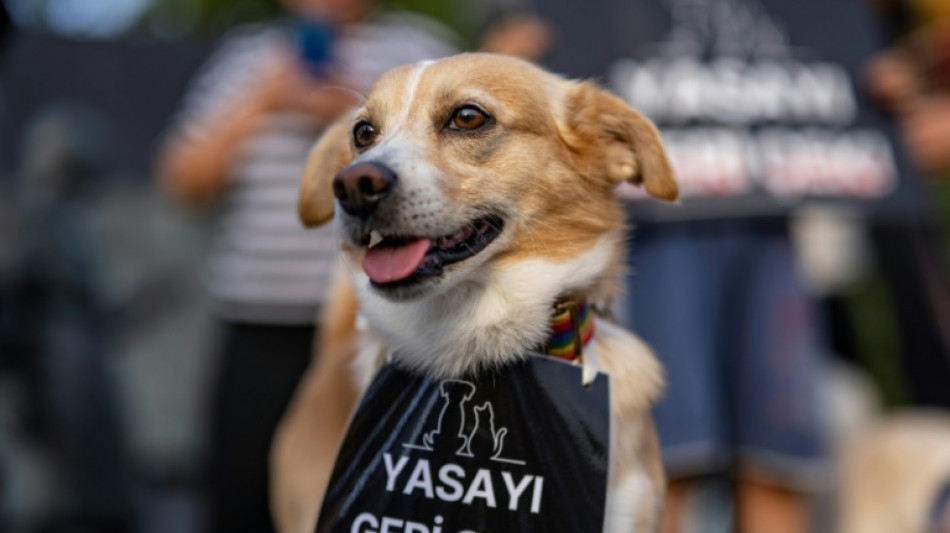
Turkish stray dog law sparks opposition anger / Photo: Yasin AKGUL - AFP

 MEXC Unveils "WE SEE YOU" Brand Visual Refresh, Putting People Behind Every Trade in Focus
 Thai capital cleans up after deadly floods

 NATO, EU allies rally to Estonia after 'sabotage' blamed on Russia

 Families demand justice for Cameroon's 'nightmare' wave of murdered women

 Tebas says Man City should face 'most severe' sanctions if guilty of rule breaches

 Pochettino calls Man City success 'a period of deception'

 Settler attack on West Bank village injures Israeli forces, drawing rare rebuke

 Mystery over UK airbase scare after reports no explosives found

 Spanish govt races to adopt housing law under protest pressure

 Estonia slams Russian 'sabotage' after arson attack on defence company

 Slovenia sees surge in '.si' sites after Trump hypes 'super intelligence'

 'Like a dream' for An as Games organisers 'sorry' for latest mix-up
 Tokyo suffers longest streak of rainy days on record

 Indonesia charges train driver over crash that killed 16 women

 صندوق النقد العربي يواصل دعم الاستقرار المالي والنقدي في المنطقة

 وزارة المالية تدعم توسع الشركات المصرية في السوق التنزانية

 محمد بن زايد يزور السعودية بعد فترة من الفتور في علاقات البلدين

 مخيم البداوي يحيي ذكرى مقتل فتح شريف بفعالية جماهيرية

 تدمير البيوت التراثية يهدد الذاكرة السياسية والعمرانية لجنوب لبنان

 اقتحامات واعتداءات إسرائيلية تسجل في عدة مناطق بالضفة الغربية

 سهم شي إن يتراجع 14% رغم إعلان أول أرباح منذ الطرح

 مجموعة الغندور ترصد 3 مليارات جنيه لتوسعات جديدة حتى 2030

 العربي الأفريقي الدولي يوسع برامج إعداد القيادات المصرفية

 إنفيديا تطلق منصة مفتوحة لضبط صلاحيات وكلاء الذكاء الاصطناعي

 دي بي ورلد تدشن خطاً بحرياً بين الهند والفجيرة وعُمان واليمن

Turkish opposition parties vowed Tuesday to fight a law authorising the capture -- and in some cases killing -- of the country’s estimated four million stray dogs.
The emotive law -- which animal lovers fear will lead to a mass cull despite government denials -- was passed at final reading in the early hours of Tuesday by a margin of 51 votes, in the face of opposition protests.
Deputies against the law wore white gloves stained with fake blood during the debate. "We will challenge this law in the constitutional court as soon as possible. It violates the animals' right to life," said Ozgur Ozel, leader of the main opposition Republican People's Party (CHP).
"Today is a dark day. Neither history nor humanity will forgive those who voted 'yes'," protested CHP lawmaker Aliye Timis Ersever.
The government argues that strays considered sick or uncontrollable should be put down to prevent a growing number of attacks and the spread of rabies.
It says the other homeless dogs must be rounded up in animal shelters and put up for adoption.
Critics say relying on animal sanctuaries and adoption is ultimately unworkable because of the numbers involved.
Instead, they advocate a mass sterilisation and vaccination campaign.
The law has revived memories of a 1910 tragedy when the Ottoman authorities rounded up around 60,000 strays in Istanbul and sent them to a deserted rock in the Sea of Marmara.
With nothing else to eat, the dogs tore each other to pieces.
International animal welfare group Four Paws urged President Recep Tayyip Erdogan not to ratify the new law.
- 'Revenge' -
"Four Paws strongly condemns the killing (and) long-term mass sheltering of stray animals as means of population control, not only due to the suffering this causes... but also because this is an ineffective, inhumane and costly way to reduce stray animal numbers," it said.
The most successful method was to catch, neuter and vaccinate the animals and then rerelease them, it added.
Erdogan has said Turkey faces a problem "like no other civilised country".
The president, whose AKP party and its allies have a majority in parliament, said on Wednesday that people wanted "safe streets".
The social-democrat CHP, which took control of Istanbul and other major cities in local elections in March, has said its mayors will not apply the law.
The legislation says dogs will be put down if they "present a danger to the life or health of people and animals, display uncontrollable negative behaviour, have a contagious or incurable disease or whose adoption is forbidden".
It says local councils must build animal shelters and implement the law by 2028. Mayors who refuse could be jailed for up to two years.
The opposition accused the AKP of seeking revenge after its drubbing in the local elections.
"You want to take revenge for March 31. You can pass as many massacre laws as you like but none of our local councils will be your accomplice," said CHP deputy Gokce Gokcen.
Millions of people in Turkey feed and pet the country's strays. The government's plan sparked protests around the country and inside parliament.
Q.Jaber--SF-PST