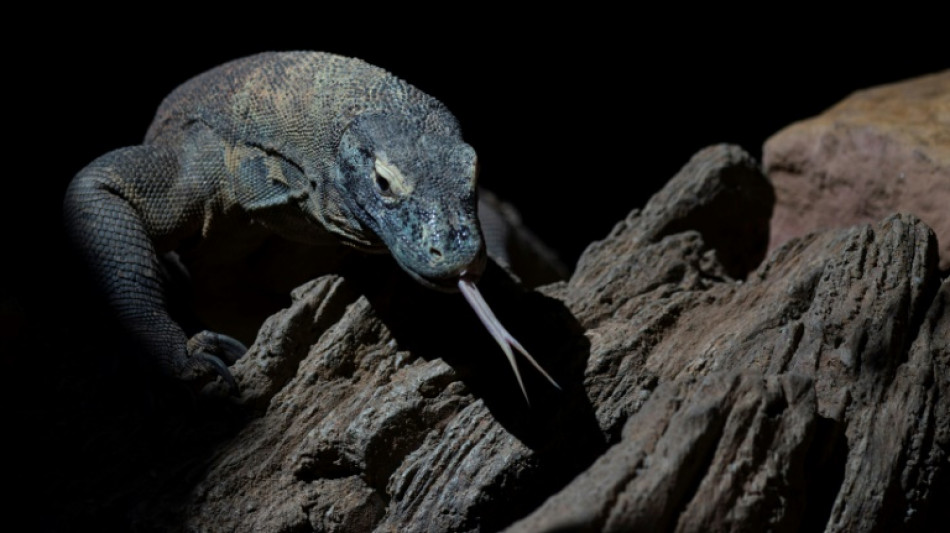
Komodo dragons have teeth coated in iron to kill prey: study / Photo: JORGE GUERRERO - AFP/File

 MEXC Unveils "WE SEE YOU" Brand Visual Refresh, Putting People Behind Every Trade in Focus

 Thai capital cleans up after deadly floods

 NATO, EU allies rally to Estonia after 'sabotage' blamed on Russia

 Families demand justice for Cameroon's 'nightmare' wave of murdered women

 Tebas says Man City should face 'most severe' sanctions if guilty of rule breaches

 Pochettino calls Man City success 'a period of deception'

 Settler attack on West Bank village injures Israeli forces, drawing rare rebuke

 Mystery over UK airbase scare after reports no explosives found

 Spanish govt races to adopt housing law under protest pressure

 Estonia slams Russian 'sabotage' after arson attack on defence company

 Slovenia sees surge in '.si' sites after Trump hypes 'super intelligence'

 'Like a dream' for An as Games organisers 'sorry' for latest mix-up

 Tokyo suffers longest streak of rainy days on record

 Indonesia charges train driver over crash that killed 16 women

 صندوق النقد العربي يواصل دعم الاستقرار المالي والنقدي في المنطقة

 وزارة المالية تدعم توسع الشركات المصرية في السوق التنزانية

 محمد بن زايد يزور السعودية بعد فترة من الفتور في علاقات البلدين

 مخيم البداوي يحيي ذكرى مقتل فتح شريف بفعالية جماهيرية

 تدمير البيوت التراثية يهدد الذاكرة السياسية والعمرانية لجنوب لبنان

 اقتحامات واعتداءات إسرائيلية تسجل في عدة مناطق بالضفة الغربية

 سهم شي إن يتراجع 14% رغم إعلان أول أرباح منذ الطرح

 مجموعة الغندور ترصد 3 مليارات جنيه لتوسعات جديدة حتى 2030

 العربي الأفريقي الدولي يوسع برامج إعداد القيادات المصرفية

 إنفيديا تطلق منصة مفتوحة لضبط صلاحيات وكلاء الذكاء الاصطناعي

 دي بي ورلد تدشن خطاً بحرياً بين الهند والفجيرة وعُمان واليمن

The fearsome Komodo dragon, native to Indonesia and the world's largest living lizard, has a coat of iron on its razor-like teeth to help it kill its prey, scientists found in a study published Wednesday.
A study led by researchers from King's College London, who carried out their work with advanced chemical and structural imaging, revealed protective iron coats in orange pigment found in the tips and serrations of Komodo dragon teeth.
"This feature has never been reported before in a carnivorous reptile," said the study published in the journal Nature Ecology & Evolution.
The researchers found iron-rich coatings most prominently on Komodo dragon teeth, although similar coverings were also found on the teeth of other living reptiles, including monitor lizards, crocodiles and alligators.
The study said concentrated iron played "a crucial role in supporting serrated teeth" in the huge lizards, who use them to kill their prey.
They prey on a range of animals from rodents to water buffalo and kill using a one-two punch of sharp teeth and a venomous bite.
The researchers believe the iron coatings may have existed in carnivorous dinosaurs but were lost over time because they could not find evidence of them on the fossilised teeth of reptiles and dinosaurs closely related to Komodo dragons.
Komodo dragons are found only in the national park of the same name and neighbouring Flores island. Only 3,458 adult and baby Komodo dragons are left in the wild, according to the International Union for the Conservation of Nature.
Thousands of tourists descend annually on the cluster of islands in the eastern part of Indonesia, the only place in the world where Komodo dragons can be seen in their natural habitat.
The reptiles, which can grow to three metres (10 feet) in length and weigh up to 90 kilograms (200 pounds), are threatened by human activity and climate change destroying their habitat.
Q.Najjar--SF-PST