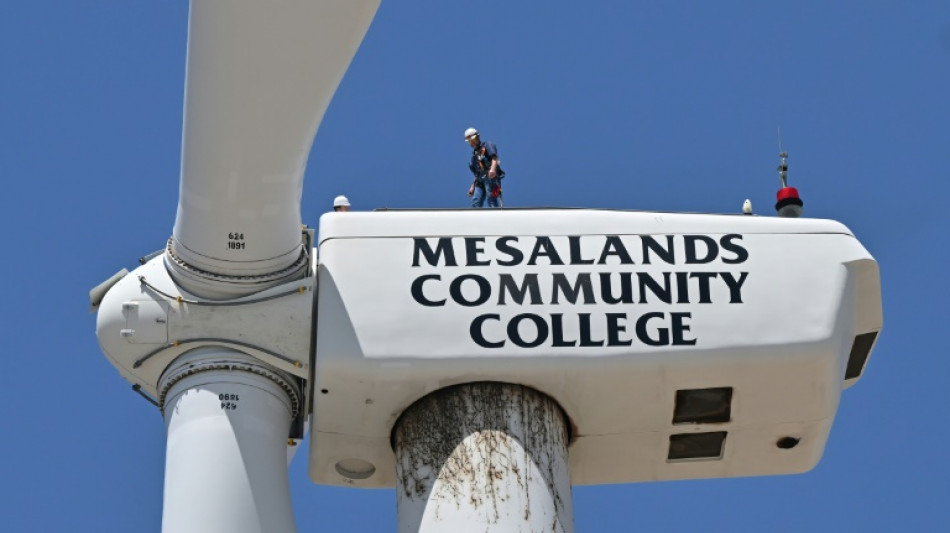
Don't look down: fearless trainees propel wind turbine boom / Photo: Frederic J. BROWN - AFP

 MEXC Unveils "WE SEE YOU" Brand Visual Refresh, Putting People Behind Every Trade in Focus

 Thai capital cleans up after deadly floods

 NATO, EU allies rally to Estonia after 'sabotage' blamed on Russia
 Families demand justice for Cameroon's 'nightmare' wave of murdered women
 Tebas says Man City should face 'most severe' sanctions if guilty of rule breaches
 Pochettino calls Man City success 'a period of deception'

 Settler attack on West Bank village injures Israeli forces, drawing rare rebuke

 Mystery over UK airbase scare after reports no explosives found
 Spanish govt races to adopt housing law under protest pressure

 Estonia slams Russian 'sabotage' after arson attack on defence company
 Slovenia sees surge in '.si' sites after Trump hypes 'super intelligence'

 'Like a dream' for An as Games organisers 'sorry' for latest mix-up
 Tokyo suffers longest streak of rainy days on record

 Indonesia charges train driver over crash that killed 16 women
 صندوق النقد العربي يواصل دعم الاستقرار المالي والنقدي في المنطقة

 وزارة المالية تدعم توسع الشركات المصرية في السوق التنزانية

 محمد بن زايد يزور السعودية بعد فترة من الفتور في علاقات البلدين

 مخيم البداوي يحيي ذكرى مقتل فتح شريف بفعالية جماهيرية

 تدمير البيوت التراثية يهدد الذاكرة السياسية والعمرانية لجنوب لبنان
 اقتحامات واعتداءات إسرائيلية تسجل في عدة مناطق بالضفة الغربية

 سهم شي إن يتراجع 14% رغم إعلان أول أرباح منذ الطرح

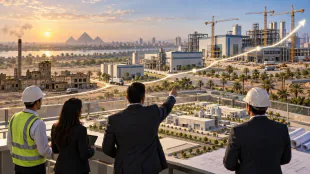 مجموعة الغندور ترصد 3 مليارات جنيه لتوسعات جديدة حتى 2030
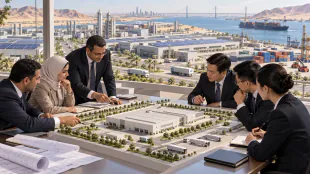
 العربي الأفريقي الدولي يوسع برامج إعداد القيادات المصرفية
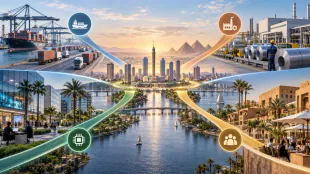
 إنفيديا تطلق منصة مفتوحة لضبط صلاحيات وكلاء الذكاء الاصطناعي

 دي بي ورلد تدشن خطاً بحرياً بين الهند والفجيرة وعُمان واليمن

Perched almost 300 feet (90 meters) above the New Mexico plains, strapped to the sheer-edged roof of a wind turbine's generator by a single safety harness, Terrill Stowe is in his element.
"I've never had anyone fall in 14 years. Hopefully today's not the first," jokes the technician instructor to AFP journalists who struggled up the 260-rung ladder beneath him.
The giant, solitary wind turbine towers improbably over the tiny city of Tucumcari, just a half hour drive from the Texas border along the historic Route 66 highway.
Built in 2008 on the campus of Mesalands Community College, the structure is one of the few working turbines in the US where new technicians can train to join the booming wind industry.
The sector's growth has been staggering. Today, the United States has around 75,000 large turbines, pumping out enough electricity to power roughly 40 million American homes.
National wind capacity has more than doubled over the last decade -- an expansion that has left the industry struggling to train enough skilled workers to keep the blades whirring.
"They're putting up more wind farms, and they don't have as many technicians as what they do wind farms," says Stowe.
He trains 10 to 20 students per semester. They first practice on the ground with a replica generator and gearbox, eventually ascending to the turbine's "nacelle," or engine room, high up at the center of its three giant blades.
Stowe warns students it is not a career for the faint of heart.
"I tell them if they're deathly afraid of heights, then they might not want to try this," he says.
In windy conditions, being up on a tower is "like riding on a boat, back and forth... 100 meters in the air," says Stowe.
- 'Conspiracy theories' -
The wind industry's acceleration has been propelled by falling technology costs, improved generating efficiency and government incentives like President Joe Biden's Inflation Reduction Act.
Among recent recruits are Nathaniel Alexander and Kevin Blea, two young men from Tucumcari who trained under Stowe and recently returned to their old college as instructors.
"I'm all for clean energy," said Alexander, 28, who signed up straight after high school.
But his main reasons for joining were a desire to do a "man's man's job" and to receive good wages.
A two-year degree costs $6,000 to $10,000 and opens the path to jobs that can pay $50,000 to $90,000 per year.
In this rural part of eastern New Mexico -- a conservative region in a largely blue state -- many are reluctant to give the Democrats credit for the boom.
The last few years have been "kind of an upward trend," admits Stowe.
But the Republican voter believes "we had more of an upward trend" when Trump was in the White House.
Alexander says recent tax credits "definitely helped" the industry, but he is "not too passionate" about green politics.
He enjoys reading Facebook posts "with conspiracy theories on how much diesel it takes to run" a wind turbine.
"It's not true at all, it's just kind of funny to me," he says.
- Wind, ice, lightning -
Safety conditions have changed dramatically in recent decades.
Before becoming an instructor, Stowe worked in wind fields and recalls having to crawl on a "frozen sheet of ice" atop turbines, through 90 mile per hour winds.
Towers are frequently struck by lightning -- often requiring technicians to climb and fix it.
"Back when I first started climbing, it didn't matter what the weather was like," he says, nostalgically.
Nowadays, "if the weather is any kind of iffy at all, they won't climb."
Even these days, Blea recalls how wind rocked the turbine so hard during his training that a fellow student "threw up in his hard hat."
"It was pretty gross, honestly," the 27-year-old says, laughing.
Those hazards aside, the work is unlike any office job, he says.
"Being the first one up that tower, and seeing the views in the morning is just awesome," adds Alexander.
"It's a good way to wake up."
S.AbuJamous--SF-PST