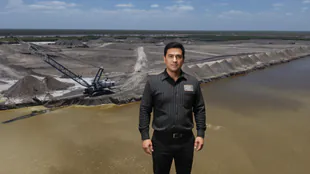
Musk says Tesla charger network will grow, days after layoffs / Photo: JUSTIN SULLIVAN - GETTY IMAGES NORTH AMERICA/AFP/File

 Indiana River Otters Make Comeback After Decades of Conservation Efforts
 Tamil Film 'Arivu' Selected for 57th International Film Festival of India

 أسعار الديزل في الولايات المتحدة تنخفض دون 6 دولارات لأول مرة منذ شهرين

 Why Wind Farms Paint One Turbine Blade Black to Protect Birds
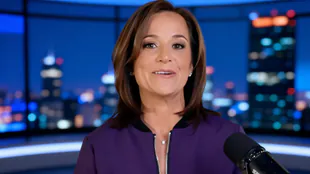 Dianna Russini Seeks Super Bowl Radio Row Credential Amid Media Return

 Clare Luvanga Leads Washington Spirit to Third Straight NWSL Championship with 2-1 Win

 Malta Stuns Sweden with Late Penalty Comeback in Rugby Europe Trophy

Tesla boss Elon Musk said Friday the electric vehicle manufacturer would invest over $500 million this year to install new superchargers, just days after a report of massive layoffs in this branch of the company.
"Just to reiterate: Tesla will spend well over $500M expanding our Supercharger network to create thousands of NEW chargers this year," Elon said on X.
"That's just on new sites and expansions, not counting operations costs, which are much higher," he added.
According to tech news outlet The Information on Monday, Tesla was moving to disband its supercharger department, laying off most of its 500 workers as well as its senior director.
The revelation raised questions about the future development of Tesla's network of over 50,000 fast chargers -- the most extensive in the world, according to Tesla -- which can add 200 miles (320 kilometers) of range in a quarter of an hour.
The fear of insufficient charging infrastructure is one of the reasons why sales of electric vehicles are progressing less rapidly than expected in the US and Tesla's well-developed network was seen as key to reassuring customers.
In the spring of 2023, several competitors -- Ford, General Motors, Rivian -- entered into partnerships with Tesla so that their vehicles could use its fast-charging network in Canada and the United States.
A few weeks later, seven automakers -- BMW, General Motors, Honda, Hyundai, Kia, Mercedes-Benz, Stellantis -- announced the creation of a joint venture to install, from this summer, at least 30,000 fast chargers in North America, accessible to all electric vehicles.
The reported layoffs came shortly after Tesla reported a 55 percent drop in quarterly earnings to $1.1 billion, reflecting the decline in EV sales.
T.Khatib--SF-PST