
Outflanked by AI, stars fade for South Korea's blind fortune-tellers / Photo: GREG BAKER - AFP

 First-time boat buyers advised to assess full ownership costs

 Planning and preparation can reduce stress of interstate relocation

 Two more arrested in Carrie Mullane suspected murder investigation

 Mayo school appeals for information after convent and chapel vandalism
 GLP-1 Users Show Higher Rates of Nail Detachment in New Studies

 Canadian soldier Aidan Goulding remembered at Vancouver funeral

 Tayyab Arif hits 57 on Pakistan Test debut against Sri Lanka

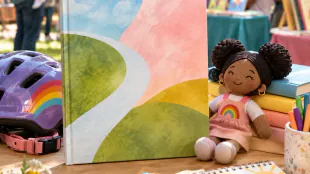 Robert Trujillo discusses literacy and social justice children’s books

 Civil rights advocate William Bill Tucker dies aged 98
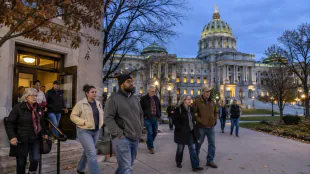
 US Treasury order targets bank transfers linked to crypto exchange MEXC

 Eagles record six sacks as rushing attack struggles against Giants

 Thames Water seeks to delay £12bn in debt repayments
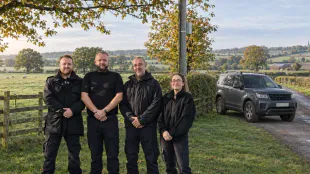
 Newark boxing gym expands alternative education programme

 Democrats consider impeachment drive against Defence Secretary Hegseth

 Rail journey offers a slower route to a Berlin city break

 Arsenal control title race as Manchester United fall into bottom three

 Suspected Krakow gunman dies after attack that killed six

 Carrick backs Dalot after hostile reception from Manchester United fans

 Belgian PM Bart De Wever Given New Deadline to Resolve €10 Billion Budget Deadlock
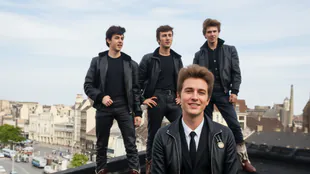
 الدفاعات الروسية تسقط 38 طائرة مسيرة فوق لينينجراد

 Amitabh Bachchan Drops Bulletproof Glass for Diwali Fan Greeting Outside Mumbai Home
Clients have drifted away from Song Oh-soon's fortune-telling village on the edge of Seoul, preferring online AI-powered divination to the centuries-old prophesying tradition still practised there.
At 86, Song is one of the last members of a community of visually impaired practitioners that drew generations of South Koreans seeking answers and advice about everything from illness and money to love and fate.
In one of the world's most AI-connected societies, the village's greatest challenge is not fading belief in fortune-telling, but the way it is consumed.
Song remains adamantly offline, relying on the "Four Pillars of Destiny" astrology in braille and on her four decades of experience in careful listening -- a skill her automated competition cannot match.
"There were people who came here wanting to die," Song told AFP in northern Seoul's Mia village. "I persuaded them to keep living."
"I also once wanted to die, but I found this work and survived."
Today, silence is often Song's only visitor. The community was once home to 70 or 80 practitioners, but fewer than 20 remain.
Many have died. Their shops down narrow alleys sit dark behind faded signs advertising "traditional fortune-telling houses".
"When I go outside for a walk, it's quiet," Song said in her tiny room that serves as both home and consulting space. "It feels lonely."
- The human factor -
Figures show South Korea's fortune-telling business is growing -- worth 1.4 trillion won ($986 million) as of 2024, according to startup analysis firm InnoForest.
Many now turn to mobile apps and artificial intelligence chatbots such as ChatGPT and Gemini for readings, a survey by market researcher Embrain said this year.
Occasionally, though, someone still seeks out a human intervention.
University professor Oh Ji-hye for years walked past the village without going inside, opting instead for AI readings during her commute.
Only recently, anxious about her career, did she turn to Song for a phone consultation.
"It felt good that someone rather than AI was concentrating on and listening to my story," the 44-year-old said.
Mia village emerged in 1966 after the first blind fortune-teller settled there, according to the Seongbuk Cultural Centre, which researches the district's history.
As Seoul boomed in the 1970s and 1980s the neighbourhood enjoyed cheap rents and a constant foot traffic of potential customers by the time Song arrived in 1984.
She lost her sight in a childhood illness before the Korean War and by 11 was studying Korean fortune-telling -- predicting subjects' futures based on their birth dates and times.
- Outread by algorithms -
She was a professional by 16, working in an industry where many people with disabilities -- especially women -- have been historically confined owing to discrimination.
"Nowadays, if a visually impaired person is musically talented, they can pursue a career in music," she said.
"But back when I lost my sight, there was nothing else I could do besides this job."
Over her lifetime, South Korea has witnessed the devastation of the 1950-53 war, periods of military rule and the 1990s financial crisis.
After periods of hardship and loss, the nation has emerged as a global financial powerhouse -- with recent astronomical profits from manufacturing AI microchips.
Those gains have lifted the nation's fortunes. Clients who once came for advice about medical ailments can now head to hospital instead.
But the technology has drawn away clients from Song's 50,000-won sessions in favour of free or affordable AI readings.
Most of the remaining practitioners have little online presence, and many cannot be found through major search platforms.
"I don't think people are less interested in fortune-telling," Song said. "But these days, they look online, so they do not come all the way to us."
Despite the village's decline, Song believes no fate is set in stone.
"If you put in the effort and make wise judgements, good fortune will come your way three times in your life," she said.
E.Qaddoumi--SF-PST