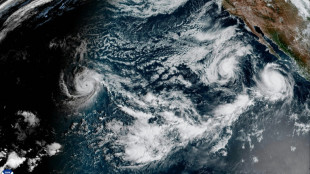
World sees first 12 months above 1.5C warming level: climate monitor / Photo: Michael Dantas - AFP/File

 Amaze Holdings (NYSE: AMZE) Executes Binding LOI to Acquire BullionFX | Alchemy, a Decentralized Gold-Backed Financial Ecosystem for Valued at US$155 Million

 Clashes between French teens, police as school blockades intensify

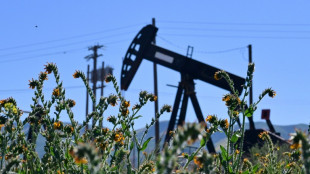 Stocks move sideways despite oil moving lower

 African leaders to gather in Egypt for business summit

 UK decides against charging foreign visitors for museums

 Dallaglio to sell England World Cup winners' medal

 Brazil come from behind to beat Australia 4-2 in friendly

 Ruthless An retains Asian Games badminton crown as Kunlavut triumphs

 Alonso to stay with F1 team Aston Martin in 2027
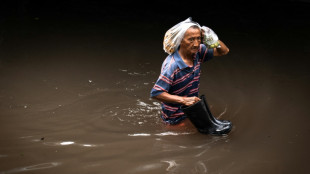
 China badminton 'still strong' despite Asian Games slump

 'Exceptional' Turner painting shown in Rome before sale

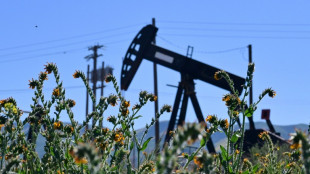 European stocks climb as oil dips

 Spain aims to ban evictions until 2030 amid housing protests

 Kunlavut first Thai man to win Asian Games badminton singles gold

 French far right says antisemitism claims part of 'total war' to derail presidency bid

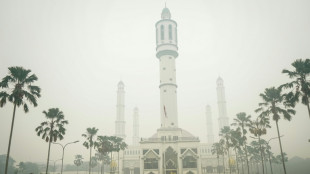 'Gift from God': Rain brings relief from Indonesia toxic haze

 Ex-world snooker champion jailed for 7 years for child sex crimes

 French teens clash with police as school blockades intensify

 FIFA accuses UEFA of 'misinformation campaign' in bid for World Cup papers

 Myanmar airstrike toll hits 50 as families gather dead

 STARTRADER Raises Lloyd's of London Client Fund Insurance to USD 30 Million in Aggregate

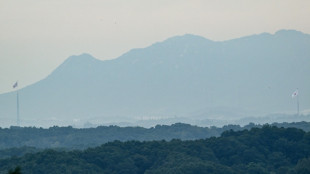 North Korean DMZ landmine blasts 'violation of armistice': Seoul

 مصر تستهدف زيادة حصة الصادرات السلعية إلى 30% من الناتج المحلي

 العربي الأفريقي الدولي يوسع برامج إعداد القيادات المصرفية

 مجموعة الغندور ترصد 3 مليارات جنيه لتوسعات جديدة حتى 2030

Earth has endured 12 months of temperatures 1.5C hotter than the pre-industrial era for the first time on record, Europe's climate monitor said Thursday, in what scientists called a "warning to humanity".
Storms, drought and fire have lashed the planet as climate change, supercharged by the naturally-occurring El Nino phenomenon, stoked record warming in 2023, making it likely the hottest in 100,000 years.
The extremes have continued into 2024, Copernicus Climate Change Service (C3S) service said, confirming that February 2023 to January 2024 saw warming of 1.52 degrees Celsius above the 19th century benchmark.
That is a grave foretaste of the Paris climate deal's crucial 1.5C warming threshold, but it does not signal a permanent breach of the limit, which is measured over decades, scientists said.
"We are touching 1.5C and we see the cost, the social costs and economic costs," said Johan Rockstrom, of the Potsdam Institute for Climate Impact Research.
"1.5 is a very big number and it hurts us really badly in terms of heat waves, droughts, floods, reinforced storms, water scarcity across the entire world. That is what 2023 has taught us."
Recent months have seen an onslaught of extremes across the planet, including devastating drought gripping the Amazon basin, sweltering winter temperatures in parts of southern Europe, deadly wildfires in South America and record rainfall in California.
"It is clearly a warning to humanity that we are moving faster than expected towards the agreed upon 1.5C limit that we signed," Rockstrom told AFP, adding that temperatures will likely fall back somewhat after the El Nino comes to an end.
Copernicus said last month was the hottest January on record -- the eighth month in a row of historic high monthly temperatures -- with temperatures 1.66C warmer overall than an estimate of the January average for 1850-1900, the pre-industrial reference period.
"2024 starts with another record-breaking month -- not only is it the warmest January on record but we have also just experienced a 12-month period of more than 1.5C above the pre-industrial reference period," said Samantha Burgess, C3S Deputy Director.
Planet-heating emissions, mainly from the burning of fossil fuels, have continued to rise in recent years, when scientists say they need to fall by almost half this decade and the UN's IPCC climate panel has warned that the world will likely crash through 1.5C in the early 2030s.
"The succession of very hot years is bad news for both nature and people who are feeling the impacts of these extreme years," Joeri Rogelj, professor of climate science and policy at Imperial College London, told AFP.
"Unless global emissions are urgently brought down to zero, the world will soon fly past the safety limits set out in the Paris climate agreement."
- 'Off the charts' -
Copernicus said January temperatures were well above average in north-western Africa, the Middle East and central Asia, as well as eastern Canada and southern Europe.
But they were below average in parts of northern Europe, western Canada and the central region of the United States.
And while parts of the world experienced an unusually wet January, swathes of North America, the Horn of Africa and the Arabian Peninsula saw drier conditions.
In Chile, which has struggled with a brutal summer heatwave and drought, the dry conditions have helped stoke wildfires, Copernicus said.
Those conditions have continued into February, with fires that started on Friday whipping into a deadly inferno that tore through neighbourhoods in the coastal Valparaiso region over the weekend leaving more than 130 people dead.
The El Nino, which warms the sea surface in the southern Pacific leading to hotter weather globally, has begun to weaken in the equatorial Pacific, Copernicus said.
Meanwhile, sea surface temperatures have continued to smash records.
Rockstrom said 2023 "is a year where ocean dynamics have simply gone berserk, it's off the charts".
Oceans cover 70 percent of the planet and have kept the Earth's surface liveable by absorbing 90 percent of the excess heat produced by the carbon pollution from human activity since the dawn of the industrial age.
Hotter oceans mean more moisture in the atmosphere, leading to increasingly erratic weather, like fierce winds and powerful rain.
S.Barghouti--SF-PST