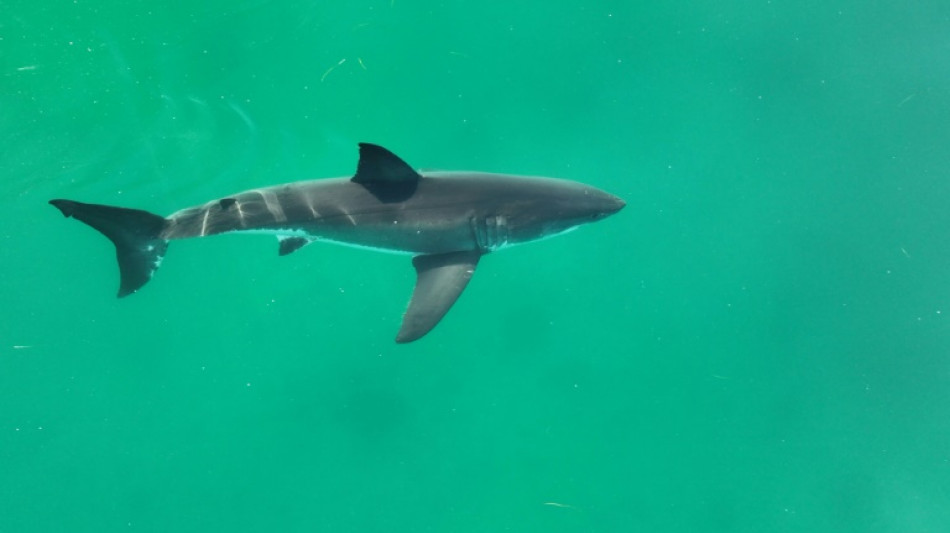
Shark bites and deaths up even as species faces crisis: study / Photo: Handout - @TheMalibuArtist/AFP/File

 MEXC Unveils "WE SEE YOU" Brand Visual Refresh, Putting People Behind Every Trade in Focus

 Thai capital cleans up after deadly floods

 NATO, EU allies rally to Estonia after 'sabotage' blamed on Russia

 Families demand justice for Cameroon's 'nightmare' wave of murdered women

 Tebas says Man City should face 'most severe' sanctions if guilty of rule breaches

 Pochettino calls Man City success 'a period of deception'

 Settler attack on West Bank village injures Israeli forces, drawing rare rebuke

 Mystery over UK airbase scare after reports no explosives found

 Spanish govt races to adopt housing law under protest pressure

 Estonia slams Russian 'sabotage' after arson attack on defence company

 Slovenia sees surge in '.si' sites after Trump hypes 'super intelligence'

 'Like a dream' for An as Games organisers 'sorry' for latest mix-up

 Tokyo suffers longest streak of rainy days on record

 Indonesia charges train driver over crash that killed 16 women
 صندوق النقد العربي يواصل دعم الاستقرار المالي والنقدي في المنطقة

 وزارة المالية تدعم توسع الشركات المصرية في السوق التنزانية

 محمد بن زايد يزور السعودية بعد فترة من الفتور في علاقات البلدين

 مخيم البداوي يحيي ذكرى مقتل فتح شريف بفعالية جماهيرية

 تدمير البيوت التراثية يهدد الذاكرة السياسية والعمرانية لجنوب لبنان

 اقتحامات واعتداءات إسرائيلية تسجل في عدة مناطق بالضفة الغربية

 سهم شي إن يتراجع 14% رغم إعلان أول أرباح منذ الطرح

 مجموعة الغندور ترصد 3 مليارات جنيه لتوسعات جديدة حتى 2030

 العربي الأفريقي الدولي يوسع برامج إعداد القيادات المصرفية

 إنفيديا تطلق منصة مفتوحة لضبط صلاحيات وكلاء الذكاء الاصطناعي

 دي بي ورلد تدشن خطاً بحرياً بين الهند والفجيرة وعُمان واليمن

Shark bites and fatalities ticked up worldwide last year, with Australia accounting for a disproportionate number of deaths resulting from heightened contact with humans even as the ancient predators face a wider extinction crisis.
There were 69 unprovoked attacks in 2023, up slightly from 63 in 2022, and ten deaths, which is double the year before and a 12-year-high, according to the International Shark Attack File, an annual global report published Monday by the University of Florida.
Gavin Naylor, director of the Florida Program for Shark Research at the Florida Museum of Natural History who co-authored the study, told AFP that the uptick didn’t mean sharks were becoming more numerous or fierce.
Three of the deaths happened off the coast of southern Australia in a region called the Eyre Peninsula, where a rebounding seal population has brought great whites into closer proximity to surfers in a remote region.
"If you get nobbled by a white shark you're probably not going to have all of the helicopters being able to be there within five minutes and stretchers and all the medical infrastructure," he said.
In all, Australia saw four deaths, followed by two in the United States, and one each in the Bahamas, Egypt, Mexico and New Caledonia.
The US saw 36 unprovoked attacks -- just over half of the total number worldwide. Most of these are "test" bites when a shark mistakes a human for prey.
"Provoking" a shark was defined as intentionally approaching one or swimming in an area where bait was used to lure fish -- and such incidents were not included in the study's headline figures.
Data was collected through media reports then independently validated by Naylor and his co-author Joe Miguez.
- Global numbers down -
"Globally shark numbers are down," said Naylor, with a broad trend of sharks moving closer to coastal waters as overfishing causes the collapse of fish stocks in the ocean. A study in Nature in 2021 found the global abundance of oceanic shark and rays down 71 percent since 1970.
This in turn had led to a disconnect between what scientists are reporting globally and coastal fishermen say locally about increased encounters, added Naylor.
What's more, shark encounters are often a consequence of people spending more time in the water, with bites spiking during the summer time of the northern and southern hemispheres.
Improving water quality off the coast of New York had, for example, attracted more fish, which in turn had brought more sand tiger sharks.
Last summer, several people were bitten off Long Island, forcing increased shark patrols.
Increasing heat meanwhile was driving shark species to pursue prey in new waters.
"Coral trout are supposed to be on the Barrier Reef, we see them in Tasmania, which is super cold water," said Naylor, and "predators follow the food."
Practical advice to avoid sharks varies from place to place, said Naylor, and people should do local research.
For instance, off the coast of Florida, wearing jewelry that reflects light can look like fish scales and attract black tip sharks. People should also get out of the water if they see schools of bait fish.
D.Qudsi--SF-PST