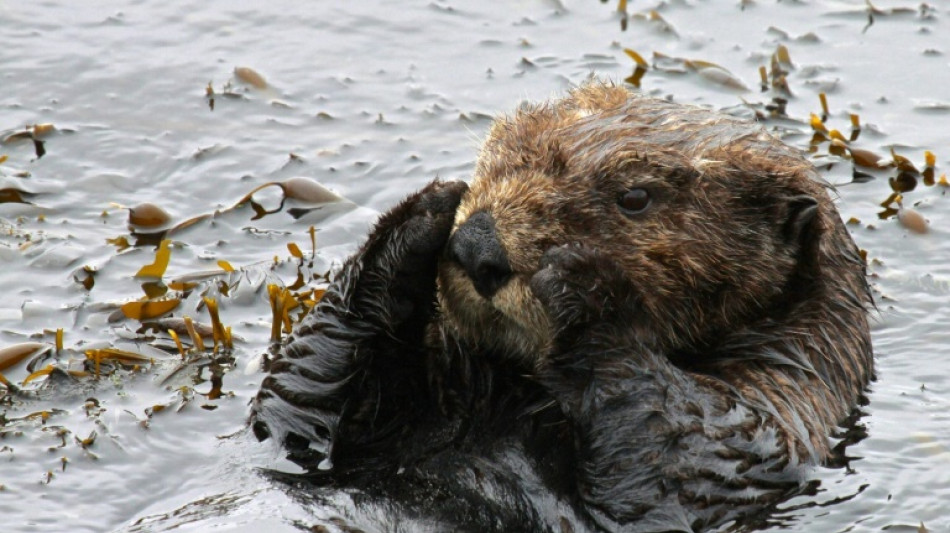
Return of hungry sea otters protects key coastal ecosystem: study / Photo: Lilian Carswell - US Fish and Wildlife Services/AFP/File

 MEXC Unveils "WE SEE YOU" Brand Visual Refresh, Putting People Behind Every Trade in Focus

 Thai capital cleans up after deadly floods

 NATO, EU allies rally to Estonia after 'sabotage' blamed on Russia

 Families demand justice for Cameroon's 'nightmare' wave of murdered women

 Tebas says Man City should face 'most severe' sanctions if guilty of rule breaches

 Pochettino calls Man City success 'a period of deception'

 Settler attack on West Bank village injures Israeli forces, drawing rare rebuke

 Mystery over UK airbase scare after reports no explosives found

 Spanish govt races to adopt housing law under protest pressure

 Estonia slams Russian 'sabotage' after arson attack on defence company

 Slovenia sees surge in '.si' sites after Trump hypes 'super intelligence'

 'Like a dream' for An as Games organisers 'sorry' for latest mix-up

 Tokyo suffers longest streak of rainy days on record

 Indonesia charges train driver over crash that killed 16 women
 صندوق النقد العربي يواصل دعم الاستقرار المالي والنقدي في المنطقة

 وزارة المالية تدعم توسع الشركات المصرية في السوق التنزانية

 محمد بن زايد يزور السعودية بعد فترة من الفتور في علاقات البلدين

 مخيم البداوي يحيي ذكرى مقتل فتح شريف بفعالية جماهيرية

 تدمير البيوت التراثية يهدد الذاكرة السياسية والعمرانية لجنوب لبنان

 اقتحامات واعتداءات إسرائيلية تسجل في عدة مناطق بالضفة الغربية

 سهم شي إن يتراجع 14% رغم إعلان أول أرباح منذ الطرح

 مجموعة الغندور ترصد 3 مليارات جنيه لتوسعات جديدة حتى 2030

 العربي الأفريقي الدولي يوسع برامج إعداد القيادات المصرفية

 إنفيديا تطلق منصة مفتوحة لضبط صلاحيات وكلاء الذكاء الاصطناعي

 دي بي ورلد تدشن خطاً بحرياً بين الهند والفجيرة وعُمان واليمن

Back from the brink of extinction, sea otters in central California have started restoring the degraded landscape of a key estuary -- thanks to their insatiable appetite for crabs, according to a study published on Wednesday.
The research depicts the ripple effects of the sea otters' return to Monterey Bay, California, highlighting how successful conservation efforts can improve the health and resilience of whole ecosystems.
Once hunted for their fur to the verge of local extinction, sea otters have made a dramatic recovery in central California after more than four decades of extensive conservation efforts in the region.
The otters have returned to coastal kelp forests and the the salt marsh-dominated coastal estuary, Elkhorn Slough.
And their return has heralded wide-ranging improvements around the estuary, a critical habitat that protects the shoreline.
In a new paper published in Nature, scientists in the United States and Canada found that the marine mammal slowed the erosion of parts of the estuary by up to 90 percent between the time they recolonised the area in the mid 1980s and 2018.
"One of the most remarkable things about this is that it's truly a conservation success story," study author Christine Angelini, director of the Center for Coastal Solutions at the University of Florida, told AFP.
Previous studies on salt marshes have shown the physical and chemical explanations for erosion.
But this study points a pincer at another culprit -- the shore crab.
These abundant crabs eat plant roots, burrow into the salt marsh soils and eventually can cause erosion and even collapse.
Sea otters eat around 25 percent of their body weight every day and researchers said they have an especially large appetite for these crabs.
"After a few decades, in areas the sea otters had recolonised, salt marshes and creekbanks were becoming more stable again, said lead author Brent Hughes, associate professor of biology at Sonoma State University, in a statement.
This was "despite rising sea levels, increased water flow from inland sources, and greater pollution".
- 'Crab feast' -
Researchers combined decades of data, over 35,000 observations of sea otters and three years of experiments manipulating the presence of top predators in a salt marsh ecosystem.
Top predators have declined in nearly every ecosystem on Earth, but conservation efforts over the past decades have helped recover species like wolves, brown bears, and eagles.
And growing research shows that reintroduction can have a wide-ranging impact on restoring ecosystems.
In this case researchers said sea otter conservation has unlocked several decades worth of benefits.
"It would cost tens of millions of dollars for humans to rebuild these creek banks and restore these marshes," said study author Brian Silliman, professor of Marine Conservation Biology at Duke University.
"The sea otters are stabilising them for free in exchange for an all-you-can-eat crab feast."
B.Mahmoud--SF-PST