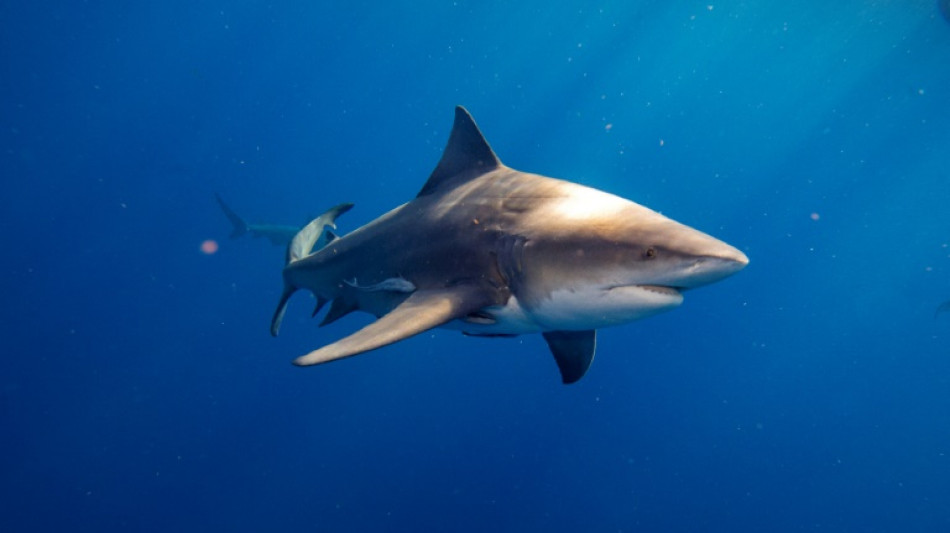
Sharks killed at alarming rates despite regulations: study / Photo: Joseph Prezioso - AFP/File

 MEXC Unveils "WE SEE YOU" Brand Visual Refresh, Putting People Behind Every Trade in Focus

 Thai capital cleans up after deadly floods

 NATO, EU allies rally to Estonia after 'sabotage' blamed on Russia

 Families demand justice for Cameroon's 'nightmare' wave of murdered women

 Tebas says Man City should face 'most severe' sanctions if guilty of rule breaches

 Pochettino calls Man City success 'a period of deception'

 Settler attack on West Bank village injures Israeli forces, drawing rare rebuke

 Mystery over UK airbase scare after reports no explosives found

 Spanish govt races to adopt housing law under protest pressure

 Estonia slams Russian 'sabotage' after arson attack on defence company

 Slovenia sees surge in '.si' sites after Trump hypes 'super intelligence'

 'Like a dream' for An as Games organisers 'sorry' for latest mix-up

 Tokyo suffers longest streak of rainy days on record

 Indonesia charges train driver over crash that killed 16 women

 صندوق النقد العربي يواصل دعم الاستقرار المالي والنقدي في المنطقة

 وزارة المالية تدعم توسع الشركات المصرية في السوق التنزانية

 محمد بن زايد يزور السعودية بعد فترة من الفتور في علاقات البلدين

 مخيم البداوي يحيي ذكرى مقتل فتح شريف بفعالية جماهيرية

 تدمير البيوت التراثية يهدد الذاكرة السياسية والعمرانية لجنوب لبنان

 اقتحامات واعتداءات إسرائيلية تسجل في عدة مناطق بالضفة الغربية

 سهم شي إن يتراجع 14% رغم إعلان أول أرباح منذ الطرح

 مجموعة الغندور ترصد 3 مليارات جنيه لتوسعات جديدة حتى 2030

 العربي الأفريقي الدولي يوسع برامج إعداد القيادات المصرفية

 إنفيديا تطلق منصة مفتوحة لضبط صلاحيات وكلاء الذكاء الاصطناعي

 دي بي ورلد تدشن خطاً بحرياً بين الهند والفجيرة وعُمان واليمن

Global shark populations are plummeting despite worldwide efforts to curb mass killings for their fins, researchers said in a new report showing that more needs to be done to protect one of the ocean's apex species.
Between 2012 and 2019, the number of sharks killed from fishing increased from some 76 million a year to more than 80 million, they reported in the journal Science.
At least 25 million were threatened species.
Sharks have prowled Earth's waters for 400 million years, but a growing appetite for their fins -- a valuable commodity in Asian markets -- has driven several species to the brink of extinction.
Today, 70 percent of countries and jurisdictions have implemented protective regulations to eliminate shark finning, where the top predators are tossed back into the ocean and left to die once fins are removed.
But some of these rules -- which first emerged in the 1990s -- have had unintended consequences that are costing even more sharks their lives, new data revealed.
Finning has marginally declined over the past two decades, but policies requiring fishers to land whole sharks inadvertently incentivised a market for shark meat.
"Anti-finning measures were not the silver bullet we hoped for," study author Laurenne Schiller told AFP.
Researchers spent three years collecting data on fishery regulations and shark mortality.
They were surprised to learn "how widespread the trade with shark meat, oil and cartilage is, and how sharks are showing up in a lot of products without consumers being aware," said lead author Boris Worm.
- Blood in the water -
Fisheries are now catching smaller sharks, including juveniles, more often, because of the decline in the fin trade and regional declines in the abundance of large sharks.
In hotspots where shark mortality is greatest, researchers found a higher use of gillnets -- walls of netting that hang in the water -- and trawls, which is heavy netting dragged along the ocean floor.
Despite being highly evolved ocean predators, sharks are incredibly vulnerable, Schiller said.
"Sharks have spent over 99% of their time on Earth in an ocean without humans, so in many ways, they were not prepared for us and the impacts of fishing."
As a keystone species, sharks are crucial for keeping oceans healthy.
"When we lose these species, it can throw off the balance of the marine ecosystem", she said.
Today, one in three shark species around the world is threatened with extinction.
On a more positive note, Worm emphasised that many nations and territories have already implemented shark fishing prohibitions and sanctuaries to safeguard one of the world's oldest species.
Implementing shark sanctuaries and no-take protected areas seem to keep shark mortality levels low, according to the study.
Still, the current risks for coastal sharks appear to be escalating globally, a conclusion supported by the International Union for the Conservation of Nature (IUCN).
"We need to take a more targeted approach to reducing shark mortality," Schiller said.
N.Awad--SF-PST