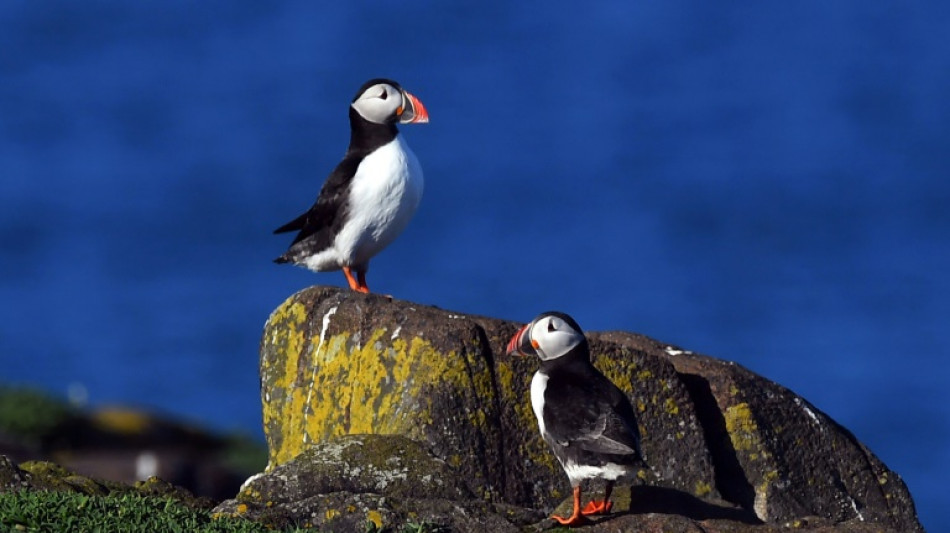
Over half of seabirds in UK and Ireland 'in decline': survey / Photo: Andy Buchanan - AFP

 محافظ طولكرم يدعو لمبادرة مجتمعية لخفض تكاليف الأعراس وتعزيز التكافل

 Shinde Clarifies Torn Photo Controversy Amid Sonia Gandhi Book Protest

 AI Hacking Tool Artex Enables Global Cyberattacks by Low-Skill Actors

 BING X: اختفاء 22,624.66 وحدة من عملة SNC على منصة بينغ إكس — ما مدى أمان الرموز المودعة لدى المنصة؟ وهل يُعلَّق ترخيصها بموجب لائحة MiCAR

 BING X: 22,624.66 SNC have disappeared at BingX – how safe are tokens on BingX? Will BingX’s MiCAR licence be suspended?

 Dubai Police Expand Luxury Patrol Fleet with 525-hp Defender

Almost half of the breeding seabird species in the UK and Ireland have declined in the past 20 years, with climate change one of the possible causes, according to a new survey released on Thursday.
The study, which also covered the Channel Islands off the coast of northern France, found that 11 out of 21 seabird species had seen a loss in numbers.
In the other 10 species, five remained stable with five increasing partly due to targeted conservation work.
Researchers said drivers varied between species and regions but were likely to be partly linked to "adverse weather conditions which may be a result of climate change".
For the remaining four of the 25 species surveyed, no conclusions were drawn due to survey method changes.
One of the factors implicated in the loss of species included invasive predators which may have been released in seabird colony islands, or brown rats or American minks which may have stowed away on boats.
"Climate change is another important factor, adverse weather conditions are causing nest sites to be swept away and making foraging conditions more difficult," the Seabirds Count survey said.
"Increased water temperatures reduce the availability of important food such as sandeels which leads to seabird parents not finding enough food," it added.
This was exacerbated by fish stock depletion by commercial fisheries resulting in insufficient food to go around during the breeding season.
The study, which took place between 2015 and 2021, was carried out by the Joint Nature Conservation Committee (JNCC) along with 20 partners.
It found that Scotland had seen the biggest loss with 14 species in decline.
Species of particular concern highlighted by the study include the Atlantic puffin whose decline at most sites surveyed marked a change from three previous censuses.
"Measures are needed to support populations and to actively prioritise their conservation," Seabirds Count said.
The researchers also warned that since the census was completed, seabird colonies in Britain and Ireland had seen a severe outbreak of bird flu.
The overall impact of Highly Pathogenic Avian Influenza (HPAI) is yet to be estimated with the help of new data collected in 2023.
The survey's findings are set out in Seabirds Count which is being released in book form by wildlife publishers Lynx Edicions.
It is said to be the most comprehensive seabird census produced to date and provides population estimates for all 25 regularly breeding species of Britain, Ireland, the Isle of Man and the Channel Islands.
W.Mansour--SF-PST



