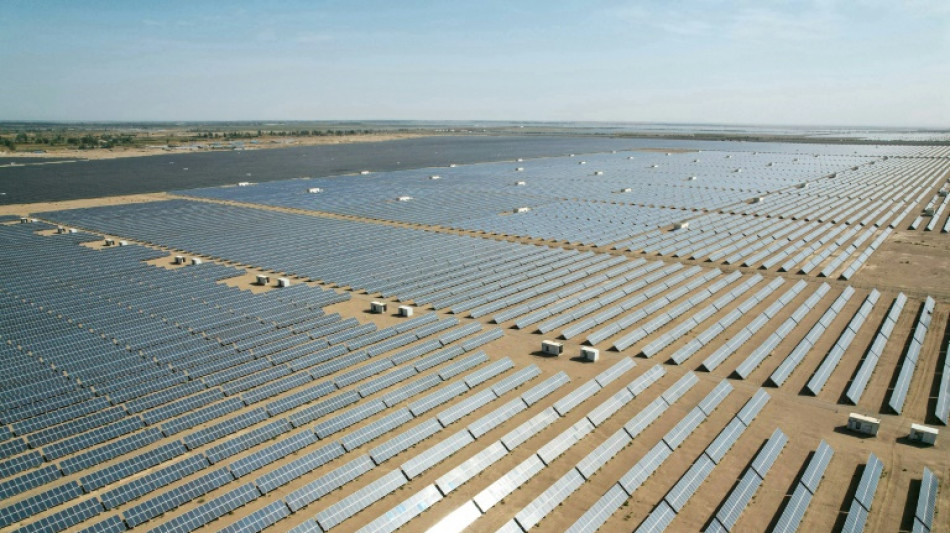
China emissions could fall in 2024 on renewables jump / Photo: STR - AFP/File

 محافظ طولكرم يدعو لمبادرة مجتمعية لخفض تكاليف الأعراس وتعزيز التكافل

 Shinde Clarifies Torn Photo Controversy Amid Sonia Gandhi Book Protest

 AI Hacking Tool Artex Enables Global Cyberattacks by Low-Skill Actors

 BING X: اختفاء 22,624.66 وحدة من عملة SNC على منصة بينغ إكس — ما مدى أمان الرموز المودعة لدى المنصة؟ وهل يُعلَّق ترخيصها بموجب لائحة MiCAR

 BING X: 22,624.66 SNC have disappeared at BingX – how safe are tokens on BingX? Will BingX’s MiCAR licence be suspended?

 Dubai Police Expand Luxury Patrol Fleet with 525-hp Defender

China's carbon emissions are likely to fall in 2024 because record growth in renewable energy capacity is now sufficient to cover growing demand, a new analysis finds.
China is the world's largest greenhouse gas emitter and has brushed aside calls for a more ambitious carbon neutrality target than its current 2060 goal.
The International Energy Agency says the country is projected to account for 45 percent of global emissions from existing fossil fuel assets between 2023 and 2050.
But China has also been installing renewable energy capacity at breakneck speed, with new solar in 2023 alone amounting to twice the entire installed capacity in the United States, the analysis, released Monday by UK-based climate site Carbon Brief, said.
"Newly installed solar, wind, hydro and nuclear capacity added in 2023 alone will generate an estimated 423 terawatt hours (TWh) per year, equal to the total electricity consumption of France," the report by Lauri Myllyvirta of the Centre for Research on Energy and Clean Air added.
The massive ramp-up in installation and a projected rebound in hydropower generation as drought recedes and reservoirs refill "are all but guaranteed to push fossil-fuel electricity generation and CO2 emissions into decline in 2024," the report said.
That decline could be sustained because "the rate of low-carbon energy expansion is now sufficient to not only meet but exceed the average annual increase in China's demand for electricity overall," the analysis argues.
The report is based on official figures and commercial data.
However, China continues to expand its coal power capacity, and the report warns that is "setting the scene for a showdown between the country's traditional and newly emerging interest groups".
Renewable energy growth "threatens the interests of the coal industry and local governments with a high exposure to the coal sector," Carbon Brief said.
"These stakeholders could be expected to resist the transition, raising concerns about potential roadblocks."
Chinese and American climate officials met earlier this week for talks ahead of this month's COP28 discussions, with both sides praising constructive talks, without offering details.
L.AbuAli--SF-PST



