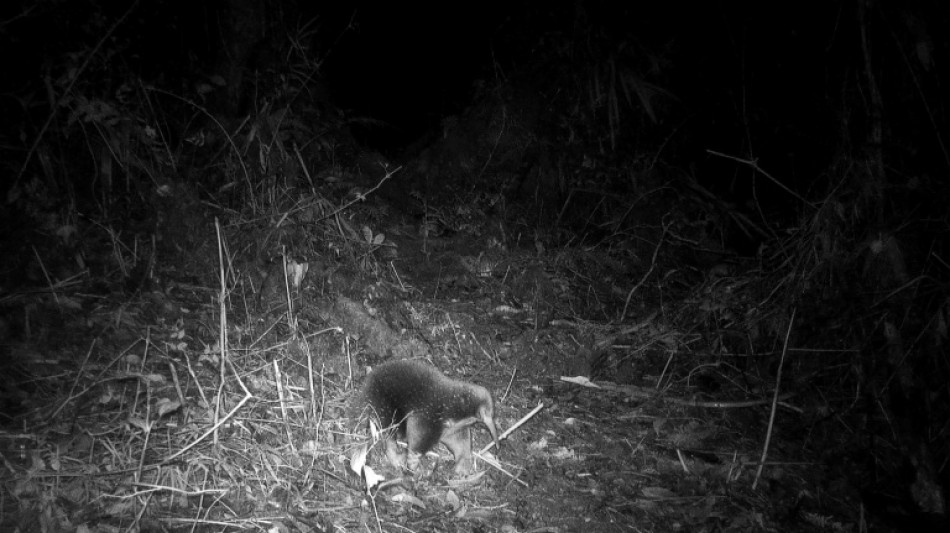
Elusive Attenborough echidna rediscovered in Indonesia / Photo: Handout - EXPEDITION CYCLOPS/AFP

 Tokyo suffers longest streak of rainy days on record

 Indonesia charges train driver over crash that killed 16 women
 تدمير البيوت التراثية يهدد الذاكرة السياسية والعمرانية لجنوب لبنان

 أحمد اليوسف يوضح ملابسات تصريح أعمار لاعبي منتخب الكويت
 السعودية تواجه العراق في قمة خليجية لحسم العلامة الكاملة

 العراق يستضيف خليجي 28 وبغداد والبصرة تتسابقان على تنظيم المباريات

 وليد الدغسني يحول فضاء «البروفة» إلى مختبر بصري للحياة

 رجا بهلول يبحث العلاقة المتبادلة بين الثقافة السياسية ونظام الحكم

 حريق منزلين فلسطينيين في هجوم لمستوطنين على جالود جنوب نابلس

 Sabalenka 'fresh' for first tournament since losing No.1 spot

 Myanmar airstrike death toll rises to 50: aid workers

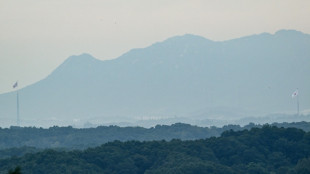 North Korean DMZ landmine blast 'violation of armistice'

 South Korea volleyball team latest to be bussed to wrong Games venue

 Malaysia starts sending Myanmar migrants home

 8.3 mn refugees at risk due to 'severe' funding cuts: UN

 Stocks drop and oil rises as Hormuz hopes fade

 OpenAI cancels release of newest model due to safety concerns

 AI bosses head to White House as safety pressure builds

 Batista sacked as Costa Rica coach after six months

 Flooding, power cuts and evacuations as Hurricane Polo slams Mexico

 NFL Giants obtain QB McCarthy from Vikings

 Deal for evicted Spanish pensioner as PM seeks new housing law

 Clippers apologize, warn fans of 'challenges' after Leonard scandal

 Turkish comedian convicted for Erdogan 'insult' freed pending appeal

 Trump announces 'biggest' US steel plant in battleground Iowa

An elusive echidna feared extinct after disappearing for six decades has been rediscovered in a remote part of Indonesia, on an expedition that also found a new kind of tree-dwelling shrimp.
The Zaglossus attenboroughi, a kind of long-beaked echidna named for famed British naturalist David Attenborough, had last been seen in 1961.
Echidnas are nocturnal and shy, making them difficult to find at the best of times, and the Attenborough long-beaked echidna has never been recorded outside the extremely remote Cyclops Mountains of Indonesia's Papua region.
They are the last vestiges of an ancient animal line, explained James Kempton, a biologist from the University of Oxford who led the expedition.
"The reason it appears so unlike other mammals is because it is a member of the monotremes –- an egg-laying group that separated from the rest of the mammal tree-of-life about 200 million years ago."
It took a team of scientists and experts from Britain and Indonesia four weeks and 80 camera traps to find the echidna, and it was only on the last day, and the final memory card of the trip, that the creature made an appearance.
Just a few seconds of black and white footage shows the slightly ungainly creature ambling through the undergrowth, apparently unaware of the excitement its very existence is likely to elicit.
"The discovery is the result of a lot of hard work and over three-and-a-half years of planning," said Kempton.
The team relied heavily on guidance from the local community, who helped them navigate difficult terrain and granted them access to areas regarded as sacred.
In addition to the rediscovered echidna, the team found a kind of honeyeater bird not recorded since 2008, and a slew of underground species that are new to science.
Blind spiders, blind harvestman and a whip scorpion were all recorded in a previously unexplored cave system that was revealed only when a team member fell through a moss-covered entrance.
Among the more unusual findings was a new kind of tree-dwelling shrimp.
"We were quite shocked to discover this shrimp in the heart of the forest," said Leonidas-Romanos Davranoglou, the team's lead entomologist, theorising that the region's heavy rainfall creates an environment humid enough for the shrimps to live on land.
The discoveries came despite perilous conditions, with Davranoglou breaking his arm on the trip and another researcher enduring a leech attached to his eye for a day and half before it was removed at a hospital.
For all the hardships, Kempton described the landscape as "magical," and the team hopes their findings will highlight the desperate need for conservation of the region and Indonesia's remaining forests elsewhere.
"Tropical rainforests are among the most important and most threatened terrestrial ecosystems," said Davranoglou.
M.AlAhmad--SF-PST