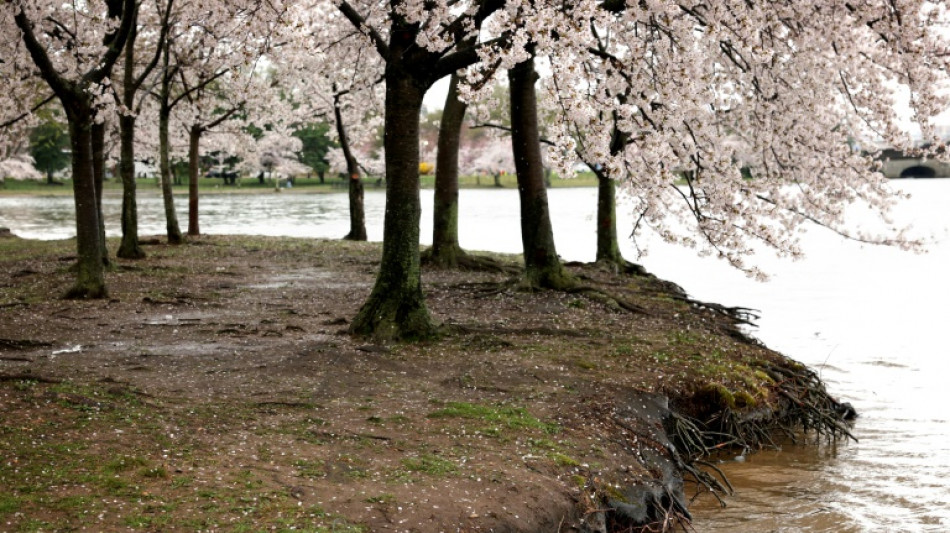
Living near green space makes you 2.5 years younger: study / Photo: ALEX WONG - GETTY IMAGES NORTH AMERICA/AFP

 Trump denies offering to sell arms to China's Xi

 Wemby ready for NBA Spurs to move rivals in climb to top

 Ukraine to postpone some spending amid delays in aid: PM
 Tuchel says Czech Republic game 'not yet a must-win'

 MaXhosa puts South Africa on the Paris fashion map

 Rose, Scott among 2027 World Golf Hall of Fame finalists

 Brunson says NBA champion Knicks can't get satisfaction

 France puts out largest wildfire since 1949

 Real Madrid's Perez summoned over Barcelona referee payments comments

 Oil takes off again, Wall Street dips after Trump rejects Iran truce offer
 AlgoQuant Asset Management Selects Liquid Mercury to Enhance Digital Asset Trading Infrastructure

 UK to reopen refugee resettlement scheme to push 'safe' migration

 Pope urges Europe to help combat 'lies and deceit' in world affairs
 Iranian lawyer Nasrin Sotoudeh wins Council of Europe's rights prize

 French far-right's Bardella denies alleged 2013 antisemitic comments

 Oil up, Wall Street dips after Trump rejects Iran truce offer

 Gakpo withdraws from Netherlands squad

 SpaceX puts Starship megarocket in orbit for first time
 Iran denies link to suspected bomb plot at UK airbase used by US

 Ex-boss Mancini says City charges 'not my concern'

 Berlin Marathon winner Assefa finished race with torn Achilles

 Comedian convicted for Erdogan 'insult' but freed pending appeal

 French prosecutors seek two-year sentence for ex-minister Dati in graft case

 Eala makes fast start as weather and transport woes hit Asian Games

 Hurricane Polo approaches Mexico, threatens severe damage
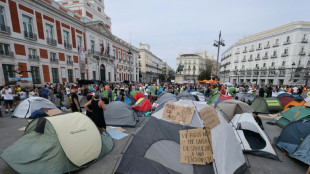
City parks and green spaces help counter heat, boost biodiversity, and instill a sense of calm in the urban jungle.
They also help slow biological aging, with people who have access to green spaces found to be on average 2.5 years biologically younger than those who do not, according to a new study published Wednesday in Science Advances.
"Living near more greenness can help you be younger than your actual age," Kyeezu Kim, the study's lead author and a postdoctoral scholar at Northwestern University's Feinberg School of Medicine, told AFP.
"We believe our findings have significant implications for urban planning in terms of expanding green infrastructure to promote public health and reduce health disparities."
Exposure to green spaces has previously been linked with better cardiovascular health and lower rates of mortality.
It's thought that more physical activity and social interactions are at play, but whether parks actually slowed down aging on a cellular level has been unclear.
To investigate, the team behind the study examined DNA chemical modifications known as "methylation."
Prior work has shown that so-called "epigenetic clocks" based on DNA methylation can be a good predictor of health conditions such as cardiovascular disease, cancer, cognitive function, and a more accurate way of measuring age than calendar years.
Kim and colleagues followed more than 900 white and Black people from four American cities -- Birmingham, Chicago, Minneapolis, and Oakland -- over a period of 20 years, from 1986-2006.
Using satellite imaging, the team assessed how close the participants' residential addresses were to surrounding vegetation and parks, and paired this data with blood samples taken in years 15 and years 20 of the study, to determine their biological age.
The team constructed statistical models to evaluate the results, and control for other variables, such as education, income, and behavioral factors like smoking, that might have affected the results.
They found that people whose homes were surrounded by 30 percent green cover within a five kilometer (three mile) radius were on average 2.5 years younger biologically compared to those whose homes were surrounded by 20 percent green cover.
The benefits were not evenly shared. Black people with more access to green space were only one year biologically younger, while white people were three years younger.
"Other factors, such as stress, qualities of the surrounding green space, and other social support, can affect the degree of benefits of green spaces in terms of biological aging," said Kim, explaining the disparities required further study.
For example, parks in deprived neighborhoods used for illicit activities might be less frequented, negating the benefits.
Next steps might involve investigating the link between green spaces and specific health outcomes, she added. It's also not yet clear how exactly greenery reduces aging -- only that it does, added Kim.
Epidemiologist Manuel Franco, of the University of Alcala and Johns Hopkins, called the research a "well designed study."
"We have more and better scientific evidence to increase and promote the use of urban green spaces," added Franco, who was not involved in the study.
S.AbuJamous--SF-PST