-
 Trump denies offering to sell arms to China's Xi
-
Justice Alito steps aside from major US climate case

-
 Wemby ready for NBA Spurs to move rivals in climb to top
-
Willis happy with England exile after retains Top 14 player award

-
 Ukraine to postpone some spending amid delays in aid: PM
-
Spain housing protests keep heat on government as PM seeks new law

-
 Tuchel says Czech Republic game 'not yet a must-win'
-
Wissa spoils Zimbabwe homecoming as DR Congo win AFCON qualifier

-
 MaXhosa puts South Africa on the Paris fashion map
-
UK police release on bail five men held over airbase incident

-
 Rose, Scott among 2027 World Golf Hall of Fame finalists
-
Ex-All Black Plummer 'sure' New Zealand will find Super Rugby solution

-
 Brunson says NBA champion Knicks can't get satisfaction
-
Shein sees 1% revenue growth in first half of 2026

-
 France puts out largest wildfire since 1949
-
Netherlands regrets Israel retaliation in settlements row

-
 Real Madrid's Perez summoned over Barcelona referee payments comments
-
Moscow seizes Russian assets of German food retailer Metro

-
 Oil takes off again, Wall Street dips after Trump rejects Iran truce offer
-
Bulgarian spirits inflamed by new rakia rules

-
 AlgoQuant Asset Management Selects Liquid Mercury to Enhance Digital Asset Trading Infrastructure
-
Documentary turns camera on architect Peter Zumthor

-
 UK to reopen refugee resettlement scheme to push 'safe' migration
-
UK police say releasing on bail five men held over airbase incident

-
 Pope urges Europe to help combat 'lies and deceit' in world affairs
-
Trump admin finalizes reversal of US fuel economy standards

-
 Iranian lawyer Nasrin Sotoudeh wins Council of Europe's rights prize
-
US says no China arms sale plans after envoy cites Trump offer
-
 French far-right's Bardella denies alleged 2013 antisemitic comments
-
Dozens kidnapped in two weekend attacks in northern Nigeria

-
 Oil up, Wall Street dips after Trump rejects Iran truce offer
-
Next stop the world: Pathirage wins Asian Games javelin gold

-
 Gakpo withdraws from Netherlands squad
-
Aster Launches Perpetual Grid Trading 2.0 with Up to 140,000 $ASTER Liquidity Mining Campaign

-
 SpaceX puts Starship megarocket in orbit for first time
-
Seoul says North Korean mines 'highly suspected' as cause of DMZ blast
-
 Iran denies link to suspected bomb plot at UK airbase used by US
-
Russia pummels Kyiv in latest deadly daytime attack
-
 Ex-boss Mancini says City charges 'not my concern'
-
Wartime Ukraine works to keep its railways on track

-
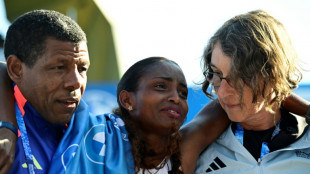 Berlin Marathon winner Assefa finished race with torn Achilles
-
Boy among 3 dead in migrant Channel crossing accident: French authorities

-
 Comedian convicted for Erdogan 'insult' but freed pending appeal
-
SGFX Creates a Standout Brand Experience at Forex Expo Dubai 2026

-
 French prosecutors seek two-year sentence for ex-minister Dati in graft case
-
Pope urges Europe to help combat 'deceit and lies' in international ties

-
 Eala makes fast start as weather and transport woes hit Asian Games
-
Injured Buttler to miss England ODI series in Pakistan

-
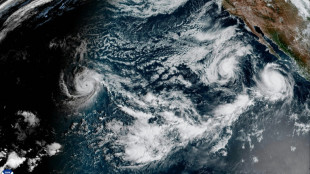 Hurricane Polo approaches Mexico, threatens severe damage
-
Madrid housing protesters vow to maintain pressure on government

UN adopts 'historic' high seas treaty
The world's first international treaty to protect the high seas was adopted Monday at the United Nations, a landmark environmental accord designed to protect remote ecosystems vital to humanity.
Secretary-General Antonio Guterres hailed as a "historic achievement" the treaty that will establish a legal framework to extend swathes of environmental protections to international waters, which make up more than 60 percent of the world's oceans.
Following more than 15 years of discussions, including four years of formal negotiations, UN member states finally agreed on the text for the treaty in March after a flurry of final, marathon talks.
The text, since frozen, has been pored over by the UN's lawyers and translators to make sure it matches in the body's six official languages.
"Healthy oceans, from coastal waters to remote high seas and deep seabed areas, are integral to human health, wellbeing, and survival," a group of scientists noted in The Lancet journal.
Scientists have increasingly come to realize the importance of oceans, which produce most of the oxygen we breathe, limit climate change by absorbing CO2, and host rich areas of biodiversity, often at the microscopic level.
But with so much of the world's oceans lying outside of individual countries' exclusive economic zones, and thus the jurisdiction of any single state, providing protection for the so-called "high seas" requires international cooperation.
- Marine reserves -
The result is that they've been long ignored in many environmental fights, as the spotlight has been on coastal areas and a few emblematic species.
A key tool in the treaty will be the ability to create protected marine areas in international waters.
Currently, only about one percent of the high seas are protected by any sort of conservation measures.
The treaty is seen as crucial to countries protecting 30 percent of the world's oceans and lands by 2030, as agreed by world governments in a separate historic accord reached in Montreal in December.
After the adoption, "then the race to ratification will begin" and the 30 percent target "will remain within reach," said Chris Thorne of Greenpeace.
The treaty, officially known as the treaty on "Biodiversity Beyond National Jurisdiction" or BBNJ, also introduces requirements to carry out environmental impact studies for proposed activities to be carried out in international waters.
Such activities, while not listed in the text, would include anything from fishing and maritime transport to more controversial pursuits, like deep-sea mining or even geo-engineering programs aimed at fighting global warming.
The treaty also establishes principles for sharing the benefits of "marine genetic resources" (MGR) collected by scientific research in international waters -- a sticking point that almost derailed last-minute negotiations in March.
Developing countries, which often don't have the money to finance such expeditions, fought for benefit-sharing rights, hoping to not get left behind by what many see as a huge future market in the commercialization of MGR, especially by pharmaceutical and cosmetic companies searching for "miracle molecules."
It remains to be seen how many countries will decide to come on board.
NGOs believe that the threshold of 60 ratifications required for it to enter into force should be reachable since the High Ambition Coalition for the BBNJ -- which pushed for the treaty -- counts some 50 or so countries as members, including those of the European Union, as well as Chile, Mexico, India and Japan.
But 60 is far from the universal adoption -- the UN has 193 member states -- that defenders of the ocean are pushing for.
"Let's carry this momentum forward. Let's continue working to protect our oceans, our planet, and all the people on it," said UN General Assembly President Csaba Korosi.
C.AbuSway--SF-PST