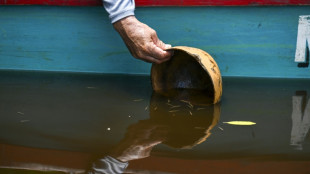
UN to adopt high seas treaty Monday / Photo: Ed JONES - AFP

 Trump denies offering to sell arms to China's Xi

 Wemby ready for NBA Spurs to move rivals in climb to top

 Ukraine to postpone some spending amid delays in aid: PM

 Tuchel says Czech Republic game 'not yet a must-win'

 MaXhosa puts South Africa on the Paris fashion map

 Rose, Scott among 2027 World Golf Hall of Fame finalists

 Brunson says NBA champion Knicks can't get satisfaction

 France puts out largest wildfire since 1949

 Real Madrid's Perez summoned over Barcelona referee payments comments

 Oil takes off again, Wall Street dips after Trump rejects Iran truce offer

 AlgoQuant Asset Management Selects Liquid Mercury to Enhance Digital Asset Trading Infrastructure

 UK to reopen refugee resettlement scheme to push 'safe' migration

 Pope urges Europe to help combat 'lies and deceit' in world affairs

 Iranian lawyer Nasrin Sotoudeh wins Council of Europe's rights prize
 French far-right's Bardella denies alleged 2013 antisemitic comments
 Oil up, Wall Street dips after Trump rejects Iran truce offer

 Gakpo withdraws from Netherlands squad

 SpaceX puts Starship megarocket in orbit for first time
 Iran denies link to suspected bomb plot at UK airbase used by US

 Ex-boss Mancini says City charges 'not my concern'

 Berlin Marathon winner Assefa finished race with torn Achilles

 Comedian convicted for Erdogan 'insult' but freed pending appeal

 French prosecutors seek two-year sentence for ex-minister Dati in graft case

 Eala makes fast start as weather and transport woes hit Asian Games

 Hurricane Polo approaches Mexico, threatens severe damage

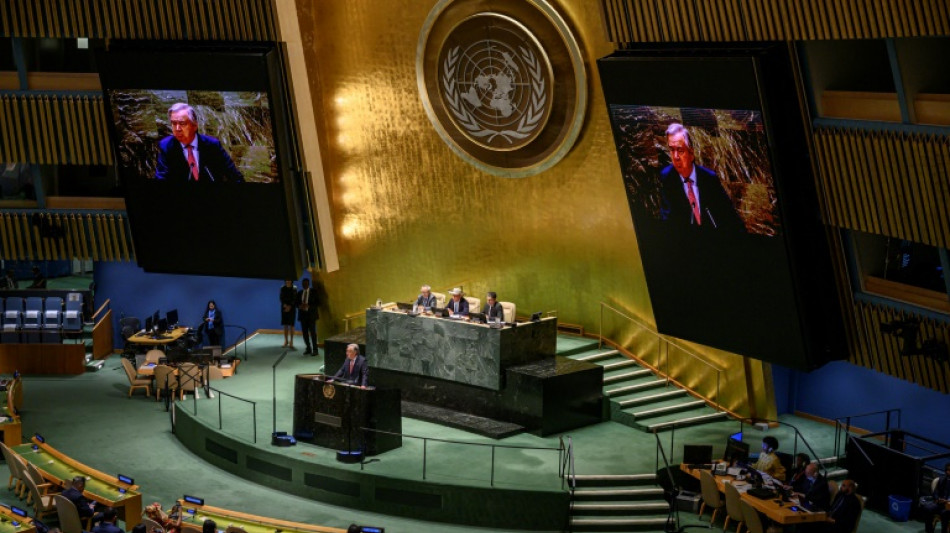
The world's first international treaty to protect the high seas is scheduled to be adopted Monday at the United Nations, a huge step for the "historic" environmental accord after more than 15 years of discussions.
"It's a historic moment," Minna Epps, ocean team director of the International Union for the Conservation of Nature, told AFP. But "it's appalling that it took so long."
The landmark treaty would establish a legal framework to extend swathes of environmental protections to international waters, which make up more than 60 percent of the world's oceans.
Following four years of official negotiations, UN member states finally agreed on the text for the treaty in March after a flurry of final, marathon talks.
Since then, the text has been pored over by the UN's lawyers and translators to make sure it matches in the body's six official languages.
But the journey won't be over Monday. After the UN adopts the treaty, it will need to be ratified by at least 60 member states to go into effect.
"Humanity counts on the ocean. But can the ocean count on us?" UN Secretary-General Antonio Guterres asked on Twitter recently, calling for more maritime protections.
Scientists have increasingly come to realize the importance of oceans, which produce most of the oxygen we breathe, limit climate change by absorbing CO2, and host rich areas of biodiversity, often at the microscopic level.
But with so much of the world's oceans lying outside of individual countries' exclusive economic zones, and thus the jurisdiction of any single state, providing protection for the so-called "high seas" requires international cooperation.
The result is that they've been long ignored in many environmental fights, as the spotlight has been on coastal areas.
- Marine reserves and impact studies -
A key tool in the treaty will be the ability to create protected marine areas in international waters.
Currently, about one percent of the high seas are protected by any sort of conservation measures.
That's a drop in the bucket for what's required to achieve goals to set aside for protection 30 percent of the world's oceans and lands by 2030, as agreed by world governments in a separate historic accord reached in Montreal in December.
Without the ratification of the high seas treaty, "we're not going to achieve 30x30. It's as simple as that," said Jessica Battle, an ocean policy expert with the World Wildlife Fund.
The treaty, officially known as the treaty on "Biodiversity Beyond National Jurisdiction" or BBNJ, also introduces requirements to carry out environmental impact studies for proposed activities to be carried out in international waters.
Such activities, while not listed in the text of the treaty, would include anything from fishing and maritime transport to more controversial pursuits, like deep-sea mining or even geo-engineering programs aimed at fighting global warming.
The treaty also establishes principles for sharing the benefits of "marine genetic resources" (MGR) collected by scientific research in international waters -- a sticking point that almost derailed last-minute negotiations in March.
Developing countries, which often don't have the money to finance such expeditions, fought for benefit-sharing rights, hoping to not get left behind by what many see as a huge future market in the commercialization of MGR, especially by pharmaceutical and cosmetic companies searching for "miracle molecules."
After the text is adopted, observers think it won't be difficult to find 60 countries to ratify the agreement, putting it into force.
The High Ambition Coalition for the BBNJ, which pushed for the treaty, counts some 50 or so countries as members, including those of the European Union, as well as Chile, Mexico, India and Japan.
"What we are hopeful for is that once the treaty enters into force, other countries will, even if they weren't the first 60... want to become a part of this agreement in order to help shape the future direction of it," said Liz Karan, an ocean governance campaigner with Pew Charitable Trusts.
While the treaty is a big step forward in establishing the governance of international waters, plenty of questions remain, to be taken up by future BBNJ Conference of the Parties meetings.
O.Mousa--SF-PST