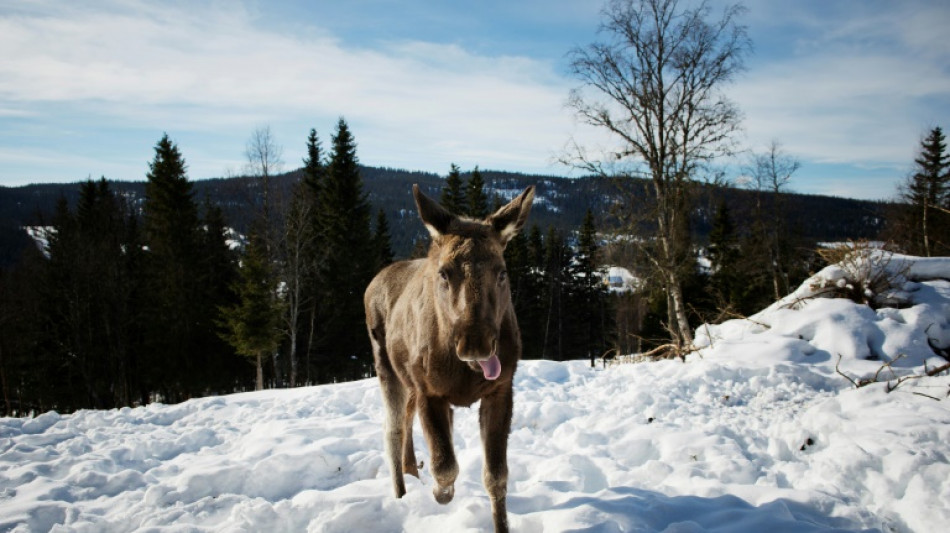
Slow-paced nature TV captivates Swedish audiences / Photo: Jonathan NACKSTRAND - AFP/File

 Rose, Scott among 2027 World Golf Hall of Fame finalists
 Brunson says NBA champion Knicks can't get satisfaction

 France puts out largest wildfire since 1949
 Real Madrid's Perez summoned over Barcelona referee payments comments
 Oil takes off again, Wall Street dips after Trump rejects Iran truce offer
 AlgoQuant Asset Management Selects Liquid Mercury to Enhance Digital Asset Trading Infrastructure
 UK to reopen refugee resettlement scheme to push 'safe' migration
 Pope urges Europe to help combat 'lies and deceit' in world affairs
 Iranian lawyer Nasrin Sotoudeh wins Council of Europe's rights prize

 French far-right's Bardella denies alleged 2013 antisemitic comments

 Oil up, Wall Street dips after Trump rejects Iran truce offer

 Gakpo withdraws from Netherlands squad

 SpaceX puts Starship megarocket in orbit for first time
 Iran denies link to suspected bomb plot at UK airbase used by US
 Ex-boss Mancini says City charges 'not my concern'
 Berlin Marathon winner Assefa finished race with torn Achilles

 Comedian convicted for Erdogan 'insult' but freed pending appeal

 French prosecutors seek two-year sentence for ex-minister Dati in graft case
 Eala makes fast start as weather and transport woes hit Asian Games

 Hurricane Polo approaches Mexico, threatens severe damage
 Energy markets rally after Trump rejects Iran truce offer
 Japanese convenience store enlists Lady Gaga to bolster recruitment
 Seoul summons Ukraine envoy in row over North Korean POWs

 Ireland 'raised awareness worldwide' in Israel game: Hallgrimsson

 Colombian police capture wife, daughter of Ecuador drug lord
Using dozens of cameras set up throughout Sweden's massive forests, weeks-long live broadcasts of elk and other wild animals, or just as often not much at all, have captured Swedish audiences' hearts.
As three elks timidly approach a lake on screen, comments next to the live feed flood in. "Go on!", "Jump in!", "They're beautiful!" people write before the elk eventually turn back and move away.
It's a typical scene from the programme "Den Stora Algvandringen" ("The Great Elk Migration"), another example of so-called "slow TV", where things are just left to happen at their own pace and are an antidote to the stress of everyday life.
The genre was originally initiated in 2009 in Norway with the broadcast of a seven-hour recording from a camera attached to a train travelling through the snowy countryside.
Aired for a few weeks each spring by public broadcaster SVT on TV and online, "Den Stora Algvandringen" attracts a large community that watches and comments on the animals' every move.
"Moose (elks) are called the kings of the forest," Ingvar Persson, a regular viewer, told AFP.
There are over 300,000 of them in Sweden.
- Popular -
"They are a very special symbol for Swedish people," the 61-year-old added.
A hunter in his spare time, Persson said he enjoys the slow and natural pace of the show.
"It's kind of relaxing and also fascinating... Most of the time you spend in a forest there won't be that much happening.
"It's basically wind blowing and you are waiting for something hopefully showing up. You might think that a day spent waiting would be a day lost but it's not," Persson said.
Launched five years ago, the production has been a major success in the Scandinavian country, with viewers logging a combined 12 million hours in 2022. The latest broadcasts started on April 23 and 2023 looks to be a record year.
"I had no idea it would be this popular," producer Johan Erhag said.
"On all the social media, everything is very stressed. There's a lot of music in programmes. There's a lot of speaking. And this is the totally opposite way," Erhag explained.
- Not like Disney -
"We can't decide what happens... We don't want to do a Disney programme where everything is perfect. I mean, this is nature, anything can happen. And we really want to show what it is like," he added.
The video feed is monitored in real time from a control room lined with screens.
Teams work shifts day and night to offer alternating viewpoints from 30 cameras -- some of which can be controlled remotely -- scattered around the Kullberg region in the centre of the country.
In the spring, the region is known to be a popular route for large mammals heading to new pastures.
"Even if it's not a motion forward, there are still many things to look at and it still communicates this feeling of nature," Anders Lindberg, a columnist for Swedish newspaper Aftonbladet, told AFP.
"It's a form of meditation, which I think for many people is something that they need in their lives, and something they lack for example in big cities like Stockholm," he added.
"It's TV, it's show business and it's quite good show business. I think this could be exported to other countries also. The whole concept of sitting and watching nothing happening for hours and hours could be quite healthy for more people than us".
Q.Bulbul--SF-PST