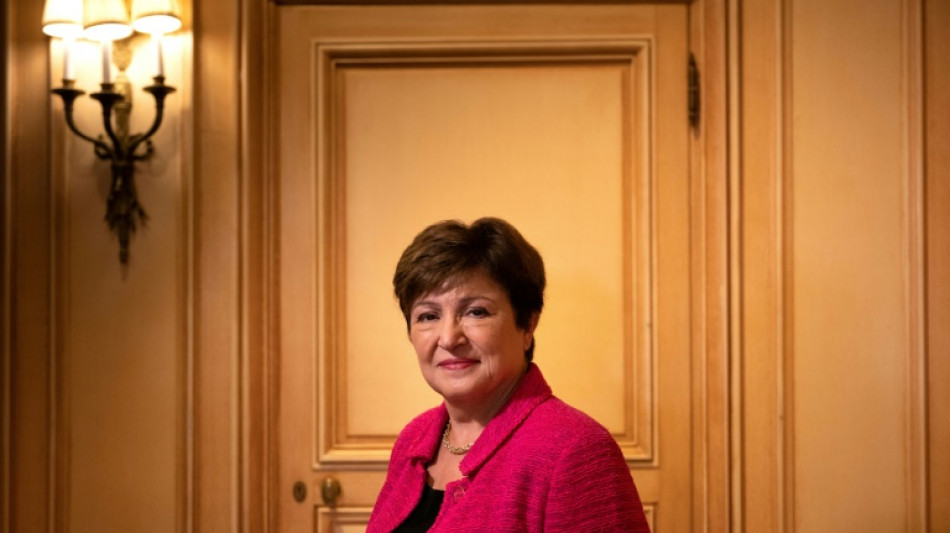
World Bank, IMF spring meetings to get underway in complex economic environment / Photo: Brendan Smialowski - AFP

 Oil takes off again, Wall Street dips after Trump rejects Iran truce offer

 AlgoQuant Asset Management Selects Liquid Mercury to Enhance Digital Asset Trading Infrastructure
 UK to reopen refugee resettlement scheme to push 'safe' migration

 Pope urges Europe to help combat 'lies and deceit' in world affairs

 Iranian lawyer Nasrin Sotoudeh wins Council of Europe's rights prize
 French far-right's Bardella denies alleged 2013 antisemitic comments
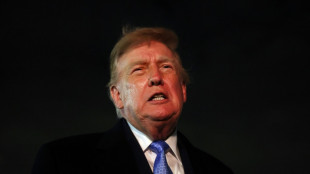 Oil up, Wall Street dips after Trump rejects Iran truce offer

 Gakpo withdraws from Netherlands squad

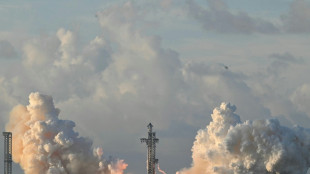 SpaceX puts Starship megarocket in orbit for first time
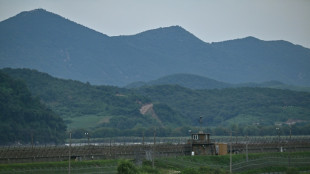
 Iran denies link to suspected bomb plot at UK airbase used by US
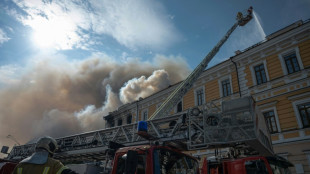
 Ex-boss Mancini says City charges 'not my concern'

 Berlin Marathon winner Assefa finished race with torn Achilles

 Comedian convicted for Erdogan 'insult' but freed pending appeal

 French prosecutors seek two-year sentence for ex-minister Dati in graft case

 Eala makes fast start as weather and transport woes hit Asian Games

 Hurricane Polo approaches Mexico, threatens severe damage

 Energy markets rally after Trump rejects Iran truce offer
 Japanese convenience store enlists Lady Gaga to bolster recruitment

 Seoul summons Ukraine envoy in row over North Korean POWs

 Ireland 'raised awareness worldwide' in Israel game: Hallgrimsson

 Colombian police capture wife, daughter of Ecuador drug lord

 More Asian Games woes as bus takes Pakistan team to wrong venue

 Radio frequencies vital to Earth observation must be protected: UN
 Comedian on trial for insulting Erdogan in standup show

 Women's Fashion Week kicks off in Paris

The World Bank and International Monetary Fund's spring meetings get underway later this week with an ambitious reform and fundraising agenda likely to be overshadowed by concerns over high inflation, rising geopolitical tension and financial stability.
"Growth remains historically weak -— now and in the medium term," IMF managing director Kristalina Georgieva said during a speech last week.
The fund now expects global growth to fall below three percent this year, and to remain at close to three percent for the next half a decade -- its lowest medium-term prediction since the 1990s.
Close to 90 percent of the world's advanced economies will experience slowing growth this year, while Asia's emerging markets are expected to see a substantial rise in economic output -- with India and China predicted to account for half of all growth, she said.
Low-income countries are expected to suffer a double shock from higher borrowing costs and a decline in demand for their exports, which Georgieva said could fuel poverty and hunger to increase.
Updated growth projections published in the IMF's World Economic Outlook on Tuesday will provide a broader look at how different countries are coping, with additional publications to detail fiscal and financial challenges to the global economy.
- Tackling inflation remains a priority -
This year's spring meeting will be held against the backdrop of high inflation and ongoing concerns about the health of the banking sector following the dramatic collapse of Silicon Valley Bank.
Georgieva told AFP last week that central banks should continue battling high inflation through interest-rate hikes, despite concerns that it could further inflame the banking sector.
"We don't envisage, at this point, central banks stepping back from fighting inflation," she said during an interview on Thursday.
"Central banks still have to prioritize fighting inflation and then supporting, through different instruments, financial stability," she said.
Ahead of the spring meetings, the IMF and World Bank also called on wealthier countries to help plug a $1.6-billion hole in a concessional lending facility for low-income countries that was heavily-used during the Covid-19 pandemic.
Many low-income countries are now facing mounting debt burdens due in part to the higher interest-rate environment.
- US pushes for World Bank reforms -
The spring meeting also provides an opportunity to make progress on an ambitious US-backed agenda to reform the World Bank so it is better-prepared to tackle long-term issues like climate change.
US Treasury Secretary Janet Yellen told AFP in an interview that she expects member states will agree to update the World Bank's mission statement to include "building resilience against climate change, pandemics, and conflict and fragility," to its core goals.
Yellen said she also expects an agreement to "significantly" stretch the World Bank's financial capacity, which "could result in an additional $50 billion in extra lending capacity over the next decade."
The changes will likely fall to the bank's next president to implement, with current World Bank president David Malpass due to step down early from a tenure marked by concerns over his position on climate change.
Malpass is widely expected to be replaced by US-backed former Mastercard chief executive officer Ajay Banga, who was the only person nominated for the position.
I.Yassin--SF-PST