Emissions cuts can slash heat deaths in Mideast, N. Africa: study / Photo: AHMAD AL-RUBAYE - AFP

 Oil takes off again, Wall Street dips after Trump rejects Iran truce offer

 AlgoQuant Asset Management Selects Liquid Mercury to Enhance Digital Asset Trading Infrastructure

 UK to reopen refugee resettlement scheme to push 'safe' migration

 Pope urges Europe to help combat 'lies and deceit' in world affairs
 Iranian lawyer Nasrin Sotoudeh wins Council of Europe's rights prize

 French far-right's Bardella denies alleged 2013 antisemitic comments

 Oil up, Wall Street dips after Trump rejects Iran truce offer

 Gakpo withdraws from Netherlands squad

 SpaceX puts Starship megarocket in orbit for first time
 Iran denies link to suspected bomb plot at UK airbase used by US

 Ex-boss Mancini says City charges 'not my concern'

 Berlin Marathon winner Assefa finished race with torn Achilles

 Comedian convicted for Erdogan 'insult' but freed pending appeal

 French prosecutors seek two-year sentence for ex-minister Dati in graft case

 Eala makes fast start as weather and transport woes hit Asian Games

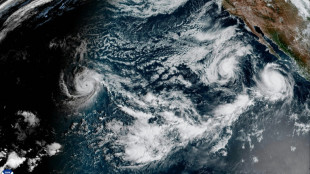 Hurricane Polo approaches Mexico, threatens severe damage

 Energy markets rally after Trump rejects Iran truce offer
 Japanese convenience store enlists Lady Gaga to bolster recruitment

 Seoul summons Ukraine envoy in row over North Korean POWs

 Ireland 'raised awareness worldwide' in Israel game: Hallgrimsson

 Colombian police capture wife, daughter of Ecuador drug lord

 More Asian Games woes as bus takes Pakistan team to wrong venue

 Radio frequencies vital to Earth observation must be protected: UN

 Comedian on trial for insulting Erdogan in standup show

 Women's Fashion Week kicks off in Paris

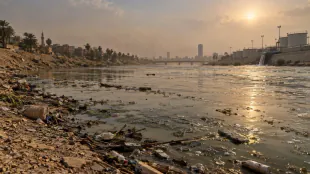
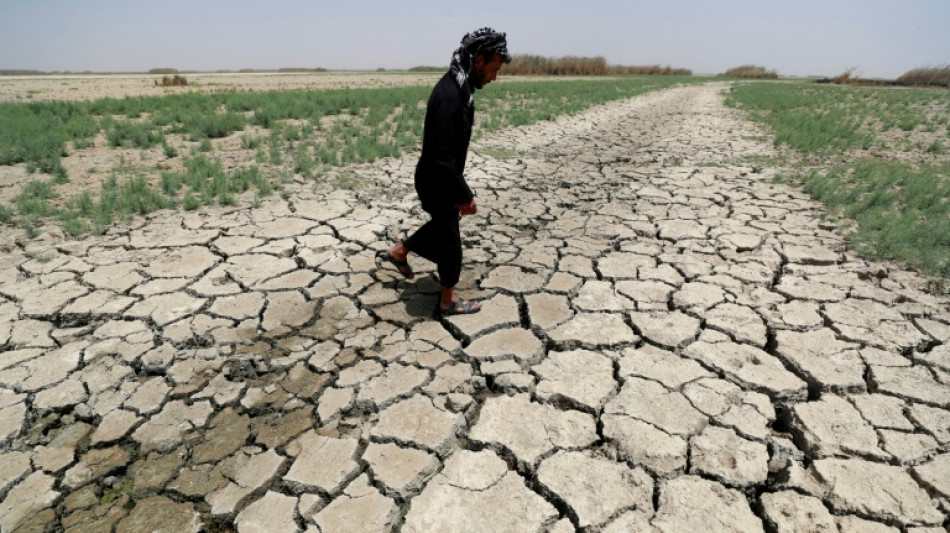
Meeting world targets to limit climate change would avert hundreds of thousands of heat-related deaths in the Middle East and North Africa, scientists said on Tuesday, urging the region to adapt better.
A modelling study published in The Lancet Planetary Health journal found slashing carbon emissions to limit the rise in Earth's average temperature to two degrees Celsius would reduce heat-related deaths in the region by 80 percent compared to a high-emissions scenario.
The regional focus on the heat risk came as Dubai prepares to host the United Nations COP28 climate summit in November.
Countries have pledged to limit global warming to 1.5C under the Paris climate accords, prompting efforts to switch to low-carbon energy sources.
In the highest-emissions scenario without cuts, around 123 people per 100,000 in the region would die per year from heat-related causes by the end of this century, according to the study, led by specialists at the London School of Hygiene and Tropical Medicine.
That would be 60 times greater than the current heat-death rate and far higher than in other regions of the world.
Of the 19 countries analysed, Iran was expected to have the highest annual death rate under a high-emissions scenario -- 423 deaths per 100,000 of population.
Lead author Shakoor Hajat told AFP temperatures were projected to be very high in parts of Iran. Ageing will also occur at a faster rate there than in many other countries in the region.
Hajat said health impacts would be "catastrophic" if the 2C target were not reached.
"Even with stronger action, countries in the region need to develop ways other than air-conditioning to protect their citizens from the dangers of extreme heat," he said.
"Public health measures such as national heat protection plans and heat alert warning systems could be introduced.
"These are common in countries in Europe and North America and parts of Asia, but not in the Middle East," he said.
"Many MENA (Middle East and North Africa) countries also need to strengthen their existing health systems to better prepare for climate change impacts."
C.Hamad--SF-PST