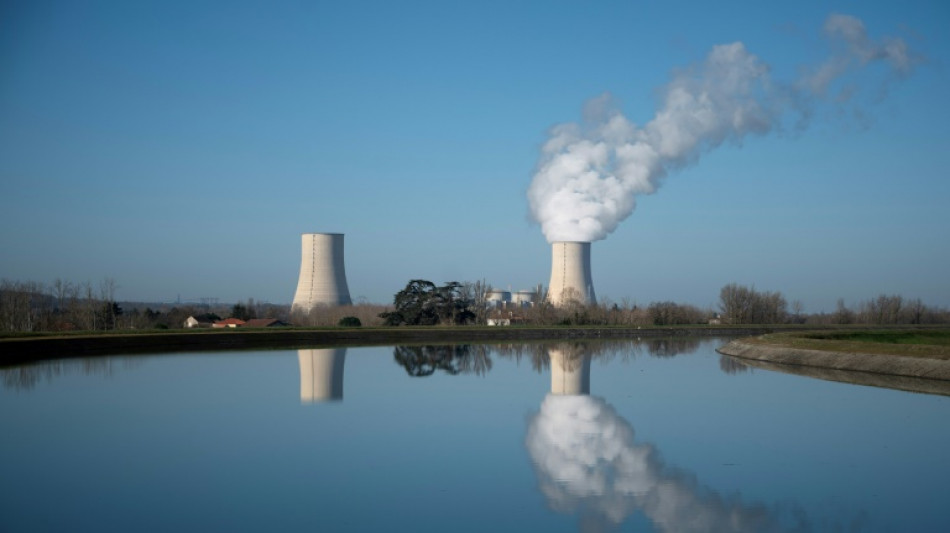
EU to unveil green tech plans to take on US, China / Photo: Matthieu RONDEL - AFP/File

 Oil up, Wall Street dips after Trump rejects Iran truce offer

 Gakpo withdraws from Netherlands squad

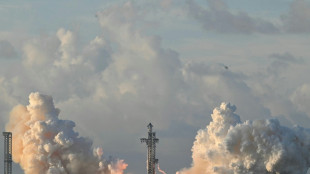 SpaceX puts Starship megarocket in orbit for first time
 Iran denies link to suspected bomb plot at UK airbase used by US
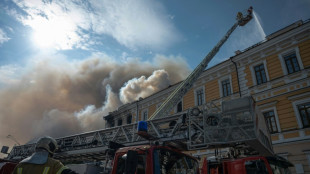
 Ex-boss Mancini says City charges 'not my concern'

 Berlin Marathon winner Assefa finished race with torn Achilles

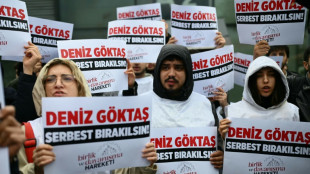 Comedian convicted for Erdogan 'insult' but freed pending appeal
 French prosecutors seek two-year sentence for ex-minister Dati in graft case
 Eala makes fast start as weather and transport woes hit Asian Games
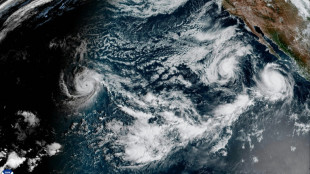 Hurricane Polo approaches Mexico, threatens severe damage
 Energy markets rally after Trump rejects Iran truce offer
 Japanese convenience store enlists Lady Gaga to bolster recruitment

 Seoul summons Ukraine envoy in row over North Korean POWs
 Ireland 'raised awareness worldwide' in Israel game: Hallgrimsson

 Colombian police capture wife, daughter of Ecuador drug lord
 More Asian Games woes as bus takes Pakistan team to wrong venue

 Radio frequencies vital to Earth observation must be protected: UN
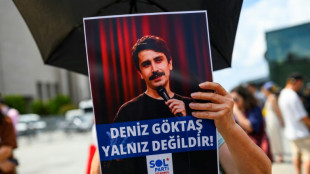 Comedian on trial for insulting Erdogan in standup show

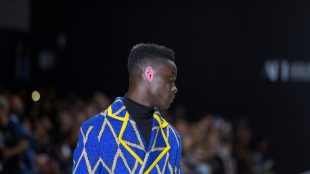 Women's Fashion Week kicks off in Paris
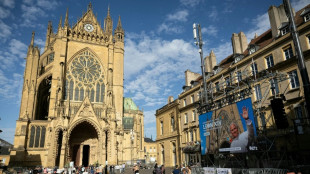 Pope arrives in French border city to speak on united Europe

 The wildfires choking Indonesia, sparking regional haze
 PU Prime Deepens Argentina Presence Through FX Expo Buenos Aires 2026

 Nothing to seal here: NZ police help stranded pup home

 White House releases list of products US, China could tax less
 'Pseudo-journalism': Partisan 'news' sites target US midterms

The EU will reveal hotly debated proposals on Thursday to boost spending on clean tech, possibly overcoming internal divisions to include nuclear energy in the mix, to confront growing industrial competition from the United States and China.
Brussels wants to protect European businesses by prioritising green technologies, including solar and wind, for more financing and greater regulatory freedom.
The European Commission, the EU's executive arm, will publish draft plans for a Net Zero Industry Act on Thursday to meet its ambitious target to become a "climate neutral" economy with zero greenhouse gas emissions by 2050.
The proposal was to be made public Tuesday, but a standoff in the commission over whether to include nuclear power, a low-carbon energy, delayed the announcement. Heated discussion was expected until the last minute.
Another landmark draft regulation will also be unveiled on Thursday that aims to secure supplies of critical raw materials needed to make the most of the electrical products consumers use today, including smartphones and electric vehicles.
Green technology production took on greater urgency after the United States unveiled a $370-billion "buy American" subsidy programme for tax credits and clean energy subsidies, known as the Inflation Reduction Act (IRA) last year.
European businesses have warned that lavish subsidies elsewhere alongside lower energy bills could tempt the continent's firms to Asia or North America, and EU officials have complained that the IRA will discriminate against Europe's industry.
- Matching subsidies -
The commission has toiled over a response to the IRA despite divisions in the 27-member bloc, with some countries arguing for looser subsidy rules to allow them to back their own firms with state aid, and others opposed over fears of triggering a subsidies war.
Last week, the commission loosened state aid rules for green technology and allowed members to match subsidies offered in other states.
The clean technology sector is expected to be worth 600 billion euros ($630 billion) worldwide by 2030, more than three times current levels.
Under draft proposals seen by AFP, the commission now wants at least 40 percent of green tech to be produced in the EU by 2030.
This will be achieved, the commission hopes, by ensuring businesses obtain permits faster and says public tenders would be considered based on green criteria that could favour European companies.
If nuclear is included as a green technology, that would be a victory for around a dozen countries including France, although there is stringent opposition from anti-nuclear Germany.
Some have questioned the bloc's "protectionist" objectives.
"The purpose of this law and how the draft was written is not to achieve faster decarbonisation, but it's basically to reshore production and that is a protectionist goal," said Niclas Poitiers, research fellow at the Brussels-based Bruegel think tank.
"This is about making sure that batteries and solar panels are produced in the EU."
Commission President Ursula von der Leyen, however, this week dismissed such claims and insisted the proposal was in fact "a very open act".
- 'Vulnerable' EU -
The EU also wants to meet the rapidly growing need for raw materials, much of which it currently imports from China, to avoid relying on one country for a specific product.
When Moscow invaded Ukraine last year, the EU was brought to its knees by higher energy costs as Brussels raced to find fossil fuels elsewhere instead of Russia.
"The EU's supply of raw materials is highly concentrated on a few countries... This makes us vulnerable to supply disruptions or aggressive actions," the bloc's internal market commissioner Thierry Breton said.
According to the leaked proposals, the EU wants the bloc to meet 10 percent of the demand for mining and extraction of raw materials.
It also says the EU should not rely on one single country for more than 70 percent of imports for any strategic raw material by 2030.
N.Shalabi--SF-PST