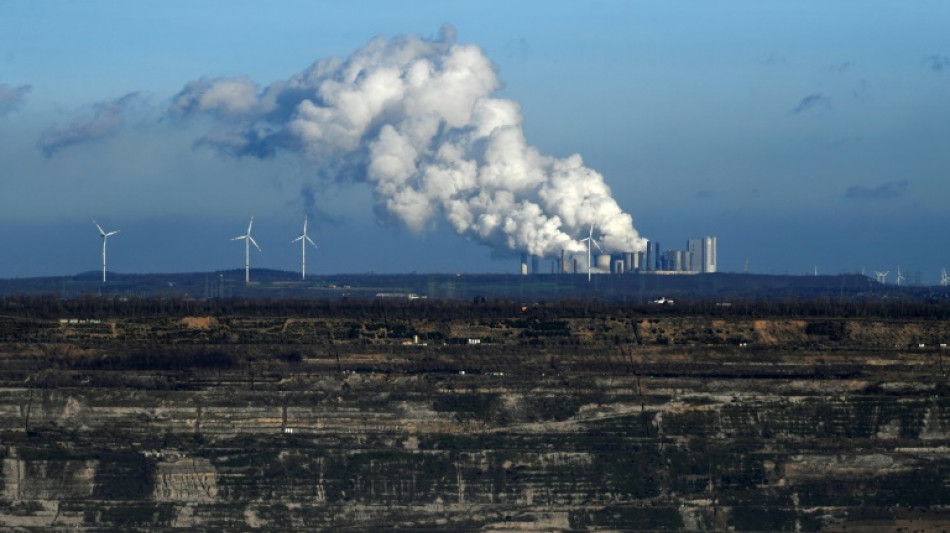
Renewables help offset rise in coal emissions, IEA says / Photo: Ina FASSBENDER - AFP/File

 مصلحة مياه القدس توحّد جهودها مع بلديات الرام ومخماس لتعزيز استدامة المياه

 Saudi PIF Retains Top Sovereign Wealth Fund Brand Title for Third Year

 Binance Secures $6.5 Billion Asset-Freezing Order from Abu Dhabi Court

 Malta PM Abela Refuses Parliamentary Question on Maritime Borders Amid Turkey-Libya Deal

 محافظ طولكرم يدعو لمبادرة مجتمعية لخفض تكاليف الأعراس وتعزيز التكافل
A jump in renewables and efficiency efforts helped blunt a feared runaway in carbon emissions growth from a surge in coal use last year due to the global energy crisis, the IEA said Thursday, even if CO2 emissions hit a new record.
In the end, global energy-related emissions rose by less than one percent but are still on an unsustainable growth trajectory, the International Energy Agency said in a new report.
"The impacts of the energy crisis didn't result in the major increase in global emissions that was initially feared –- and this is thanks to the outstanding growth of renewables, EVs, heat pumps and energy-efficient technologies," IEA executive director Fatih Birol said.
"Without clean energy, the growth in CO2 emissions would have been nearly three times as high," he added.
The additional 321 million tonnes of energy-related emissions took the total to a new high of more than 36.8 billion tonnes. Energy-related emissions accounted for more than three-quarters of the production of greenhouse gasses.
The 0.9 percent increase was less than the global economic growth rate of 3.2 percent in 2022, returning to a decade-long trend broken last year by the six percent jump due to the post-Covid rebound in global economic activity.
Russia's sharp cutback in natural gas deliveries to Europe last year following international sanctions over Moscow's invasion of Ukraine triggered a global energy crisis.
Not only did many European countries increase their use of coal-fired power plants, Asian countries did so even more as the price of liquefied natural gas skyrocketed.
CO2 emissions from coal grew 1.6 percent, which was around one-quarter of the rate in 2021, the IEA said.
Nevertheless, emissions growth still exceeded by far the average growth rate of coal emissions during the past decade, and more than offset the 1.6 percent drop in emissions from lower natural gas consumption.
The IEA noted that CO2 emissions grew the fastest from oil, at 2.5 percent, but still remain below pre-pandemic levels. The increase was driven in large part to the post-Covid rebound in air traffic.
The Paris-based IEA said China's emissions overall were flat last year due to strict Covid-19 measures and declining construction activity, which led to weaker economic growth and reductions in industrial and transport emissions.
But excluding China, emissions from emerging and developing economies in Asia increased 4.2 percent due to their rapid economic growth and rising demand for energy.
Birol also took a swipe at fossil fuel companies, which he noted were making record revenues thanks to the jump in energy prices.
"We still see emissions growing from fossil fuels, hindering efforts to meet the world's climate targets," he said.
Fossil fuel companies "need to take their share of responsibility, in line with their public pledges to meet climate goals," Birol said, urging them to review their strategies in order to produce "meaningful emissions reductions".
L.Hussein--SF-PST



