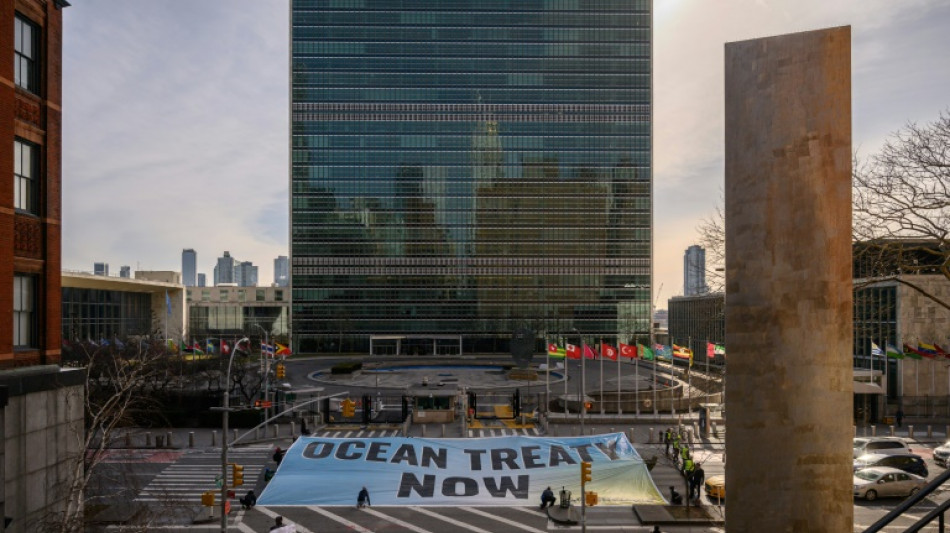
UN head says high seas treaty must be 'ambitious' / Photo: Ed JONES - AFP

 Oil up, Wall Street dips after Trump rejects Iran truce offer

 Gakpo withdraws from Netherlands squad

 SpaceX puts Starship megarocket in orbit for first time
 Iran denies link to suspected bomb plot at UK airbase used by US
 Ex-boss Mancini says City charges 'not my concern'

 Berlin Marathon winner Assefa finished race with torn Achilles

 Comedian convicted for Erdogan 'insult' but freed pending appeal

 French prosecutors seek two-year sentence for ex-minister Dati in graft case

 Eala makes fast start as weather and transport woes hit Asian Games

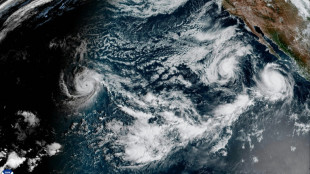 Hurricane Polo approaches Mexico, threatens severe damage

 Energy markets rally after Trump rejects Iran truce offer
 Japanese convenience store enlists Lady Gaga to bolster recruitment

 Seoul summons Ukraine envoy in row over North Korean POWs

 Ireland 'raised awareness worldwide' in Israel game: Hallgrimsson

 Colombian police capture wife, daughter of Ecuador drug lord

 More Asian Games woes as bus takes Pakistan team to wrong venue

 Radio frequencies vital to Earth observation must be protected: UN

 Comedian on trial for insulting Erdogan in standup show

 Women's Fashion Week kicks off in Paris

 Pope arrives in French border city to speak on united Europe
 The wildfires choking Indonesia, sparking regional haze

 PU Prime Deepens Argentina Presence Through FX Expo Buenos Aires 2026

 Nothing to seal here: NZ police help stranded pup home
 White House releases list of products US, China could tax less
 'Pseudo-journalism': Partisan 'news' sites target US midterms

United Nations chief Antonio Guterres urged countries Wednesday to agree a "robust and ambitious" treaty to protect the high seas, as time starts to run out for negotiators.
After 15 years of formal and informal talks, delegates have been meeting in New York since February 20 to discuss a text that aims to protect nearly half the planet.
It is the third "final" negotiating round in less than a year and is due to end Friday.
"Our ocean has been under pressure for decades. We can no longer ignore the ocean emergency," Guterres said in a message read to negotiators.
"The impacts of climate change, biodiversity loss and pollution are being keenly felt around the globe, affecting our environment, our livelihoods and our lives," the secretary-general added.
"In adopting a robust and ambitious agreement at this meeting, you can take an important step forward in countering these destructive trends and advancing ocean health for generations to come."
The high seas begin at the border of countries' exclusive economic zones, which extend up to 200 nautical miles (370 kilometers) from coastlines. They thus fall under the jurisdiction of no country.
While the high seas comprise more than 60 percent of the world's oceans and nearly half the planet's surface, they have long drawn far less attention than coastal waters and a few iconic species.
An updated draft text released last weekend is still full of parenthetical clauses and multiple options on some major issues that will determine the robustness of the final agreement.
Observers who spoke with AFP however were optimistic Wednesday thanks to significant progress in talks over recent days.
"The first week felt like we were going around in circles, but we feel like the pace is very much picking up and the views are moving closer to one another," said Greenpeace's Laura Meller.
"A strong global ocean treaty is very, very reachable," she added.
Glen Wright, a researcher at the Institute for Sustainable Development and International Relations, said he wouldn't call the proposal "ambitious."
"But I think it's strong enough to be meaningful, to set up something that states can use in the future to build on," he added.
Still under dispute is how the marine protected areas, a core part of any future treaty's mandate, will be created.
Several observers told AFP that China is pushing for the future governing body of any eventual treaty, known as the conference of the parties (COP), to determine the sanctuaries by consensus rather than a majority vote.
They say China is trying to give itself a de facto veto, like the one Beijing has used for years to prevent the creation of other marine protected areas by the Commission for the Conservation of Antarctic Marine Living Resources (CCAMLR).
How to divide eventual profits from the collection -- by pharmaceutical, chemical or cosmetic manufacturers, for example -- of newly discovered marine substances is also causing division.
O.Salim--SF-PST