
Business and consumers hamper climate fight: report / Photo: Lionel BONAVENTURE - AFP

 SGFX Creates a Standout Brand Experience at Forex Expo Dubai 2026

 Pope urges Europe to help combat 'deceit and lies' in international ties

 Injured Buttler to miss England ODI series in Pakistan
 Madrid housing protesters vow to maintain pressure on government
 In kayaks or waist-deep in floodwater, shoppers return to Bangkok markets

 UK police probes Iran link to air base bomb scare: media
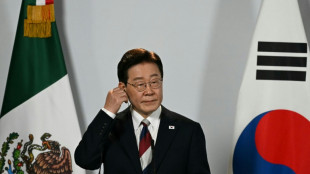
 Eala blasts into Asian Games quarters in just 55 minutes
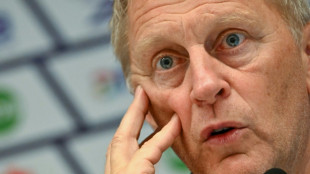
 Taiwan gender-row boxer Lin Yu-ting guarantees Asian Games medal

 Comedian on trial for allegedly insulting Erdogan in standup show

 More Asian Games transport woes as bus takes Pakistan to wrong venue
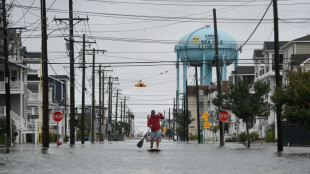
 Death toll in South Africa bar shooting rises to 18
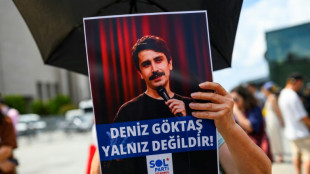
 Aide to Venezuelan opposition leader returns from exile

 Messi and Alcaraz love it, now padel takes step closer to Olympics

 Tolls mount in Thailand, Myanmar floods

 Why India's opposition wants top poll official out

 PU Prime Strengthens UAE Momentum with Strong Showing at Forex Expo Dubai 2026

 Eight dead in Thailand floods since mid-September

 Oil prices spike after Trump rejects Iran truce offer
 Taylor Swift sets new record at MTV VMAs

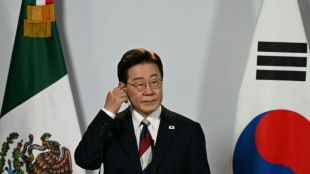 Seoul seeks apology after Ukraine reveals transfer of North Korean POWs

 Messi on target again but Miami downed by Columbus

 In Washington's political cauldron, a fight over foie gras
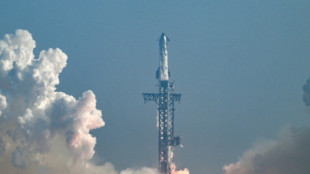
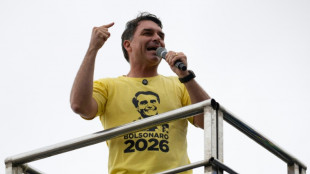 Flavio Bolsonaro: political heir in his father's shadow

 Ravens grab last-second win in Rio as Commanders stop Seahawks

 USA rallies to capture 11th consecutive Presidents Cup

Corporations and consumers are the main obstacle to the emissions cuts needed to keep global warming to the 1.5-degree Celsius limit, researchers said Wednesday, adding that "positive signs" in other areas are not yet enough to meet climate goals.
The report by a multidisciplinary team of researchers warned that staying within the 1.5C goal was "not plausible", but that this could change if societies stepped up their efforts to cut emissions.
"We see all kinds of positive signs, for example, the political protests, divestment decisions, climate litigation cases, transnational initiatives, this is all on the rise," said one of the study authors Anita Engels. "So you could think that we are really on a good track."
But she added: "We need to do so much more".
The report, the Hamburg Climate Futures Outlook, assessed the plausibility of achieving the emissions reductions necessary to limit temperatures in line with the Paris Agreement.
That 2015 deal saw nations agree to limit global warming to well below two degrees Celsius since pre-industrial times, preferably 1.5C.
Researchers looked at 10 societal factors that they considered to be the most important drivers of decarbonisation and found that currently none are yet at a level that would lead to the dramatic emissions reductions needed by 2050.
- Media 'ambivalent' -
Using global databases and computer modelling, the authors found that seven social trends were moving tentatively in the right direction -- including United Nations climate governance, regulation, litigation, and divestment from fossil fuels.
One -- the media -- was seen as "ambivalent".
But the two heading in the wrong direction were corporate responses and consumption patterns, which the researchers said "continue to undermine the pathways to decarbonisation".
The two are closely interlinked, said Engels.
"It would be so much easier if the way the products are produced is regulated in a way that (consumers) are not forced to buy climate destructive products," she told AFP.
The report said it was still too early to assess the potential impact of recent events such as Russia's invasion on Ukraine.
Researchers also looked at six physical processes around the planet, from the melting of ice sheets to fears that a deforested Amazon rainforest will transform into savannah.
Jochem Marotzke from the Max Planck Institute for Meteorology said that these and other physical processes were important, but that "we're not on a slippery slope".
It was human agency that would prove most decisive, he said.
A.Suleiman--SF-PST