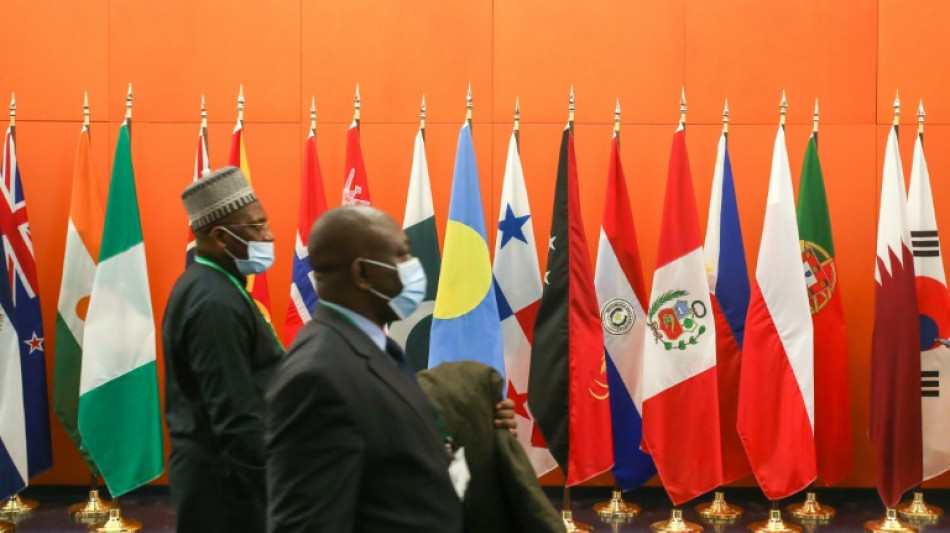
Developing countries stage walk out at UN biodiversity talks / Photo: Lars Hagberg - AFP

 مصلحة مياه القدس توحّد جهودها مع بلديات الرام ومخماس لتعزيز استدامة المياه

 Saudi PIF Retains Top Sovereign Wealth Fund Brand Title for Third Year

 Binance Secures $6.5 Billion Asset-Freezing Order from Abu Dhabi Court

 Malta PM Abela Refuses Parliamentary Question on Maritime Borders Amid Turkey-Libya Deal

 محافظ طولكرم يدعو لمبادرة مجتمعية لخفض تكاليف الأعراس وتعزيز التكافل
Delegates from developing countries at high-stakes UN talks on biodiversity staged a late-night walkout after talks broke down with wealthy nations over the contentious issue of funding, officials and non-profit groups said Wednesday.
The deterioration in dialogue comes on the eve of the high-level phase of negotiations involving the environment ministers of the 196 members at the summit, called COP15.
At stake is the health of the Earth's ecosystems and the million plant and animal species threatened with extinction as a result of habitat destruction, pollution and the climate crisis.
"The countries left the meeting because they considered that it was impossible to make progress in the discussions because developed countries were not ready to compromise," the nonprofit Avaaz said in an update.
David Ainsworth, a spokesman for the UN Environment Programme, told reporters: "The atmosphere deteriorated when the group started discussing concepts, in particular the global biodiversity fund proposal" -- a new fund sought by low income nations to help them achieve their objectives.
Wealthy nations oppose creating a new mechanism and would rather reform existing financial flows.
China, which is chairing the summit, was set to hold a major meeting involving all heads of delegations to resolve the impasse.
The current finance gap for biodiversity ranges from between $600 billion to almost $825 billion per year, according to experts.
A group of developing nations including Gabon, Brazil, South Africa and Indonesia this year called for rich countries to provide at least $100 billion annually -– rising to $700 billion a year by 2030 -- for biodiversity.
Major targets include a cornerstone pledge to protect 30 percent of the world's land and seas by 2030, eliminating harmful fishing and agriculture subsidies and tackling invasive species and reducing pesticides.
P.Tamimi--SF-PST



