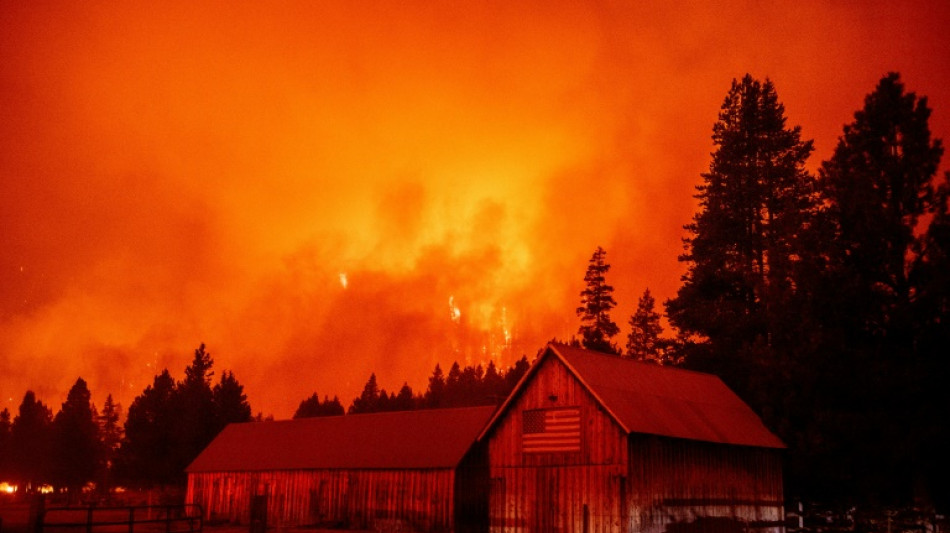
World funds own destruction with $1.8 tn subsidies: study

 Kubayi Warns Residents to Vacate Hijacked Buildings as State Prepares Seizures

 Van Gogh’s ‘Châtaigniers en Fleurs’ Sets $285m Record at Sotheby’s

 محكمة الاحتلال تمدد اعتقال مدير مستشفى كمال عدوان دون تهمة

 Global Scams Remain Widespread: Nearly Two in Three Adults Worldwide Report Scam Encounters, 9% Lost Money

 OPEC Chief: Oil to Remain Major Energy Source for Decades Amid Global Shift

 Hyundai Offers £1,000 Deposit Contribution on Black Friday for Tucson, Santa Fe, Kona, Ioniq 9 and Bayon
The world must slash $1.8 trillion in annual subsidies that destroy the environment, according to a study Thursday from business groups including one founded by tycoon Richard Branson.
The report, estimating the value of damaging state subsidies, was commissioned by Branson's nonprofit initiative The B Team and global coalition Business for Nature, which comprises academic, corporate and environmental organisations.
The vast subsidies, totalling two percent of global GDP, fund the "global destruction of nature" and governments worldwide must act, the two organisations added in a statement.
The study "finds the fossil fuel, agriculture and water industries receive more than 80 percent of all environmentally harmful subsidies per year", the organisations concluded.
And they called upon governments to "redirect, repurpose or eliminate" those subsidies by 2030 to help "finance a net zero global economy".
Governments across the world pay an estimated $640 billion in support to the fossil fuel industry, contributing to climate change, air and water pollution and land subsidence, the study found.
Agriculture receives some $520 billion in subsidies that contribute towards soil erosion, water pollution, deforestation, greenhouse gas emissions and loss of biodiversity and natural habitats, it claimed.
And another $350 billion in subsidies for the water industry is said to help fund water pollution and risk ocean and waterway ecosystems.
"Nature is declining at an alarming rate, and we have never lived on a planet with so little biodiversity," said Christiana Figueres, head of The B Team's climate working group.
"At least $1.8 trillion is funding the destruction of nature and changing our climate, while creating huge risks for the very businesses who are receiving the subsidies."
She added that "harmful subsidies must be redirected towards protecting the climate and nature, rather than financing our own extinction".
The study was published one month before the next phase of the UN biodiversity summit COP15 in Geneva.
The research was based on data from the International Energy Agency watchdog and the Organisation for Economic Co-operation and Development, which is a club of industrialised economies that includes wealthy G20 members.
S.AbuJamous--SF-PST



