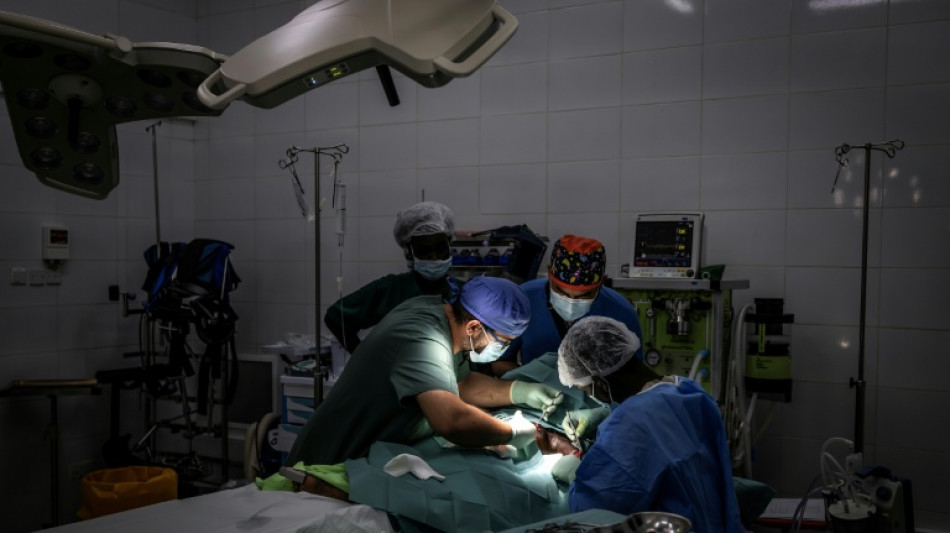
Africa faces child surgery crisis as key anaesthesia runs out / Photo: Luis TATO - AFP

 Dangote to launch $16bn refinery in Kenya
 North Korean leader 'extremely obese': Seoul spy agency

 Yankees and pope-backed White Sox start MLB playoffs with wins

 Malaysia's ex-PM Mahathir in hospital for observation
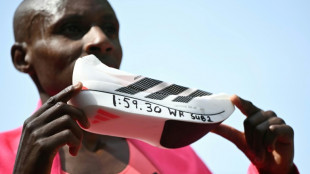 'No limits': Marathon world record holder Sawe chasing history

 Countdown begins to biggest-ever Rugby World Cup

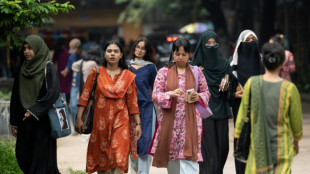 Bangladesh women lose ground after quota reform
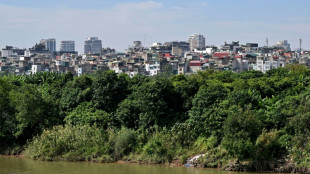 Vietnam admits 'differing opinions' on Hanoi development
 Stocks temper gains as oil pares heavy losses, US data in focus
 New Zealand denies breaching climate commitments to EU

 Albert becomes youngest US scorer in 4-2 win over Chile
 Pirate island's plunging population shows Greece's demographic decline
 With elections ahead, Latvia's Russian-speakers reject Moscow's help
 Brazil football clubs face massive sponsorship blow from betting ban
 ChatGPT maker wants to be the App Store for AI as safety concerns grow
 Women fight fires and sexism in Indonesian Borneo

 Forsling's OT blast lifts Florida over Carolina in NHL opener

 Hurricane Polo sweeps over Mexico's Pacific coast, heads inland

 Grynspan pulls ahead in race to lead UN: diplomat

 Trump touts AI boss pledge to self-regulate

 Oil down, but stocks lower as bond yields rise

 England break down stubborn Czechs to claim first Nations League win
 UN Security Council extends Haiti anti-gang force by 6 months

 Manchester City guilty of Premier League charges: What comes next?
 Man City chief Soriano slams Premier League 'conspiracy theory'

African hospitals face huge new costs as they scramble to replace the main anaesthetic for child operations that is set to run out in 2027, a charity has warned.
Halothane is still widely used across sub-Saharan Africa to put children to sleep for operations, primarily because it can be seven to 10 times cheaper than the newer alternative, sevoflurane.
But the last halothane manufacturer shut down its production line in India in 2023, and stocks are rapidly running out across Africa.
"We don't know exactly when, but I don't think we will have any halothane left by the end of 2027," said Elizabeth Igaga, an anaesthesiologist in Uganda.
Igaga is senior director for programme safety at Smile Train, a charity that carries out more than 100,000 surgeries each year for cleft lips and palates, 90 percent of them for children.
"This halothane situation is a big deal for us. We are committed to them having safe surgery," she said.
While high-end hospitals have already switched to sevoflurane, they represent a tiny fraction of health facilities in sub-Saharan Africa.
The transition has exposed years of under-funding in anaesthesia systems on the continent, with many discovering that machines need to be replaced at a cost of tens of thousands of dollars each.
The announcement that halothane was no longer being produced "set off nationwide panic" in Zambia, said Sompwe Mwansa, president of the country's Society of Anaesthetists.
"We're playing catch-up on equipment needs and training needs," she told AFP.
"It's really been quite a challenging transition period for us, especially for centres that are away from sort of the urban centres."
Across much of Africa, anaesthetics are administered by health workers who are not doctors and will require fresh training for new drugs to avoid expensive wastage, Mwansa added.
The World Federation of Societies of Anaesthesiologists called in 2024 for African governments to urgently budget for the transition.
"Unfortunately, that call has not received the response that the timeline requires," Smile Train said in a statement.
Ugandan and Zambian authorities have responded positively, according to the doctors who spoke to AFP.
But the transition adds millions of dollars to already stretched health budgets, compounded by massive cuts to aid subsidies from Western countries over the past 18 months.
"It may very realistically lead to a reduction in our surgical capacity," said Mwansa.
"Already anaesthesia was a hidden corner of the budget... with many competing interests. It's very concerning," she added.
Adding to concerns, Africa is host to the world's youngest population -- the UN predicts that by 2050, one in four children globally will reside in Africa -- while infant mortality rates remain stubbornly high.
Smile Train is helping with the transition, but cannot do everything and wants African governments to take ownership of the problem.
"We are happy to support, but we also need them to take responsibility," said Igaga.
Z.AbuSaud--SF-PST