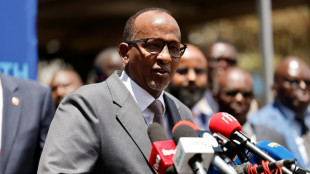
Vaccines facing misinformation spike: WHO experts / Photo: Yuri CORTEZ - AFP

 Myanmar leader lands in Malaysia for migrant return talks
 Indian central bank hikes rates for first time since 2023
 US military on Okinawa face curfew, alcohol ban after murder case
 Fierce lobbying in EU over 'forever chemicals'
 Dodgers beat Braves and Padres avoid sweep in MLB playoffs
 Mourning, war and elections as Israel marks October 7

 Messi says Argentina retirement is 'saddest day of my career'

 Oil rises and stocks fall as Hormuz worries flare

 Pacific presses world for help 'surviving' climate change at pre-COP summit

 Verstappen revival to be put to the test in steamy Singapore
 US woman who survived botched execution is conscious, speaking: lawyers

 Climate champion Australia digging more coal
 Emotion, tears as Messi retires from Argentina national team

 Dodgers push Braves to the brink of MLB playoff exit

 Crisis-stricken Haiti postpones elections

 N. Korea's Kim pledges 'invariable support' in Putin birthday letter
 OGRD Alliance Advances PLPC Multi-Asset Platform Following APHELAR Milestone, Expanding Licensing and Strategic Capital Frameworks

 Emotion, tears as Messi prepares for Argentina farewell

 Kane eyes Ronaldo record after matching England cap mark
 Spain fight back to beat Croatia, Kane adds to record for England

 Merino double helps Spain beat Croatia, reach Nations League quarters

 US stocks hit fresh records as oil stabilizes on rising supplies
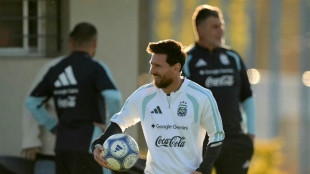 As Messi bows out, Argentines say 'thank you'

 Ronaldo opens door for Portugal return, apologises for walkout

 'Nobody seems to care': Russian city shrugs off plague reports

Vaccine programmes are being challenged by rising misinformation and an uncertain pipeline for research funding, the World Health Organization's immunisation experts said Wednesday.
And the war in the Middle East will likely hamper the fight against polio, the WHO's Strategic Advisory Group of Experts on Immunisation (SAGE) said.
The group held its biannual meeting last week, focusing on Covid-19 jab recommendations, typhoid vaccine dosing schedules and oral polio vaccine doses in routine immunisation.
"Emerging challenges for the future include uncertain funding for vaccine research and development, and misinformation and distorted information that erodes public trust in vaccines," said SAGE.
"Protecting trust and countering misinformation will be a central focus in 2026."
WHO vaccines chief Kate O'Brien said resources would be targeted this year on protecting the roll-out of core immunisation programmes.
"We're in a really deeply changing world for infectious diseases and for vaccine programmes," she said, due to conflicts, economic challenges and health budgets being cut.
Trust in vaccines is being "threatened by misinformation", she told a press conference.
Robert F. Kennedy Jr, the US health chief, has long voiced anti-vaccine rhetoric and inaccurate claims connecting vaccines and autism.
A WHO review of all available evidence issued in December reaffirmed there is no link between vaccines and autism -- contrary to the theories being propagated in the United States and beyond.
"Vaccines do not cause autism and they never have caused autism," stressed O'Brien.
She said vaccines had saved 154 million lives over the past 50 years, and more than 30 diseases could be prevented through immunisation.
"The risk is about backsliding, or even countries deciding that they can't afford all of the vaccines that are in their programme," she said.
- Crisis and response cycle -
The group voiced concern over the ongoing transmission of wild poliovirus in Pakistan and Afghanistan, and the persistent detection of vaccine-derived type-2 poliovirus in several African countries, a strain related to the weakened live poliovirus contained in oral polio vaccines.
"The conflict in the Middle East may well lead to further dissemination of polioviruses, which would then add to the burden to be mopped up in order to reach that eradication goal," SAGE chair Anthony Scott told reporters.
O'Brien added: "There are billions and billions of dollars being spent, day in and day out to destroy lives through wars.
"Does the world have its priorities straight about what we're investing in?"
As for Covid jabs, SAGE said countries should consider routine vaccination twice a year for groups at the highest risk of severe disease, because of the dwindling protection levels beyond six months.
O'Brien said the Covid-19 vaccine market had contracted down to a limited number of manufacturers and types, with mRNA vaccines remaining the dominant form.
She called for more investment, with one priority being to develop pan-coronavirus vaccines that tackle more than just Covid-19, and longer-lasting injections to reduce the repeat jabs burden on health services and the elderly.
But research and development funding tends to follow major outbreaks, meaning "we are always in this cycle of crisis and response", she said.
SAGE executive secretary Annelies Wilder-Smith said "we really need" Covid vaccines that have bigger impact on mild disease and reducing transmission of the virus.
U.AlSharif--SF-PST