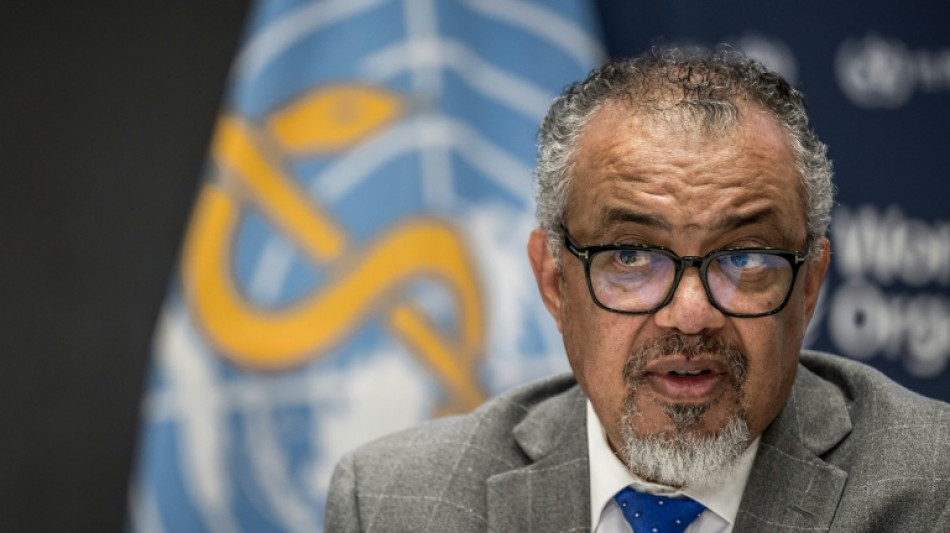
WHO sets out concerns over US vaccine trial in G.Bissau / Photo: Fabrice COFFRINI - AFP/File

 رئيس جامعة القدس يستعرض نموذج الشراكة بين التعليم العالي والصناعة في قمة QS بأبوظبي

 ابتكارات فلسطينية في مسابقة "سيف" العالمية بالرياض

 تحذير أمني من تكثيف إسرائيل إرسال رسائل نصية مستهدفة للفلسطينيين

 Polanski Accuses Sadiq Khan of Undermining Thames Water Nationalisation

 Nigeria Envoy's $61 Billion Claim Faces Scrutiny Amid Diplomatic Tensions

 وزير المالية يبحث مع برنامج الأمم المتحدة الإنمائي توسيع الدعم في غزة والضفة

 المغرب يبلغ محكمة التحكيم الرياضي بشأن اتصال محتمل بين مسؤول سنغالي ومحكم في قضية كأس أفريقيا
The World Health Organization on Friday voiced serious concerns over a planned US-funded hepatitis B vaccine trial on newborn babies in junta-run Guinea-Bissau, questioning it on scientific and ethical grounds.
The WHO insisted in a statement that the existing hepatitis B birth dose vaccine was an "effective and essential" public health intervention, with a proven record.
The agency's latest statement comes two months after an advisory panel -- appointed by US health chief Robert F. Kennedy Jr -- voted to stop recommending that all newborns in the United States receive a hepatitis B vaccine.
Kennedy has long been a vocal sceptic of vaccines, and his department says the Guinea-Bissau study seeks to "answer questions about the broader health effects" of the vaccine and "fill existing evidence gaps".
The US move to end the decades-old recommendation is the panel's latest contentious about-face concerning vaccines.
Defending the existing vaccine, the WHO said Friday: "It prevents life-threatening liver disease by stopping mother-to-child transmission at birth.
"It has been used for over three decades, with more than 115 countries including it in their national schedules," it added.
Protecting newborns with the vaccine was also important for national and global elimination efforts, said the agency.
Already on Wednesday WHO chief Tedros Adhanom Ghebreyesus had branded the planned trial in the West African nation "unethical".
- 'Significant concerns' -
In its statement Friday, the organisation elaborated on its concerns, based on what it knew of the US trial.
"WHO has significant concerns regarding the study's scientific justification, ethical safeguards, and overall alignment with established principles for research involving human participants," it said.
The vaccine has a "proven safety record across decades of use", and is effective in preventing 70 to 95 percent of cases of mother-to-child transmission" it added.
A study giving a proven life-saving intervention to some but not others exposes newborns to "potentially irreversible harm", it said.
It also argued that placebo or no-treatment vaccine trials "are only acceptable when no proven intervention exists" -- or when such as design was "indispensable" for other reasons.
"Neither condition appears to be met," it said.
There was insufficient scientific justification for the study, said the WHO, and the trial's design "raises a significant likelihood of substantial risk of bias".
Since President Donald Trump appointed Kennedy, the US government has initiated a major overhaul of vaccine policy, prompting growing concerns among the medical community.
In January 2025, the United States handed its one-year withdrawal notice to the WHO, Kennedy saying last month that the Geneva-based organisation had "trashed everything that America has done for it".
Y.Shaath--SF-PST

