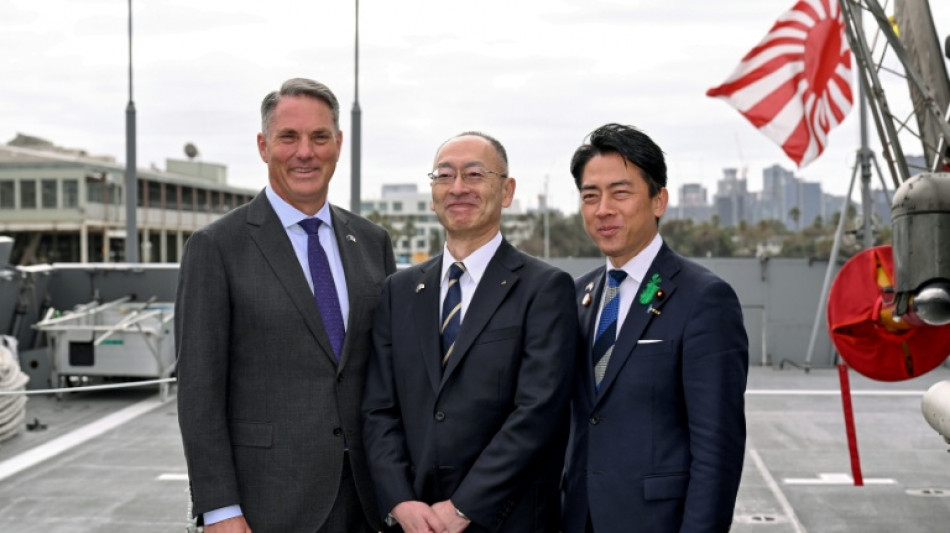
Latecomer Japan eyes slice of rising global defence spending / Photo: William WEST - AFP/File

 Euro slides as worries about French debt grow
 US withdraws all bomber aircraft from UK airbase
 Drone hits Ethiopia IDP camp as fears grow of regional war

 US-German trio wins medicine Nobel for illuminating the brain
 England captain Kane driven by desire for records says Tuchel

 N.Irish court hears challenge to disputed Orangemen parade

 Talking points from the Bahrain Grand Prix in Malaysia

 Yemen, Saudi Arabia target Houthis in new campaign as war escalates
 US-German trio wins medicine Nobel for work on optogenetics
 Swiatek, Zheng survive three-set tests in China Open third round

 Hasan says Test cricket momentum turning for Bangladesh

 Intense heat puts births in jeopardy, UN tells Fiji talks

 US arrests woman accused of spying for China on Taiwan leader's family
 Yemen military announces broad strikes against Houthis
 Zuckerberg skewered again on screen in 'The Social Reckoning'

 Fiji urges 'just' climate transition, financing at pre-COP gathering

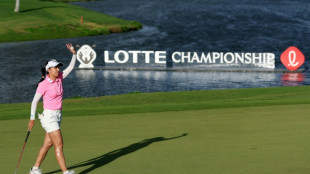 Thailand's Jeeno overcomes late wobble to win Lotte Championship
 Brazil heads to run-off as Bolsonaro pulls off shock first place finish over Lula
 EU, China to hold Beijing talks to avert trade war
 Bolsonaro edges past Lula as nail-biter Brazil vote goes to a run-off
 Rubio visits Iceland as US boosts Arctic presence

 Bolsonaro leads Lula as nail-biter Brazil vote goes to a run-off

 Patriots inflict first Bills defeat as Chiefs keep winning
 Chervon Names Peter J. Carlson Director of Sales for Strategic Accounts

 Chervon Names Claudio Chiappetta Vice President of Retail Sales for Chervon Canada

Long-pacifist Japan has shed its self-imposed ban on lethal weaponry exports, gunning for a prominent place in the global defence trade -- a challenging feat that analysts say could take years to achieve.
Under Japan's once-strict stance adopted following its World War II surrender and the atomic bombings of Hiroshima and Nagasaki, it has generally restricted arms exports in recent times to non-lethal categories like rescue, transport and surveillance.
Prime Minister Sanae Takaichi's government scrapped these constraints last month, allowing firms to supply lethal weaponry to any of the 17 countries where Japan has defence cooperation agreements.
Prohibitions on sales to nations at war remain but can be circumvented under special circumstances.
Five Japanese firms, including Mitsubishi Heavy Industries and Kawasaki Heavy Industries, are already in the top 100 global defence companies, according to the Stockholm International Peace Research Institute (SIPRI).
But they have largely lived off domestic demand from Japan's military, often in cooperation with US defence firms.
Analysts say a focus on high-tech sectors could help the transition, but caution that it could take years for defence exports to become a big contributor to economic growth, hampered by capacity and workforce shortages.
Bloomberg Intelligence analyst Ian Ma said it was a "transition from a domestic, ministry-led procurement model to a normal practice which companies could drive business opportunities just like other global companies are doing."
He added that as newcomers on the global market, Japanese firms should focus on "higher-tech niches" like naval and propulsion systems, advanced missiles, sensors and electronics.
- No 'immediate impact' -
With conflicts raging around the world, the international defence market is huge and fast growing, soaring by 41 percent between 2016 and 2025 to almost $3 trillion, according to SIPRI.
While Japanese firms may only export to 17 countries, those include some of the world's biggest defence spenders like the United States, Germany, India and Britain.
Evolutions in technology and the way wars are fought -- notably with drones -- are also making the global arms market more diffuse, which could benefit Japan, according to analysts at the Stimson Center.
Along with a steep decline in Russian arms exports, Washington's "increasingly unpredictable, extractive, and at times confrontational approach" has also pushed importers to seek alternatives to the United States, the Stimson Center said in a research note.
"Though the trend remains nascent, for Japan, the wandering eyes of traditional US defence partners could add to the demand for the sorts of sophisticated capabilities Tokyo is well-prepared to offer."
Even before the new changes, Japan has been no slouch.
Last year Mitsubishi Heavy Industries won a landmark order for 11 warships from the Australian navy.
Japan is also developing a new fighter jet with Britain and Italy, and countries in Southeast Asia are reportedly interested in acquiring used Japanese submarines and warships.
But Mitsubishi Electric, which supplied a radar system to the Philippines and may soon make air-to-air missiles with US partners, told AFP that the new rules would not have a "significant immediate impact on our business".
Rival IHI said that the changes "will not lead to an immediate acceleration of our defence equipment business", but "will have a significant impact on creating a market environment that accelerates international cooperation".
- 'Homework' -
Ma cautioned that Japan has "homework" to do, including on production capacity, skilled labour, second- and third-tier suppliers, certification, testing, maintenance support and the ability to "deliver on time".
Beyond the economic stakes, deepening security ties is also a strategic necessity for Japan, said Heigo Sato, a professor at Takushoku University, in a region where China is flexing its muscles and home to nuclear-armed North Korea.
"When it comes to defence industry cooperation, Japan is by no means a country with the world's most advanced weaponry; therefore, we must actively work to build relationships with other nations," Sato told AFP.
The Japanese public is not at all comfortable with the new strategy, with 55 percent of respondents in a recent Nikkei poll saying that they were opposed to the expansion of arms exports.
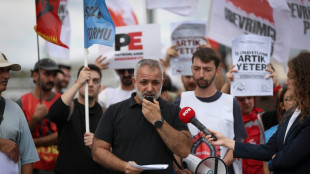
Days after Takaichi announced the new rules, dozens of protestors rallied in Tokyo.
In World War II, "Japan committed acts of aggression, and in turn suffered enormous damage from the atomic bombs," demonstrator Yura Suzuike told AFP.
Japan's pacifist constitution that followed had been drafted "with the resolve that we must never again wage war or kill people", she said.
jug-hih-nf-stu/ami/abs
H.Nasr--SF-PST