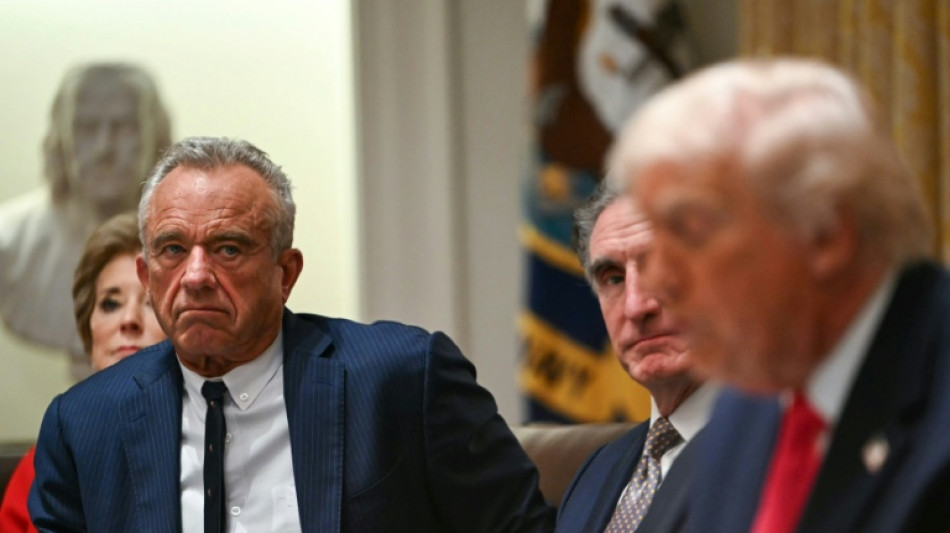
US panel votes to end recommending all newborns receive hepatitis B vaccine / Photo: ANDREW CABALLERO-REYNOLDS - AFP

 Myanmar leader lands in Malaysia for migrant return talks
 Indian central bank hikes rates for first time since 2023

 US military on Okinawa face curfew, alcohol ban after murder case

 Fierce lobbying in EU over 'forever chemicals'

 Dodgers beat Braves and Padres avoid sweep in MLB playoffs
 Mourning, war and elections as Israel marks October 7

 Messi says Argentina retirement is 'saddest day of my career'

 Oil rises and stocks fall as Hormuz worries flare

 Pacific presses world for help 'surviving' climate change at pre-COP summit

 Verstappen revival to be put to the test in steamy Singapore

 US woman who survived botched execution is conscious, speaking: lawyers
 Climate champion Australia digging more coal
 Emotion, tears as Messi retires from Argentina national team

 Dodgers push Braves to the brink of MLB playoff exit

 Crisis-stricken Haiti postpones elections

 N. Korea's Kim pledges 'invariable support' in Putin birthday letter

 OGRD Alliance Advances PLPC Multi-Asset Platform Following APHELAR Milestone, Expanding Licensing and Strategic Capital Frameworks

 Emotion, tears as Messi prepares for Argentina farewell

 Kane eyes Ronaldo record after matching England cap mark

 Spain fight back to beat Croatia, Kane adds to record for England

 Merino double helps Spain beat Croatia, reach Nations League quarters

 US stocks hit fresh records as oil stabilizes on rising supplies

 As Messi bows out, Argentines say 'thank you'

 Ronaldo opens door for Portugal return, apologises for walkout

 'Nobody seems to care': Russian city shrugs off plague reports

An advisory panel appointed by the Trump administration's vaccine-skeptic health secretary voted Friday to stop recommending that all newborns in the United States receive a hepatitis B vaccine.
The move to end the three-decade-old recommendation is the panel's latest contentious decision overturning long-standing medical advice since its overhaul by Health Secretary Robert F. Kennedy Jr., who has spent decades spreading anti-vaccine rhetoric.
US health authorities previously recommended all babies receive the first of three hepatitis B shots just after birth, mainly to prevent infections from mothers who unknowingly had the liver disease or had falsely tested negative.
The approach has virtually eradicated hepatitis B infections among young people in the United States.
Hepatitis B is a viral liver disease that can be transmitted by the mother during childbirth and puts those affected at high risk of death from cirrhosis or liver cancer.
After delaying the vote by a day, the panel eventually passed its new recommendation for "individual-based decision-making," in consultation with a health care provider, when children are born to mothers testing negatively for the disease.
The decision should "consider vaccine benefits, vaccine risks, and infection risks."
It also recommends that babies who are not vaccinated at birth wait at least two months to get the initial dose.
Under Kennedy, the Advisory Committee on Immunization Practices (ACIP) is now composed largely of figures criticized by the scientific community for lack of expertise or their promotion of vaccine-skeptic theories.
The vote was 8-3. Trump-appointed officials at the Centers for Disease Control and Prevention (CDC) are widely expected to formally adopt the recommendations at a later date.
Since 1991, US health officials have recommended the hepatitis B vaccine for newborns, as is done in countries including China and Australia and is recommended by the World Health Organization.
But several ACIP members have argued that Friday's decision aligns the US vaccination schedule with those of other economically developed countries such as France and Britain.
Medical experts say such a change is risky in the United States, pointing to shortcomings in maternal screening, with delays likely to cause a drop in vaccination rates in a country where access to health care can be complicated.
"This irresponsible and purposely misleading guidance will lead to more hepatitis B infections in infants and children," American Academy of Pediatrics President Susan J. Kressly said in a statement.
The repercussions of the ACIP's vaccine recommendations are broad because federal guidelines often dictate whether vaccines are paid for by health insurance companies in the United States, where a vaccine can cost hundreds of dollars.
On Friday, the panel is set to begin a broader review of the childhood vaccination schedule and the composition of vaccines.
But the committee's influence is waning amid withering criticism from the US scientific and medical community, with Democratic-led states announcing they will no longer follow its recommendations.
Some in Trump's own Republican party have also pushed back against the ACIP's actions, including Louisiana Senator Bill Cassidy.
Cassidy, a medical doctor who provided a key vote to allow Kennedy's nomination to succeed, condemned the ACIP's decision, noting the original recommendation was "NOT a mandate" to get the jab.
CDC officials "should not sign these new recommendations and instead retain the current, evidence-based approach," he said on X.
Ahead of the vote, Dr. Cody Meissner, one of the few dissenting voices on the advisory committee, urged his colleagues not to change the current recommendations.
"Do no harm is a moral imperative. We are doing harm by changing this wording," he warned.
B.AbuZeid--SF-PST