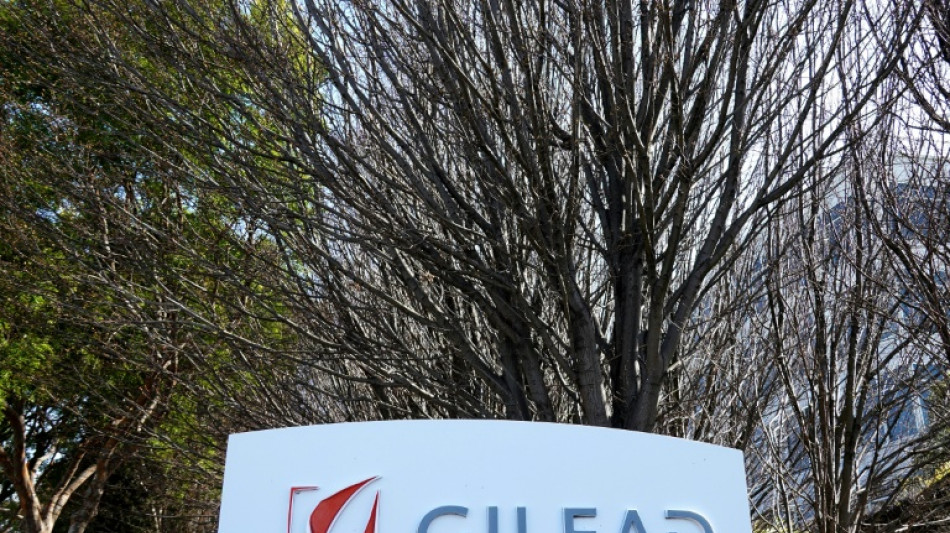
US approves Gilead's twice-yearly injection to prevent HIV / Photo: JUSTIN SULLIVAN - GETTY IMAGES NORTH AMERICA/AFP

 Gauff says online abuse was 'draining' after China Open exit

 As sector struggles, Porsche puts luxury ahead of volume

 'It's personal': Fiji minister pushes better climate finance at pre-COP

 Russia glosses over dark Soviet past in reinvented museum

 UK tax body opened probe into Man City in 2018: FT

 Yemen's Houthis claim new attacks on Saudi airports as conflict deepens
 Germany factory production at highest level for 18 months

 Thailand floods death toll rises to 60 since mid-September
 US pushes Russia for information on plague reports
 Myanmar leader lands in Malaysia for migrant return talks

 Indian central bank hikes rates for first time since 2023
 US military on Okinawa face curfew, alcohol ban after murder case

 Fierce lobbying in EU over 'forever chemicals'
 Dodgers beat Braves and Padres avoid sweep in MLB playoffs

 Mourning, war and elections as Israel marks October 7

 Messi says Argentina retirement is 'saddest day of my career'

 Oil rises and stocks fall as Hormuz worries flare

 Pacific presses world for help 'surviving' climate change at pre-COP summit

 Verstappen revival to be put to the test in steamy Singapore

 US woman who survived botched execution is conscious, speaking: lawyers
 Climate champion Australia digging more coal
 Emotion, tears as Messi retires from Argentina national team

 Dodgers push Braves to the brink of MLB playoff exit

 Crisis-stricken Haiti postpones elections
 N. Korea's Kim pledges 'invariable support' in Putin birthday letter
The US Food and Drug Administration on Wednesday approved Gilead Sciences' twice-yearly injection to prevent HIV, a move the company hailed as a major breakthrough in the fight against the sexually transmitted virus.
Drugs to prevent HIV transmission, known as pre-exposure prophylaxis or PrEP, have existed for more than a decade. But because they typically require taking a daily pill, they have struggled to make a significant dent in global infections.
"This is a historic day in the decades-long fight against HIV," said Daniel O'Day, Gilead's chairman and chief executive officer, in a statement.
Lenacapavir, marketed under the brand name Yeztugo, has been shown in clinical trials to reduce the risk of HIV transmission by more than 99.9 percent in adults and adolescents -- making it functionally akin to a powerful vaccine.
But optimism may be tempered by the drug's expected eye-watering price tag.
While the company has not disclosed specifics, analysts estimate the US launch price could be as high as $25,000 per year.
Activists are calling for the price to be slashed to $25 per person annually to help end the HIV pandemic.
The approval also comes as President Donald Trump's administration has slashed funding for HIV treatment and prevention programs both overseas and within the United States.
W.Mansour--SF-PST