
Utah becomes first US state to ban fluoride in drinking water / Photo: JUSTIN SULLIVAN - GETTY IMAGES NORTH AMERICA/AFP/File

 West must embrace 'national power' or face decline: Rubio

 Shell refining margins reach record highs as wars hit supply

 Former Spain, Barca winger Pedro retires from football

 Arteta signs new Arsenal deal until 2030

 Stocks decline as oil climbs on Mideast flareup

 Gauff says online abuse was 'draining' after China Open exit

 As sector struggles, Porsche puts luxury ahead of volume

 'It's personal': Fiji minister pushes better climate finance at pre-COP

 Russia glosses over dark Soviet past in reinvented museum

 UK tax body opened probe into Man City in 2018: FT

 Yemen's Houthis claim new attacks on Saudi airports as conflict deepens

 Germany factory production at highest level for 18 months

 Thailand floods death toll rises to 60 since mid-September

 US pushes Russia for information on plague reports
 Myanmar leader lands in Malaysia for migrant return talks

 Indian central bank hikes rates for first time since 2023

 US military on Okinawa face curfew, alcohol ban after murder case

 Fierce lobbying in EU over 'forever chemicals'

 Dodgers beat Braves and Padres avoid sweep in MLB playoffs

 Mourning, war and elections as Israel marks October 7

 Messi says Argentina retirement is 'saddest day of my career'

 Oil rises and stocks fall as Hormuz worries flare

 Pacific presses world for help 'surviving' climate change at pre-COP summit

 Verstappen revival to be put to the test in steamy Singapore

 US woman who survived botched execution is conscious, speaking: lawyers
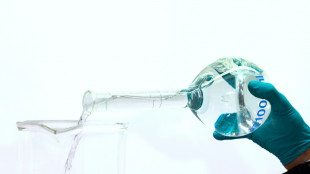
The western US state of Utah has become the first to prohibit fluoridation of its public drinking water, part of a growing movement reexamining the decades-old public health practice.
New US Health Secretary Robert F. Kennedy Jr. has long been a vocal critic of fluoridated water, which currently reaches an estimated 200 million Americans -- about two-thirds of the population.
Utah's ban, signed into law by Governor Spencer Cox on Thursday, is set to take effect on May 7. Legislatures in other Republican-led states including North Dakota, Tennessee, and Montana, are considering similar measures.
Opposition is not limited to red states. Liberal-leaning cities such as Portland, Oregon, and the City and County of Honolulu, Hawaii, have also banned fluoridation.
Fluoride was first introduced to US water systems in 1945, dramatically reducing childhood cavities and adult tooth loss. The Centers for Disease Control and Prevention hails it as one of the top public health achievements of the 20th century.
But controversy has grown around its potential neurotoxic effects. Last year, the Department of Health and Human Services under former president Joe Biden concluded with "moderate confidence" that higher levels of fluoride are linked to lower IQ scores.
This January, a paper in the prestigious journal JAMA Pediatrics, authored by the same government scientists, found a "statistically significant association" between fluoride exposure and reduced IQ. However, it left open key questions about what dosage levels may be harmful.
The World Health Organization's safety threshold stands at 1.5 milligrams per liter -- about double the US guideline of 0.7 mg/L -- and the study said there was insufficient data to determine whether that limit should be revised.
Ending fluoridation is generally opposed by the dental and public health communities. Critics of the recent study argue it failed to adequately control for confounding variables and environmental factors.
Fluoride occurs naturally in varying concentrations and strengthens teeth in several ways: by restoring minerals lost to acid, reducing acid production by cavity-causing bacteria, and making it harder for those bacteria to adhere to enamel.
Proponents argue fluoridation reduces socioeconomic disparities in dental care.
But with fluoride toothpastes widely available since the 1960s, some research suggests diminishing returns.
A recent Canadian study found that ending fluoridation increased dental caries, while an Irish study reported a decline in severe caries in both fluoridated and non-fluoridated areas.
Fluoridation policies also vary widely by country, with many, including Germany and France eschewing the practice altogether.
Z.AbuSaud--SF-PST