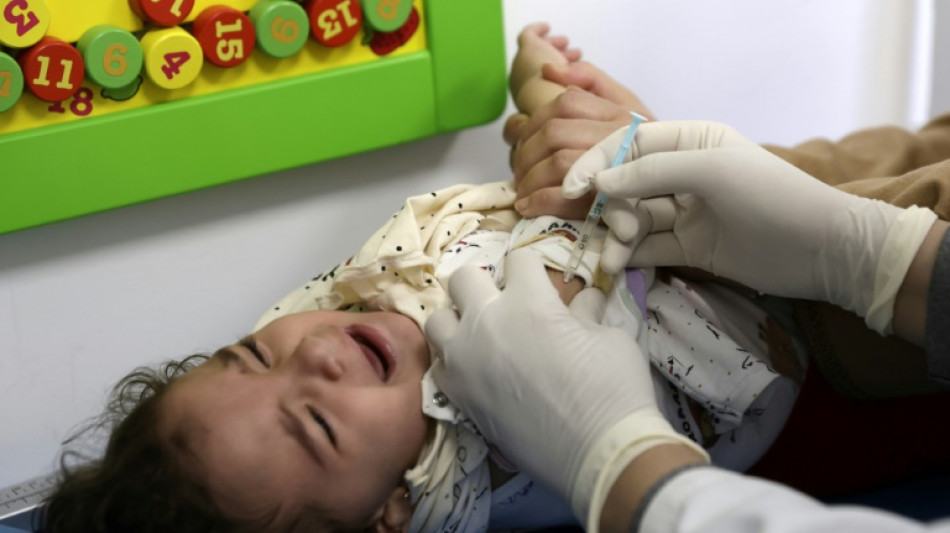
Gavi: vaccine alliance facing US funding cuts / Photo: Abdel Majid BZIOUAT - AFP

 West must embrace 'national power' or face decline: Rubio
 Shell refining margins reach record highs as wars hit supply
 Former Spain, Barca winger Pedro retires from football
 Arteta signs new Arsenal deal until 2030
 Stocks decline as oil climbs on Mideast flareup
 Gauff says online abuse was 'draining' after China Open exit
 As sector struggles, Porsche puts luxury ahead of volume
 'It's personal': Fiji minister pushes better climate finance at pre-COP
 Russia glosses over dark Soviet past in reinvented museum
 UK tax body opened probe into Man City in 2018: FT
 Yemen's Houthis claim new attacks on Saudi airports as conflict deepens
 Germany factory production at highest level for 18 months
 Thailand floods death toll rises to 60 since mid-September
 US pushes Russia for information on plague reports
 Myanmar leader lands in Malaysia for migrant return talks
 Indian central bank hikes rates for first time since 2023
 US military on Okinawa face curfew, alcohol ban after murder case
 Fierce lobbying in EU over 'forever chemicals'
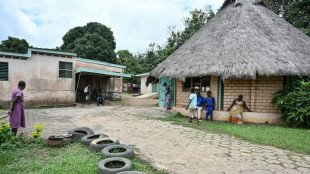
 Dodgers beat Braves and Padres avoid sweep in MLB playoffs
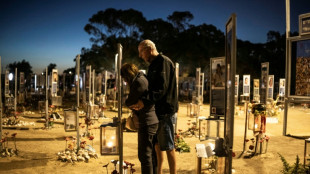 Mourning, war and elections as Israel marks October 7

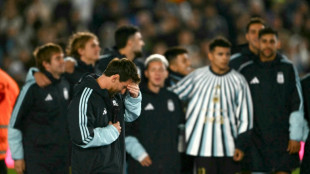 Messi says Argentina retirement is 'saddest day of my career'
 Oil rises and stocks fall as Hormuz worries flare
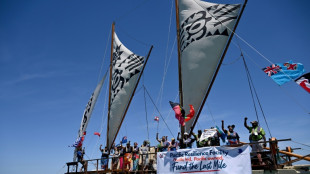 Pacific presses world for help 'surviving' climate change at pre-COP summit
 Verstappen revival to be put to the test in steamy Singapore
 US woman who survived botched execution is conscious, speaking: lawyers
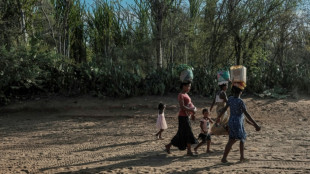
The Gavi vaccine alliance, which proudly claims it vaccinates more than half the world's children against deadly and debilitating diseases, is now seemingly next in line for US funding cuts.
The United States is reportedly set to axe its funding as President Donald Trump slashes foreign aid spending -- a move Gavi says could cost more than a million lives.
Despite its important role, Gavi is little known among the general public. Here is an overview of what it does, and how US funding cuts could impact its operations and child health worldwide:
- Gavi's mission and set-up -
Founded in 2000 as the Global Alliance for Vaccines and Immunisation, Gavi was created to provide vaccines to developing countries.
The United States has been on board from the start, as one of the six original donor countries. It now contributes around 15 percent of the regular budget.
A public-private partnership, Gavi is a non-profit organisation based in Geneva.
It works closely with the UN health and children's agencies -- the World Health Organization and UNICEF -- the World Bank and the Gates Foundation, as well as vaccine manufacturers, research agencies and vaccine-administering countries.
Its chief executive Sania Nishtar is a medical doctor and former minister and senator in Pakistan. Former EU chief Jose Manuel Barroso chairs the board.
- Impact of US pullout -
Nishtar said the US cutting its funding would have a "disastrous impact" on global health security and potentially result in more than a million deaths from preventable diseases.
Some 97 percent of Gavi's funding goes directly to vaccination programmes, meaning that if 15 percent of the budget goes, vaccination campaigns will suffer.
Over 2026-2030, Gavi aims to protect 500 million children against 20 or so diseases -- so by its calculations, 75 million fewer children would be vaccinated.
And if around nine million lives would be saved, that number could drop by 1.3 million.
Gavi is also worried about its ability to maintain its stockpiles of vaccines against diseases like Ebola, cholera and meningitis.
- Budget and US funding -
Its budget for the 2021-2025 cycle is over $21 billion -- swelled by more than $12 billion for the Covax scheme, which Gavi co-led in response to the Covid pandemic.
Washington contributed $4 billion to Covax, and was its biggest funder.
With Covax, US regular contributions and pledges for 2021-2025 amount to $1.19 billion.
The United States has steadily increased its regular contributions to Gavi, from $48 million in 2001 to $300 million in 2024.
"US global health assistance has emphasised ending preventable child deaths through high-impact, low-cost interventions," the alliance says.
US contributions accounted for 10 percent of Gavi's funding in 2011-2015; 15 percent for 2016-2020; and 24 percent in 2021-2025, including Covax.
But excluding Covax, the United States is the third-biggest contributor to Gavi, behind the Gates Foundation and Britain, covering about 15 percent of the budget.
For the years 2026-2030, Washington made a five-year pledge of at least $1.58 billion.
- Gavi's vaccines -
Gavi supports vaccines against 20 infectious diseases, including Covid-19, Ebola, malaria, rabies, polio, cholera, typhoid and yellow fever.
Gavi says that since its inception, it has helped immunise more than 1.1 billion children in 78 lower-income countries, "preventing more than 18.8 million future deaths".
By June 2023 it had crossed the landmark of having helped provide roughly six billion vaccinations globally.
According to its latest figures, more than 69 million children were vaccinated in 2023.
The alliance says that for every dollar spent on vaccines between 2021 and 2030, $21 would be saved in healthcare costs, lost wages and lost productivity due to illness and death.
- Covid jabs role -
Gavi co-led Covax, the globally pooled Covid vaccine procurement and equitable distribution effort.
The scheme to ensure Covid vaccines reached people in poorer countries wound up in December 2023.
It delivered nearly two billion doses to 146 territories.
Gavi estimates more than 2.7 million deaths were averted by Covax in low- and middle-income countries.
Z.AlNajjar--SF-PST