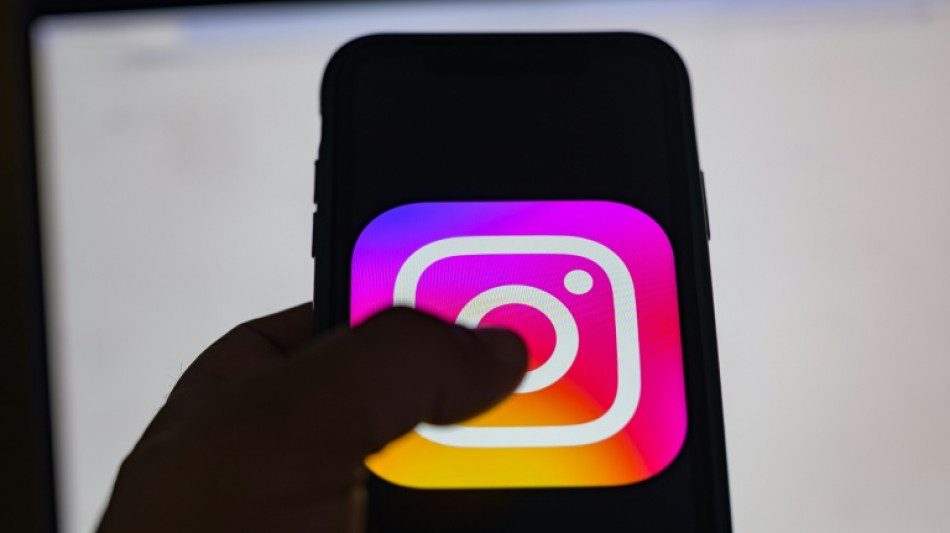
Instagram, under pressure, tightens protection for teens / Photo: Yasin AKGUL - AFP/File

 'Never again Bolsonaro': thousands march ahead of Brazil election runoff

 After botched execution, US woman was nearly taken off life support before revival

 Searing AIDS drama 'Elsinore' opens London film festival

 Evicted pensioner who sparked Spain housing protests dies: tenant union

 Golf star Rahm quitting LIV tour over 'unacceptable' terms

 Thousands march fearing return of a Bolsonaro presidency in Brazil

 French PM denies police ordered to confront student protesters

 Rubio touts US power, calls on Europe to emerge from 'slumber'

 Trump says 'we don't think' Russian plague is bio-weapon

 Five children among 26 killed in Ukraine after Russian strikes

 Man City should 'accept' punishment for rule breaches, says Lineker

 US woman who survived botched execution is awake and speaking

 From 1800s to modern pharma: a Nobel-winning chemistry quest

 Southampton boss Eckert given suspended ban over 'Spygate'

 Russia warns of 'false' information as second plague case reported

 IEA ready to release more oil reserves if necessary

 HSBC 'consults' over UK unit job cuts amid AI adoption

 UK court quashes five ex-traders' Libor rate rigging convictions

 XM Receives “Global Customer Experience Leader Award 2026” at the TrustFinance Performance Awards

 Stocks slide as oil climbs on Mideast flareup

 Heavy casualties in Ukraine after Russian strikes
 French wine harvest set to hit historic low

 Kyiv 'cannot agree' to EU membership limiting food exports: minister

 Arteta targets more Arsenal glory after signing new deal until 2030

 Russell hit with Singapore grid penalty for taking new power unit

Meta on Tuesday announced the creation of "Teen Accounts," designed to better protect underage users from the dangers associated with Instagram.
The hugely popular photo-sharing app is accused by many experts and authorities of damaging the mental health of its youngest users.
"'Teen Accounts' is a significant update, designed to give parents peace of mind," Antigone Davis, Meta vice-president in charge of safety issues, told AFP.
Under the new policy, users age 13 to 15 will have private accounts by default, with tighter safeguards on who can contact them and what content they can see.
Teens who want a public profile and fewer restrictions -- because they want to become influencers, for example -- will need to obtain permission from their parents. The new rules apply for both existing and new users to the platform.
"This is a big change. It means making sure that we do this really well," Davis said.
- 3 billion IDs -
For the past year, pressure has been building across the globe against the social media giant founded by Mark Zuckerberg and its rivals.
Last October, some forty US states filed a complaint against Meta's platforms, accusing them of harming the "mental and physical health of young people," due to the risks of addiction, cyber-bullying or eating disorders.
Australia, meanwhile, will soon set the minimum age for its social networks at between 14 and 16.
For the time being, Meta refuses to check the age of all its users, in the name of confidentiality.
"When we have a strong signal that someone's age is wrong, we're going to ask them to verify their age, but we don't want to make three billion people have to provide IDs," Davis said.
In her opinion, it would be simpler and more effective if age checks were carried out at the level of the smartphone's mobile operating system, i.e. Google's Android or Apple's iOS.
"They actually have significant information about the age of users. And if they were to share that broadly across all the apps that teens use, that would provide peace of mind for parents."
It's not clear whether the new protections will be enough to reassure governments and online safety advocates, such as Matthew Bergman, founder of the Social Media Victims Law Center.
"Instagram is addictive. Instagram leads kids down dangerous rabbit holes, where they are shown not what they want to see, but what they can't look away from," he said.
His group represents 200 parents whose children committed suicide "after being encouraged to do so by videos recommended by Instagram or TikTok."
Bergman points to the many cases where young girls have developed serious eating disorders.
Meta now prevents the promotion of extreme diets on its platforms, among other measures taken in recent years.
These measures are "baby steps, but nevertheless, steps in the right direction," he told AFP.
In his view, all that's needed is for groups to make their platforms less addictive - "and therefore a little less profitable."
This can be done without the platforms losing their quality for users, he said.
R.AbuNasser--SF-PST