From new treatments to AI: advances in the fight against cancer / Photo: Manaure QUINTERO - AFP/File

 'Never again Bolsonaro': thousands march ahead of Brazil election runoff

 After botched execution, US woman was nearly taken off life support before revival
 Searing AIDS drama 'Elsinore' opens London film festival

 Evicted pensioner who sparked Spain housing protests dies: tenant union
 Golf star Rahm quitting LIV tour over 'unacceptable' terms

 Thousands march fearing return of a Bolsonaro presidency in Brazil
 French PM denies police ordered to confront student protesters
 Rubio touts US power, calls on Europe to emerge from 'slumber'

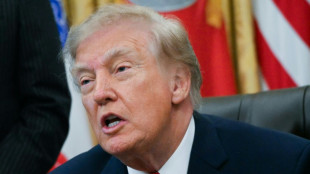 Trump says 'we don't think' Russian plague is bio-weapon
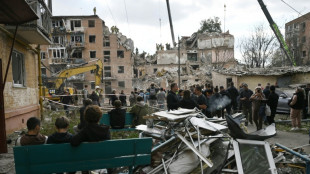 Five children among 26 killed in Ukraine after Russian strikes

 Man City should 'accept' punishment for rule breaches, says Lineker

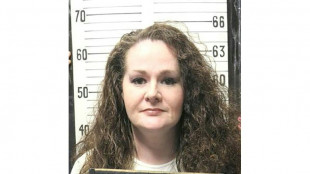 US woman who survived botched execution is awake and speaking
 From 1800s to modern pharma: a Nobel-winning chemistry quest
 Southampton boss Eckert given suspended ban over 'Spygate'

 Russia warns of 'false' information as second plague case reported
 IEA ready to release more oil reserves if necessary
 HSBC 'consults' over UK unit job cuts amid AI adoption
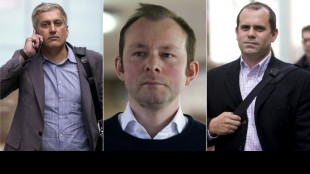 UK court quashes five ex-traders' Libor rate rigging convictions
 XM Receives “Global Customer Experience Leader Award 2026” at the TrustFinance Performance Awards
 Stocks slide as oil climbs on Mideast flareup
 Heavy casualties in Ukraine after Russian strikes
 French wine harvest set to hit historic low

 Kyiv 'cannot agree' to EU membership limiting food exports: minister
 Arteta targets more Arsenal glory after signing new deal until 2030

 Russell hit with Singapore grid penalty for taking new power unit

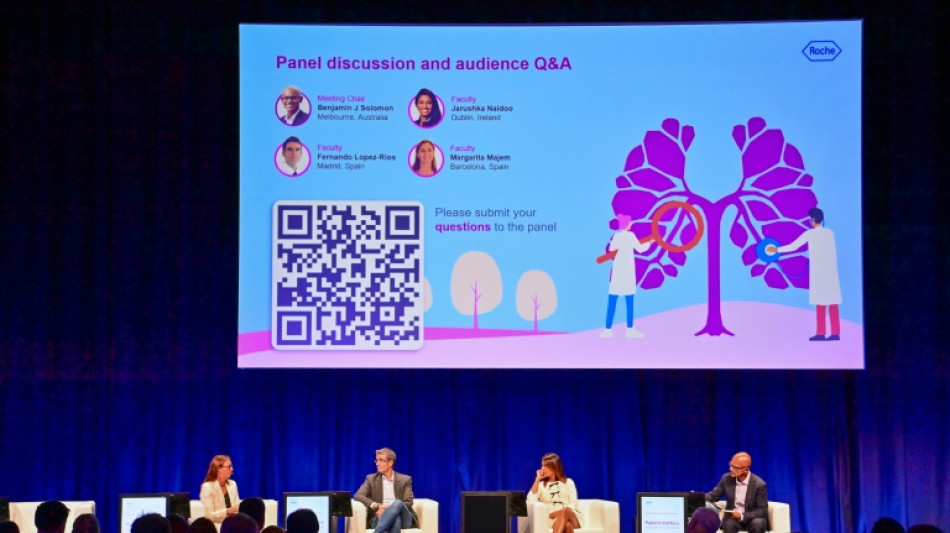
From combining treatments in unprecedented ways to deploying artificial intelligence for personalised medicine, a raft of new advances in the fight against cancer have been presented at the European Society for Medical Oncology (ESMO), which ends on Tuesday.
Here are some of the big announcements made at the five-day conference held in the Spanish city of Barcelona, which brought together 30,000 specialist doctors and researchers from around the world.
- Breastfeeding after cancer -
Women who breastfeed after receiving treatment for breast cancer do not have a higher risk of their cancer returning or of getting new tumours, according to two international studies presented at the conference.
This was also true for women carrying a genetic mutation called BRCA, which significantly increases the chance of developing breast cancer, the research found.
There had previously been concerns about pregnancy and breastfeeding after women had been diagnosed with breast cancer, because both can affect hormone levels.
"These results are key for women who wish to become pregnant and breastfeed their baby after breast cancer," said Fedro Alessandro Peccatori, a researcher and doctor at the European Institute of Oncology in Milan.
- New combination for lung cancer -
Immunotherapy, which stimulates the body's immune system to fight tumours, has already been shown to be an effective weapon against lung cancer.
On Saturday, the results of a phase two trial revealed promising signs against metastatic non-small cell lung cancer, which is when the most common form of lung cancer spreads to other parts of the body.
The trial tested a new combination of two different immunotherapies along with chemotherapy.
"By aiming at a second target of the immune system and combining these treatments, it seems that we are improving response rates -- that is, the number of patients who have their tumours shrink," Nicolas Girard, an oncologist at France's Curie Institute, told AFP.
- Rare pregnancy-linked cancer -
Another combination of immunotherapy and chemotherapy produced excellent results against a very rare form of pregnancy-related cancer which develops in the placenta. The cancer only occurs in around one out of every 10,000 pregnancies.
The combination of treatments led to 96 percent of the cancer in patients being eradicated.
"This is an exceptional result," said Benoit You, a France-based oncologist who presented the research.
- AI for personalised medicine? -
A huge artificial intelligence (AI) algorithm trained on a database of more than a billion images of tumours from around 30,000 patients in the United States also showed promise for future cancer treatment, researchers said Monday.
The model is capable of "detecting a certain number of molecular anomalies and mutations that the human eye is not always able to see," Fabrice Andre, research head at France's Gustave Roussy cancer centre, told AFP.
In the long term, the doctors hope this kind of AI will be able to help them offer personalised treatments for each patient.
- Hope for saving affected organs -
One of the main messages to come out of the ESMO conference was that combining immunotherapy with radiation therapy before surgery improves the overall survival rates for a growing number of cancers, including for the breast, bladder and cervix.
But receiving these kinds of treatments ahead of surgery seems to also allow for the affected organs themselves to be saved, Andre said.
"Organ preservation is absolutely essential to have a quality of life that is as close as possible to normal," he said.
Research presented on Monday showed encouraging results for preserving rectums in patients with cancer affecting this important part of the digestive tract. This only occurs after the treatments have caused the tumour to completely vanish.
"Until now the standard was surgery, but it seems we are entering a new era where surgery could be avoided," said David Sebag- Montefiore, an oncologist and researcher at the UK's University of Leeds.
There are hopes that this treatment combination could also have the potential to work for other cancers, such as those of the ear, nose and throat -- or lungs.
P.AbuBaker--SF-PST