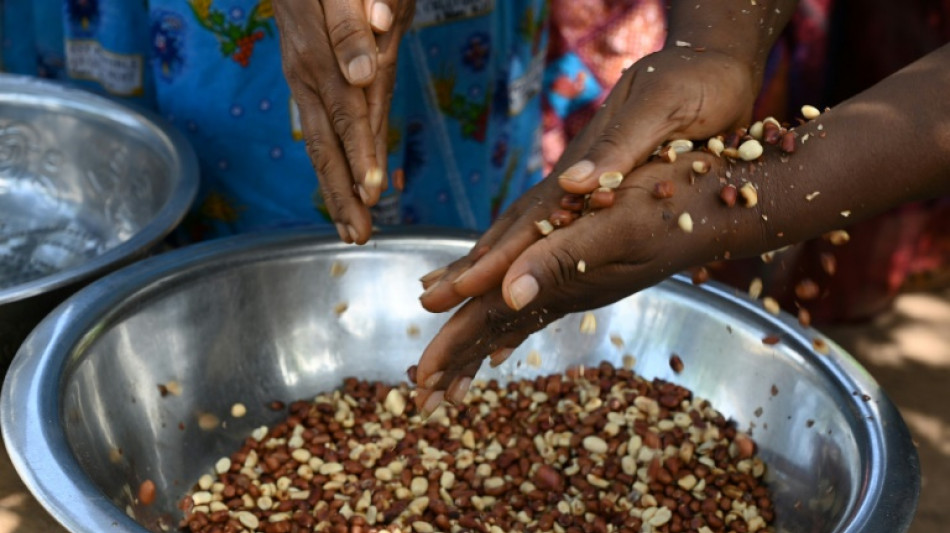
Australia launches landmark peanut allergy treatment for babies / Photo: Issouf SANOGO - AFP/File

 El Nino’s Weakening Grip on Tamil Nadu Rainfall Hinges on Potential Cyclone

 South Africa Places 36 Hospitals on Standby for Possible Imported Ebola Cases

 Two A1 Crashes Create Kilometres of Rush-Hour Congestion

 Luxembourg City Plans €13 Million Abrigado Centre for 2029

 Luxembourg Housing Petition Passes Threshold for Parliamentary Consideration

 Raheem Sterling Receives Suspended Sentence After Lamborghini Crash

 Tamil Nadu Secures Rs 58,214 Crore in Investments at Vettri Conclave

 فرنسا تدعو لتجريم "الفصل العنصري القائم على الجنس" دولياً

 أزمة الصواريخ الاعتراضية في البنتاغون: استنزاف المخزونات يفرض تعبئة صناعية حتى 2030

 Huawei Found Guilty of Trade Secret Theft in Landmark US Case

 Indian Markets Set for Gain as Foreign Inflows Offset Tariff Fears
Australian children with potentially deadly peanut allergies will be offered life-saving treatment in a nationwide programme touted as a world first.
Eligible babies will receive daily doses of peanut powder for two years to build up their tolerance, said officials announcing the initiative on Wednesday.
Over time, the infants will be given increasing doses in the hope of reducing their sensitivity to peanuts, under the supervision of doctors at 10 paediatric hospitals around the country.
It is the first national peanut allergy treatment programme offered in hospitals outside of a clinical trial setting, said Kirsten Perrett, head of oral immunotherapy at the National Allergy Centre of Excellence.
At the end of the two years, a food allergy test will determine if the treatment has led to a remission.
"Ultimately we want to change the trajectory of allergic disease in Australia so that more children can go to school without the risk of a life-threatening peanut reaction," Perrett said.
Previously, families have been told to ensure their children strictly avoid foods with peanuts.
Australian children have some of the highest rates of food allergies in the world.
Peanut allergies affect three percent of Australian children by the time they are 12 months old, government data shows.
Of those, only 20 percent will outgrow their allergy by the time they are teenagers.
Nine-month-old Hunter Chatwin, who is among those in the free treatment programme, started developing hives after eating peanut butter.
"We are taking part in the programme to try and improve his chance of being able to safely eat peanut in the future," Hunter's mother Kirsten said.
"Many families are desperate to protect their children from allergic reactions and anaphylaxis," she said.
"To have this programme available and free at public hospitals is a game-changer."
If successful, the programme will be rolled out more broadly, including in regional and remote areas.
Deaths from peanut allergies are rare in Australia, but almost 20 percent of the population has an allergic disease, data from Australia's leading allergy institute found.
This figure is estimated to grow by 70 percent by 2050, impacting 7.7 million Australians.
C.AbuSway--SF-PST

