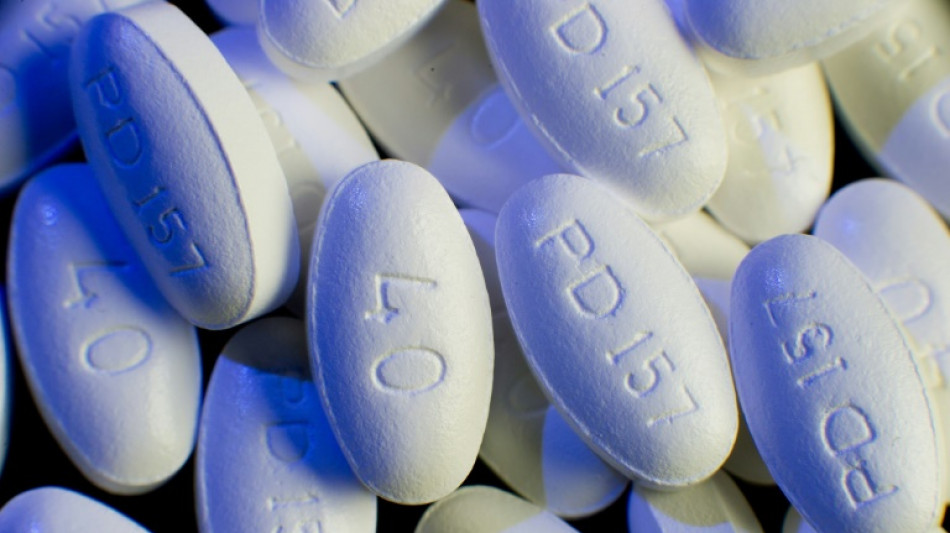
Japan biochemist who discovered statins, Akira Endo, dies / Photo: Paul J. RICHARDS - AFP

 Samsung expects 780% quarterly operating profit jump on AI boom

 Guardians survive with 9-3 win over White Sox

 Saudi Arabia says 3 dead at airports after Houthis claim attacks

 Stocks slide as oil sees volatile trading day over Iran war fears

 Microsoft pushes AI vision with new, expensive Surface laptop

 Five children among 28 killed in Russian strikes on Ukraine

 Odell Beckham Jr signs with Minnesota Vikings

 Saudi Arabia says three dead at airports after Houthis claim attacks
 Trump plans to turn Florida golf course into presidential retreat

 WHO says cannot conduct full risk assessment on Russia plague reports

 After botched execution, US woman is awake and shackled to bed

 New Zealand fly-half Mo'unga ruled out of Australia Tests
 Protests in major Turkish city after mayor defects to Erdogan party

 Climate change strips island's title of largest penguin colony: study

 Rubio says West must choose between national power or decline

 Russia's plague scare: What we know
 French luxury giant to fund redevelopment of two Paris streets: city hall

 Trump wants to turn Florida golf course into presidential retreat

 Mayor of Turkish opposition stronghold defects to Erdogan party

 Children among heavy casualties in Ukraine after Russian strikes

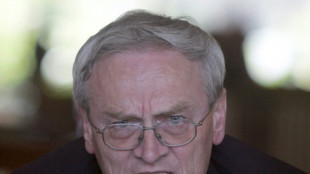 Court orders German ex-spy chief kept in jail after spying, treason arrest

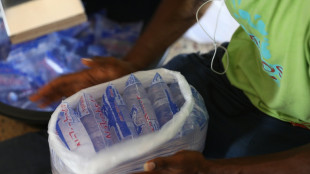 Guinea caps bottled water prices after sachets banned

 Spared, married, hanged: the last weeks of Iranian protester Alireza Sepahi

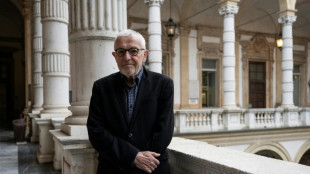 Nobel physics winner's pride at pioneering AI role

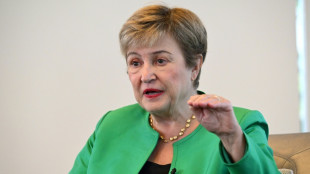 IMF preparing El Nino assistance, concerned about AI bubble burst: chief to AFP

Japanese biochemist Akira Endo, who discovered cholesterol-lowering statins, has died aged 90, his former student and colleague said on Tuesday.
Statins, which can prevent heart attacks or strokes, are among the most commonly prescribed drugs worldwide.
Keiji Hasumi, a professor who was a long-time associate of Endo, said the scientist had died on June 5.
"His work was truly great. Statins didn't exist before Endo," Hasumi told AFP. "It has the same value and impact as the discovery of penicillin."
Johns Hopkins Medicine says more than 200 million people take statins. Studies say the global market for them was worth $15 billion in 2023 and is expected to grow.
Endo experimented on thousands of microbes to reach his 1973 discovery of mevastatin -- an agent derived from penicillin that reduces so-called "bad" cholesterol in the blood.
The researcher "was a tough, strict person. He was insightful and perceptive," and "able to see the hidden essence of things", Hasumi said.
Endo was born in 1933 to a farming family in rural northern Japan.
His ambitions began early thanks to his grandfather, who was interested in medicine and became a "great home teacher", Endo said in a 2008 autobiographical essay.
As a student, Endo became interested in antibiotics like penicillin, "deeply impressed" by how many lives they had saved, his essay in the journal Nature Medicine said.
Endo carried out research in New York in the late 1960s, when coronary heart disease was the main cause of US deaths.
"I often saw ambulances coming to take elderly people who had suffered a heart attack to hospital", which "made me realise the importance of developing a cholesterol-lowering drug", he said.
Endo worked at the Tokyo University of Agriculture and Technology, which issued a statement expressing condolences over his death, and at Japanese drugmaker Sankyo, now a part of Daiichi-Sankyo.
He spent two years testing 6,000 strains of microbe in the search for a new drug that could help achieve his goal before finally finding mevastatin.
Conflicting reports on the benefits and potential harms of statins in recent years have prompted some people prescribed the drugs to stop taking them.
"Are statins safe? For most people, the answer is a resounding yes, according to a 2014 Johns Hopkins meta-analysis of 20 years worth of published research," the US university says.
Endo was a strong candidate for a Nobel Prize, but never won. In a report on his death, Japanese broadcaster NHK noted Endo had received other accolades, including being honoured as a Person of Cultural Merit by the government in 2011.
His discovery "was the result of many twists and turns", Hasumi said.
"He reached his goal by overcoming so many challenges, without which medicines cannot be created, I think I remember him saying."
K.Hassan--SF-PST