World treats crises affecting black, white lives unequally: WHO chief / Photo: Fabrice COFFRINI - AFP/File

 Indonesian court hears 'negligence' complaint against state over fires, haze
 Rubio in Greece to urge against Western civilisation 'decline'
 Micron workers at Taiwan plant vote in favour of strike
 In 'The Social Reckoning,' Jeremy Allen White takes on Facebook's 'frightening' ambition
 Chip industry activists call for South Korea to recognise cancer cases
 Famine-scarred southern Madagascar braces for El Nino
 How the EU regulates lobbyists
 I.Coast refuge offers lifelong care for youngsters scorned as 'sorcerers'

 Indian central bank hikes rates for first time in more than 3 years
 Hotel Blacklist Launches New Accommodation Industry Risk Assessment Tool
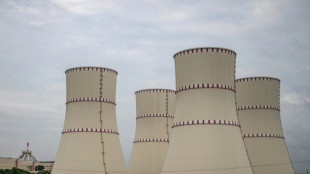 Bangladesh nuclear plant draws hope -- and worry

 US beat Canada 1-0 to wrap up four-win international break
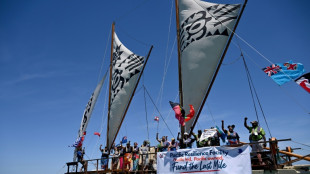
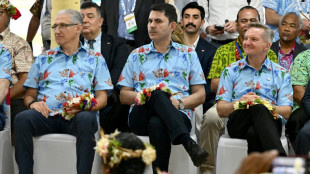 Turkey, Australia's joint COP31 leadership raises doubts

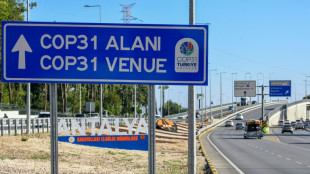 For Turkish NGOs, COP31 offers rare space for action
 Sleep, appetite, gene-editing experts contend for Nobel chemistry prize
 Nobel Peace Prize haunted by the 'spectre' of Trump

 Africa launches own credit agency in bid for cheaper borrowing

 US, China, EU: three paths to regulating AI
 Australia's High Court rules against coal mine in landmark climate case
 Australia touts new funds for Pacific infrastructure at Fiji 'pre-COP'

 Eva Marie Saint, Oscar winner of Hollywood classics, dies at 102

 Australia probes app used in cheap smart glasses over privacy fears
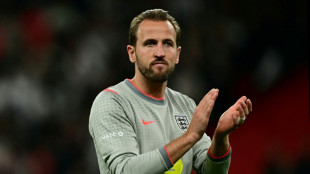
 England needed to 'move on' from World Cup pain, says Tuchel

 O'Neill to stay at Celtic after period of "reflection"

 Kane marks 125th England cap with Wembley Nations League double

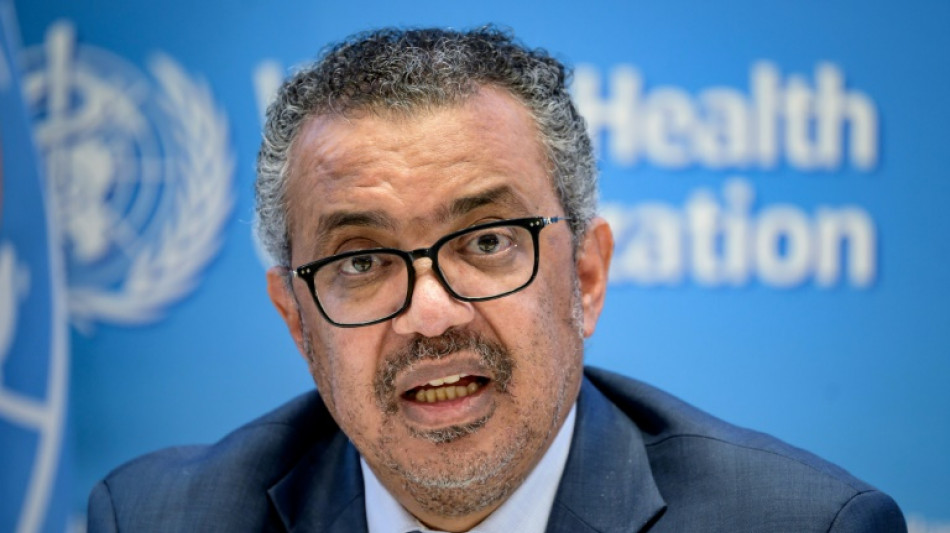
The WHO chief said Wednesday that the world was treating humanitarian crises affecting black and white lives unequally, with only a "fraction" of the attention on Ukraine given elsewhere.
World Health Organization's director-general Tedros Adhanom Ghebreyesus said the emergencies happening in other parts of the world were not being taken as seriously and hoped the international community "comes back to its senses".
"I don't know if the world really gives equal attention to black and white lives," Tedros told a news conference.
"The whole attention to Ukraine is very important of course, because it impacts the whole world.
"But even a fraction of it is not being given to Tigray, Yemen, Afghanistan and Syria and the rest. A fraction.
"I need to be blunt and honest that the world is not treating the human race the same way. Some are more equal than others. And when I say this, it pains me. Because I see it. Very difficult to accept but it's happening."
- Tigray siege -
Tedros, who is himself from Tigray, said the United Nations had determined that 100 trucks per day of life-saving humanitarian supplies needed to be going into the besieged northern region of Ethiopia.
The country's former health and foreign minister said that since a truce was declared, at least 2,000 trucks should have gone in, but only 20 have done so thus far.
Tedros said he was worried that the 20 trucks going in could be just a "diplomatic manoeuvre" on the part of the government in Addis Ababa.
"In effect, the siege by the Ethiopian and Eritrean forces continues," he said.
"To avert the humanitarian calamity and hundreds of thousands more people from dying, we need unfettered humanitarian access from those reinforcing the siege."
But Tedros said global attention was simply not being placed on such humanitarian crises.
"I hope the world comes back to its senses and treats all human life equally," he said.
"What is happening in Ethiopia is a tragic situation. People are being burned alive... because of their ethnicity.... Without any crime.
"So we need to balance. We need to take every life seriously because every life is precious."
- World crises -
The UN says hundreds of thousands of people are at risk of starvation in Tigray, where people have for months also faced fuel shortages and a lack of basic services such as electricity, telecommunications, internet and banking.
Across northern Ethiopia, the 17-month conflict has driven more than two million people from their homes, according to the UN, and left more than nine million people in need of food aid.
Thursday marks 50 days since Russia invaded Ukraine. More than a quarter of the Ukrainian population has been forced from their homes.
Moscow -- already accused by the West of widespread atrocities against civilians -- appears to be readying a massive offensive across Ukraine's eastern Donbas region.
The UN calls Yemen the world's worst humanitarian crisis.
The UN is also seeking its biggest-ever single-country appeal for funds for Afghanistan, which is on the brink of economic collapse, with more than 24 million people needing humanitarian assistance to survive.
Civil war erupted in Syria in 2011 after the violent repression of protests demanding regime change.
Around half a million people have been killed and millions have been displaced in the conflict, which has battered the country's economy.
M.Qasim--SF-PST