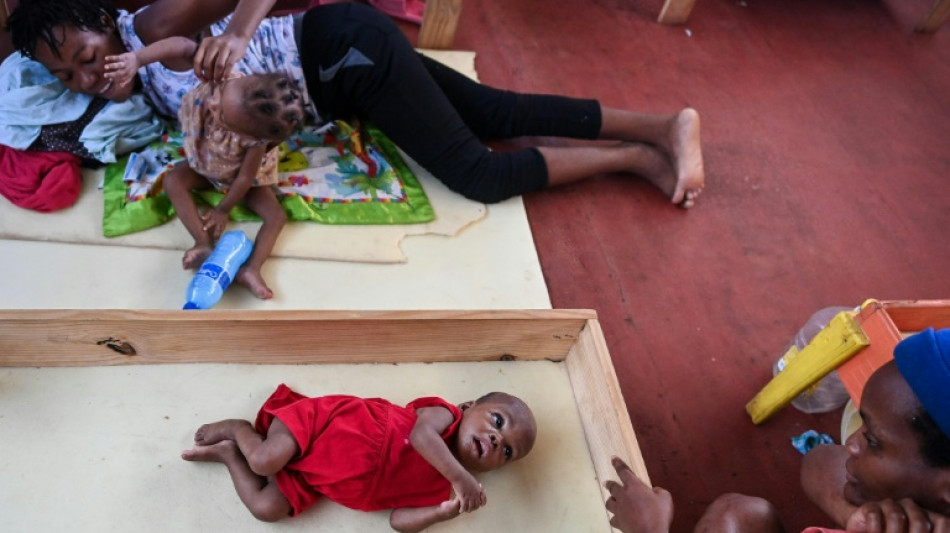
In Haiti, gang violence foments child malnutrition tragedy / Photo: Richard PIERRIN - AFP

 أين الأمن القومي العربي؟.. تحليل نقدي لغياب الرؤية المشتركة

 Crude Oil Prices Rise on Reports of Houthi Attack on Saudi Refinery

 El Nino’s Weakening Grip on Tamil Nadu Rainfall Hinges on Potential Cyclone

 Black Friday Discounts Cut Prices on Two Top-Rated Wiper Blades

 Twickenham Grounds Team Prepares Pitch for Six Matches in Three Days

 Luxembourg City Plans €13 Million Abrigado Centre for 2029

 Two A1 Crashes Create Kilometres of Rush-Hour Congestion

 South Africa Places 36 Hospitals on Standby for Possible Imported Ebola Cases

 Tamil Nadu Secures Rs 58,214 Crore in Investments at Vettri Conclave

 فرنسا تدعو لتجريم "الفصل العنصري القائم على الجنس" دولياً

 أزمة الصواريخ الاعتراضية في البنتاغون: استنزاف المخزونات يفرض تعبئة صناعية حتى 2030

In Cite Soleil, the largest slum in Haiti's gang-infested capital, the early days of August have brought a grim flow of sometimes skeletally malnourished children to the Fontaine Hospital Center.
The community clinic, a reassuring presence in this poorest corner of Port-au-Prince for more than 30 years, offers rare respite to inhabitants who now face daily threats from the armed groups controlling most of the city.
On this day, nurses and care workers are weighing infants and young children, scrupulously monitoring their too-slow growth.
"Every day we receive between 120 and 160 children for vaccinations, and it's at this point that we carry out screenings, particularly for malnutrition," Fontaine hospital's founder Jose Ulysse tells AFP.
"In some situations, these children are downright skeletal and find it hard to breathe," explains the director, noting that such respiration troubles are a common complication of malnourishment.
Less severe cases are treated and sent home with nutritional assistance for their families.
Children in the worst shape are hospitalized, placed in small beds -- some hooked up to intravenous feeds -- where they lie under the anxious watch of their mothers, many of whom also suffer from malnutrition.
The children are kept, sometimes for weeks, until their weight stabilizes.
Forty to 50 children a day need nutritional help, Ulysse says, up from perhaps a dozen a day four or five years ago.
- Faces of hunger -
Through a doorway, 19-month-old David, wearing a canary-yellow T-shirt, watches the comings and goings. He is one of the many youngsters being treated for serious malnutrition.
The gang violence ravaging Haiti has provoked a sharp rise in infant malnutrition -- up 30 percent in a single year -- according to data published in May by Unicef.
In the Fontaine center, listless-looking children present all the symptoms of extreme malnutrition: emaciated faces, prominent rib cages, distended abdomens, muscular wasting, even rickets.
Nearly one child in four now suffers from chronic malnutrition in this poorest of Caribbean nations, with more than 115,000 children undernourished to a life-threatening degree, according to the UN agency.
Gang violence has made it increasingly hard for people in the Haitian capital to work, shop, or provide proper care for their children.
And on top of the security crisis, Haiti has seen a concerning resurgence of cholera.
- 'Violence is everywhere' -
"More and more mothers and fathers can no longer provide appropriate care and nutrition to their children... due to increasing horrific violence caused by armed groups," Bruno Maes, the Unicef representative in Haiti, said in May.
With snipers on rooftops, and gang members spreading terror through rape, kidnapping and murder, parents find it increasingly difficult -- and perilous -- to bring their children to aid centers like the Fontaine clinic.
Some parents "leave their children because they can't take care of them," says Ulysse, adding the center survives in part thanks to assistance from Unicef.
So far, no Fontaine employee has fallen victim to the gangs, but according to Ulysse no one is letting down their guard.
"Violence is everywhere," he says. "Everyone is afraid of everyone."
D.AbuRida--SF-PST

