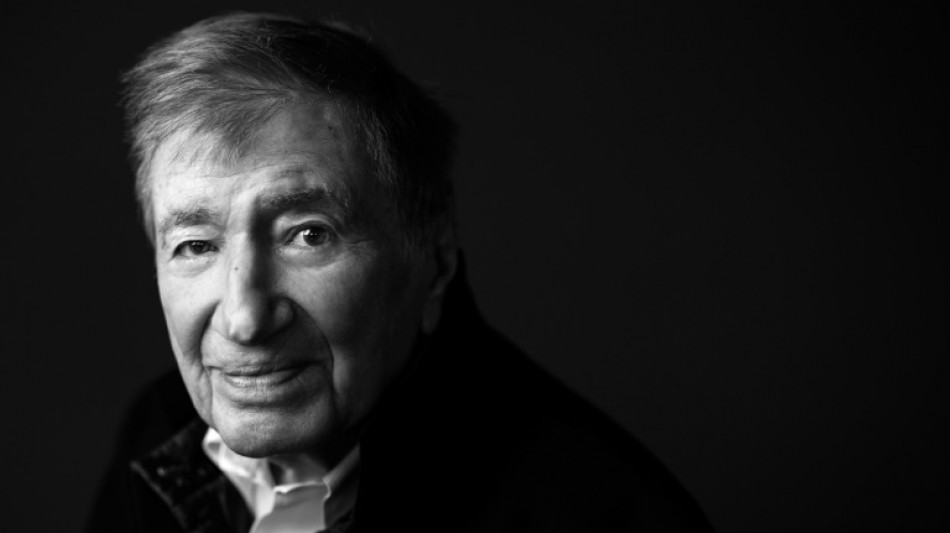
French inventor of abortion pill calls Wyoming ban 'scandalous' / Photo: JOEL SAGET - AFP

 Morikawa says LIV players face 'business decision' after Rahm exit
 Tenzing Norgay's son says Himalayas sending climate warning

 On your bike! Bottas opts for two wheels to reach Singapore GP

 Alcaraz, Sinner, Osaka commit to Australian Open '1 Point Slam'

 Dodgers beat Braves to advance in MLB playoffs, Rays oust Yankees

 'A sun as black as my lungs': how corruption crucified a polluted Albania city

 The British historian helping the French rediscover de Gaulle

 Dodgers beat Braves to advance, Guardians survive in MLB playoffs
 Latin American, Caribbean women top Nobel literature buzz

 US says Fiji-based Chinese official paid bribes for Beijing

 After botched US execution, Christa Pike was nearly taken off life support

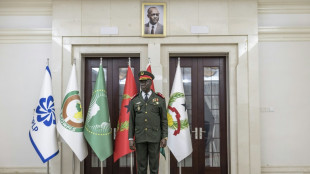 Guinea-Bissau junta urges military unit loyal to ex-president to disarm
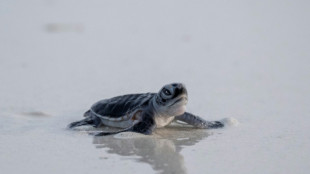 As species decline, green turtles offer glimmer of hope

 Brothers Scott and Beauden Barrett named to start for All Blacks

 EU trade chief seeks to dial down China tensions

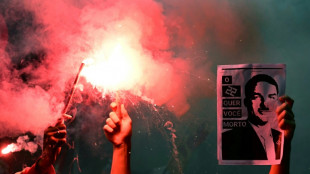 'Never again Bolsonaro': thousands march ahead of Brazil election runoff

 After botched execution, US woman was nearly taken off life support before revival

 Searing AIDS drama 'Elsinore' opens London film festival

 Evicted pensioner who sparked Spain housing protests dies: tenant union

 Golf star Rahm quitting LIV tour over 'unacceptable' terms

 Thousands march fearing return of a Bolsonaro presidency in Brazil
 French PM denies police ordered to confront student protesters
 Rubio touts US power, calls on Europe to emerge from 'slumber'

 Trump says 'we don't think' Russian plague is bio-weapon
 Five children among 26 killed in Ukraine after Russian strikes

French scientist Etienne-Emile Baulieu, known as the father of the abortion pill, said it was "scandalous" and "a setback for women's freedom" that the US state of Wyoming has banned the drug.
Baulieu, who at the age of 96 is still working on treatments for depression and Alzheimer's, did not mince his words about the ban.
"It is a setback for women's freedom, particularly for those in the most precarious position who do not have the means to go to another state" to get an abortion, he told AFP in an interview.
Last week Wyoming became the first US state to outlaw the use of the abortion pill.
It was the latest point marked for conservative anti-abortion activists in the United States after the Supreme Court overturned the constitutional right to the procedure last year, leaving the policy to individual states.
Baulieu said he had dedicated a large part of his life to "increasing the freedom of women," and the ban was a step in the opposite direction.
Born in Strasbourg in 1926 to Jewish parents, Baulieu was raised by his feminist mother after his father, a doctor, died when he was a boy. At the age of 15, Baulieu joined the French resistance against Nazi occupation.
He went on to become a self-described "doctor who does science," specialising in the field of steroid hormones.
Invited to work in the United States, Baulieu was noticed in 1961 by Gregory Pincus, known as the father of the contraceptive pill, who convinced him to focus on sex hormones.
Back in France, Baulieu designed a way to block the effect of the hormone progesterone, which is essential for the egg to implant in the uterus after fertilisation.
"I wanted to make a contragestive," which stops gestation, he told AFP.
Partnering with the French Roussel-Uclaf laboratory, the oral drug RU-486, also known as mifepristone, was developed in 1982, providing a safe and inexpensive alternative to surgical abortion.
But there was a long battle for the drug to become authorised in the United States, where anti-abortion activists dubbed it the "death pill".
- 'Fanaticism and ignorance' -
In early March, French President Emmanuel Macron praised Baulieu's resilience when he presented the scientist with the Grand-Croix de la Legion d'Honneur, the top rank in France's honours system.
"You, a Jew and a resistance fighter, you were overwhelmed with the most atrocious insults and even compared to Nazi scientists," Macron said.
"But you held on, for the love of freedom and science."
Baulieu's wife Simone Harari Baulieu, a media producer in France, said "adversity slides off him like water off a duck's back".
She added that the recent "step backwards" in the United States was propelled by "fanaticism and ignorance".
Even at age 96, Baulieu heads into his office at the Kremlin-Bicetre University Hospital in the southern suburbs of Paris three times a week.
Stacks of photos, diplomas and binders contain "the work of a lifetime," the scientist said, adding that he still wants to "be useful".
His latest award is pinned to his blue suit, but Baulieu said he "never seriously hoped to receive such honours".
"It was a pleasure, but what interests me is improving people's health."
- 'Driving force' -
The team in his lab are continuing research he began years ago aiming to prevent the development of Alzheimer's disease, as well as treatment for severe depression, for which clinical trials begin in the coming months.
Baulieu said "there is no reason we cannot find treatments" for both illnesses, which have stubbornly evaded many previous attempts.
Julien Giustiniani, the team leader at the Baulieu Institute, which was created to finance research into dementia, said Baulieu was "always enthusiastic".
"He is a driving force for us," Giustiniani said.
Though Baulieu now uses a cane to walk, he exudes a tireless energy.
He partly credits using DHEA, a natural hormone produced by the adrenal gland, which Baulieu first described in the 1960s and has been touted as an anti-ageing supplement.
The causes that have dominated his life were "women, brain health and longevity," Baulieu said.
"I would be bored if I did not work anymore," he added.
S.AbuJamous--SF-PST