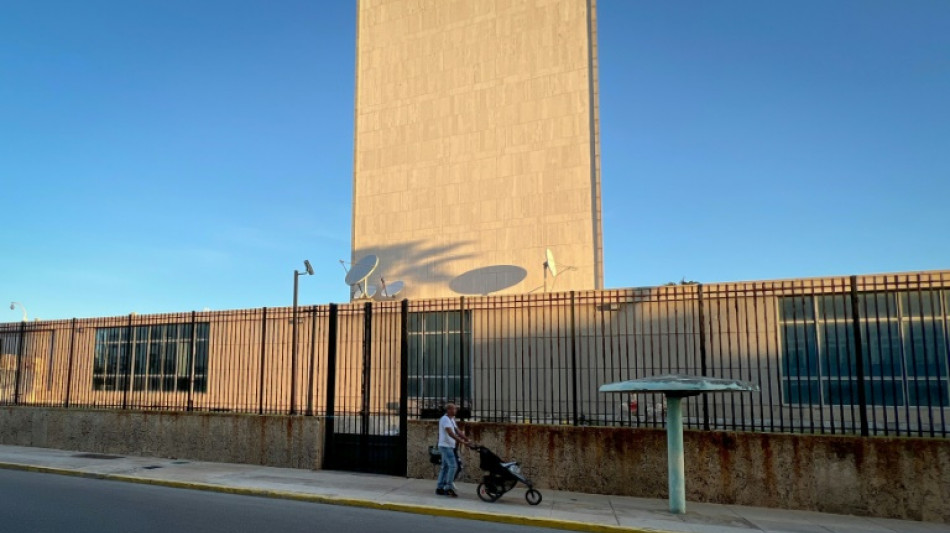
'Very unlikely' foreign actor caused Havana Syndrome: US intelligence / Photo: ADALBERTO ROQUE - AFP/File

 Dodgers beat Braves to advance in MLB playoffs, Rays oust Yankees
 'A sun as black as my lungs': how corruption crucified a polluted Albania city
 The British historian helping the French rediscover de Gaulle
 Dodgers beat Braves to advance, Guardians survive in MLB playoffs
 Latin American, Caribbean women top Nobel literature buzz
 US says Fiji-based Chinese official paid bribes for Beijing
 After botched US execution, Christa Pike was nearly taken off life support

 Guinea-Bissau junta urges military unit loyal to ex-president to disarm
 As species decline, green turtles offer glimmer of hope
 Brothers Scott and Beauden Barrett named to start for All Blacks
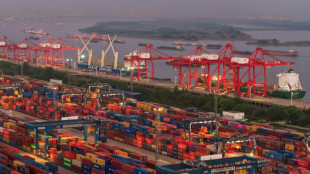 EU trade chief seeks to dial down China tensions
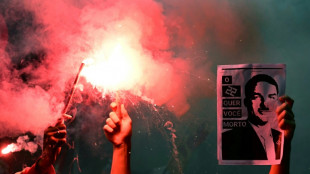 'Never again Bolsonaro': thousands march ahead of Brazil election runoff

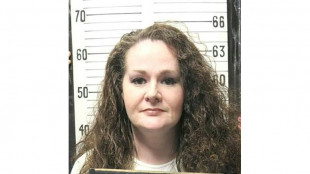 After botched execution, US woman was nearly taken off life support before revival
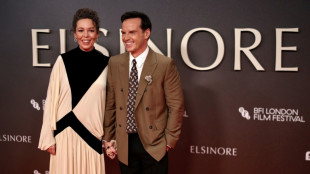 Searing AIDS drama 'Elsinore' opens London film festival
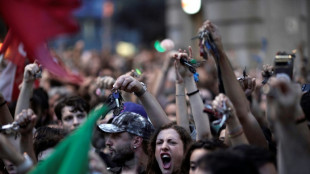 Evicted pensioner who sparked Spain housing protests dies: tenant union
 Golf star Rahm quitting LIV tour over 'unacceptable' terms
 Thousands march fearing return of a Bolsonaro presidency in Brazil
 French PM denies police ordered to confront student protesters
 Rubio touts US power, calls on Europe to emerge from 'slumber'
 Trump says 'we don't think' Russian plague is bio-weapon
 Five children among 26 killed in Ukraine after Russian strikes
 Man City should 'accept' punishment for rule breaches, says Lineker
 US woman who survived botched execution is awake and speaking
 From 1800s to modern pharma: a Nobel-winning chemistry quest
 Southampton boss Eckert given suspended ban over 'Spygate'
Multiple American intelligence agencies conclude it is "very unlikely" the mysterious illness known as Havana Syndrome that afflicted US personnel was caused by a foreign actor, an assessment released Wednesday said.
The first cases of what became known as Havana Syndrome emerged in Cuba in 2016, involving complaints of nosebleeds, migraines and nausea after experiencing piercing sounds at night, with similar reports later emerging in China, Russia, Europe and even Washington.
The CIA said last year that it was "unlikely" a foreign actor had conducted a sustained campaign targeting US personnel, but that it could not rule out foreign attacks in about two dozen cases.
The latest assessment says most intelligence agencies "have concluded that it is 'very unlikely' a foreign adversary is responsible" for Havana Syndrome.
"Five agencies judge that available intelligence consistently points against the involvement of US adversaries," while one "judges it is only unlikely a foreign adversary played a role," and another abstained, it says.
Agencies looked into various indicators of "hostile activity," including identifying suspicious people near incident sites and searching for a pattern among those who were affected.
"These efforts could not identify an adversary as being responsible for any incident," the assessment says.
US intelligence had said in 2022 that intense directed energy from an external source could have caused some cases of Havana Syndrome, officially known as anomalous health incidents (AHIs).
But the latest assessment says intelligence agencies concluded that "there is no credible evidence that a foreign adversary has a weapon or collection device that is causing AHIs."
- Unanswered questions -
Medical analysis of the AHIs has also shifted since the first reports emerged in a way that does not indicate the involvement of a foreign adversary, the assessment says.
Initial studies found that Havana Syndrome "represented a novel medical syndrome or consistent pattern of injuries similar to traumatic brain injury," but a review of preliminary data from a 2021 National Institutes of Health study does not point to such a pattern.
The assessment says the initial medical opinions were a central part of the hypothesis that the injuries were not the result of natural causes.
Now, intelligence agencies assess that the Havana Syndrome symptoms were probably the result of preexisting conditions, conventional illnesses and environmental factors.
Attorney Mark Zaid, who says his firm represents more than two dozen people suffering from AHIs, criticized the intelligence assessment.
"The latest US intelligence assessment lacks transparency and we continue to question the accuracy of the alleged findings," Zaid said in a statement.
"It is inconceivable based on an overwhelming number of unanswered questions that today's report will be the last word," he added.
The US consulate in Havana -- which was closed after Havana Syndrome cases emerged during Donald Trump's presidency -- resumed full immigrant visa services for Cubans in January.
W.Mansour--SF-PST