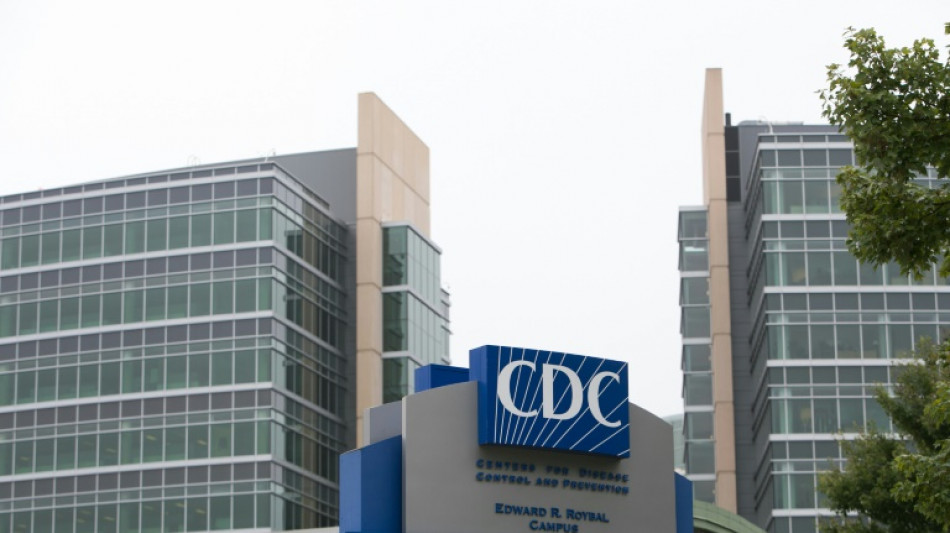
Blacks, Hispanics on dialysis get more staph infections than whites: CDC / Photo: Jessica McGowan - GETTY IMAGES/AFP/File

 El Nino’s Weakening Grip on Tamil Nadu Rainfall Hinges on Potential Cyclone

 South Africa Places 36 Hospitals on Standby for Possible Imported Ebola Cases

 Two A1 Crashes Create Kilometres of Rush-Hour Congestion

 Luxembourg City Plans €13 Million Abrigado Centre for 2029

 Luxembourg Housing Petition Passes Threshold for Parliamentary Consideration

 Raheem Sterling Receives Suspended Sentence After Lamborghini Crash

 Tamil Nadu Secures Rs 58,214 Crore in Investments at Vettri Conclave

 فرنسا تدعو لتجريم "الفصل العنصري القائم على الجنس" دولياً

 أزمة الصواريخ الاعتراضية في البنتاغون: استنزاف المخزونات يفرض تعبئة صناعية حتى 2030

 Huawei Found Guilty of Trade Secret Theft in Landmark US Case

 Indian Markets Set for Gain as Foreign Inflows Offset Tariff Fears
Black and Hispanic adults on dialysis experience more staph bloodstream infections than white patients receiving the treatment for kidney failure, US health officials said Monday.
The US Centers for Disease Control and Prevention (CDC), citing 2017-2020 data, said adults on dialysis for end-stage kidney disease (ESKD) were 100 times more likely to have a Staphylococcus aureus bloodstream infection than adults not receiving the treatment.
According to the CDC, more than 800,000 people in the United States live with ESKD. Seventy percent are being treated with dialysis and 30 percent have a functioning kidney transplant.
African-Americans constitute some 33 percent of all US dialysis patients although they make up only 12 percent of the population.
About one in every five dialysis patients is Hispanic.
Members of both groups have significantly higher rates of staph bloodstream infections than white patients on dialysis, the CDC said, with Hispanic patients experiencing a 40 percent higher risk.
The CDC said the higher prevalence of ESKD among Blacks and Hispanics is due in part to underlying conditions such as hypertension and diabetes.
Needles and catheters are used to connect patients to dialysis machines that clean their blood, and bacterial infections such as staph can enter a patient's bloodstream.
Some staph infections are resistant to common antibiotics, making them particularly deadly.
The CDC said bloodstream infections in dialysis patients in the United States have decreased since 2014 but more needs to be done to prevent them.
"Preventing staph bloodstream infections begins by detecting chronic kidney disease in its early stages to prevent or delay the need for dialysis," CDC chief medical officer Debra Houry said in a statement.
"Healthcare providers can promote preventative practices, including methods to manage diabetes and high blood pressure, as well as providing education on treatment options," Houry said.
The CDC said 4,840 dialysis facilities reported 14,822 bloodstream infections in 2020 and 34 percent of them were due to staph.
Z.Ramadan--SF-PST

