
Ivory Coast leprosy sufferers fight social exclusion / Photo: Issouf SANOGO - AFP

 Dodgers beat Braves to advance in MLB playoffs, Rays oust Yankees

 'A sun as black as my lungs': how corruption crucified a polluted Albania city

 The British historian helping the French rediscover de Gaulle
 Dodgers beat Braves to advance, Guardians survive in MLB playoffs
 Latin American, Caribbean women top Nobel literature buzz
 US says Fiji-based Chinese official paid bribes for Beijing
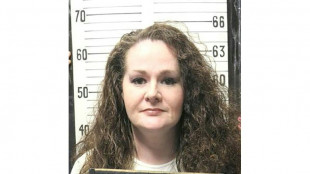 After botched US execution, Christa Pike was nearly taken off life support

 Guinea-Bissau junta urges military unit loyal to ex-president to disarm

 As species decline, green turtles offer glimmer of hope

 Brothers Scott and Beauden Barrett named to start for All Blacks
 EU trade chief seeks to dial down China tensions

 'Never again Bolsonaro': thousands march ahead of Brazil election runoff

 After botched execution, US woman was nearly taken off life support before revival
 Searing AIDS drama 'Elsinore' opens London film festival

 Evicted pensioner who sparked Spain housing protests dies: tenant union
 Golf star Rahm quitting LIV tour over 'unacceptable' terms

 Thousands march fearing return of a Bolsonaro presidency in Brazil
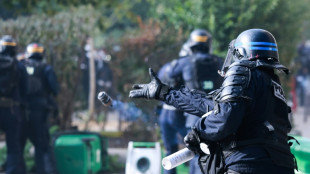 French PM denies police ordered to confront student protesters
 Rubio touts US power, calls on Europe to emerge from 'slumber'

 Trump says 'we don't think' Russian plague is bio-weapon
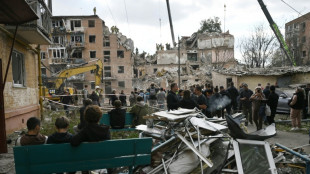 Five children among 26 killed in Ukraine after Russian strikes

 Man City should 'accept' punishment for rule breaches, says Lineker

 US woman who survived botched execution is awake and speaking
 From 1800s to modern pharma: a Nobel-winning chemistry quest

 Southampton boss Eckert given suspended ban over 'Spygate'

"A week before my mother died, her house was broken into and burned down," said Mathieu Okoma Agoa, from a village in Ivory Coast.
"After her funeral, women danced in the village because, according to them, the evil was gone," he said.
Okoma Agoa's mother suffered from leprosy, a disease that made her a social outcast long before she died. And the experience left its mark on him, too. "I am scarred for life," he said.
He is not the only one.
Camille Kouassi Assi, the village chief, told how his parents were also ostracised because of their leprosy, right up until the end of their lives. Recalling their ordeal, his voice trembled, his eyes welling up with tears.
Both men spoke to AFP in the run-up to World Leprosy Day on Sunday. They live in the southern Ivorian village of Duquesne-Cremone, which since the 1960s has been a refuge for leprosy patients and their relatives fleeing social exclusion.
Around 100 kilometres (60 miles) from the economic hub Abidjan, Duquesne-Cremone is named after a French priest and the Italian city whose inhabitants financed its creation.
- 'We feel at home here' -
At first glance it is like any other Ivorian village. But this community of 2,800 inhabitants, isolated at the end of a long track that cuts through an immense forest, is sheltered from the gaze of outsiders.
And it still has 54 patients.
"We feel at home here," Kouassi Assi, a father of four and mathematics teacher, told AFP in the small courtyard of his home.
Further along the same road, Gisele Abena, 29, was being treated at the Raoul Follereau Institute, a hospital belonging to a French group of the same name.
The medical centre has been fighting leprosy and Buruli ulcer, a skin infection, for almost a century.
Abena emerges from one of the pastel-coloured buildings grouped together on 42 hectares, whose open windows let in the tropical heat.
She is in a wheelchair, as leprosy has eaten away at her feet.
"I feel good here," said the mother of two. "There are a lot of us and I have made friends."
Originally from Bondoukou in the northeast, she has no desire to return there and experience again the stigma local people imposed upon her.
- Widespread ignorance -
"The leprosy microbe socially excludes patients," said Professor Bamba Vagamon, director general of the Raoul Follereau Institute.
"It distorts the face, distinctive features. The patient no longer recognises himself, nor do those who know him," he explained.
"It is as if he no longer really exists. I find this all the more horrible since the patient retains all his mental faculties," he said.
"Between 70 and 80 percent of patients have a depressive symptom," he added.
Ivory Coast has 12 of the 20 neglected tropical diseases (NTDs) listed by the World Health Organization (WHO), including leprosy.
In 2022, 514 new cases were recorded in the country, but because antibiotic-based treatments are long and recovery difficult to establish, it is it is hard to say exactly how many patients there are.
If life in Duquesne-Cremone is a welcome haven from what the patients have experienced elsewhere, the staff nevertheless want them, eventually, to return to their families -- even if they are often reluctant to have them back because they are so poorly informed about the disease.
"Until 2015, even medical universities in Ivory Coast did not offer education on leprosy," explained Vagamon. He only managed to change that eight years ago.
- Long incubation -
Leprosy is transmitted through prolonged contact. The microbe multiplies very slowly, making the incubation period up to five years. The first symptoms cause spots to appear, then gradually eat away at desensitised limbs.
"There is no test that can detect a case of leprosy before the appearance of physical symptoms," added Vagamon.
His institute will soon become a research centre specialising in NTDs, with a view to developing a means of screening.
Vagamon is confident the "zero leprosy by 2030" objective set by the Ivorian health ministry in 2022 is achievable, in particular thanks to raising awareness among children in schools.
Representing 10 percent of leprosy cases, children in rural areas are regularly affected by various skin diseases.
"They often come to class tired and have trouble concentrating because they scratch a lot," explained Pierre Bazie, deputy headmaster in the village school in Djougbosso.
They are being targeted by state-organised screenings financed by the Raoul Follereau Institute, so they understand the dangers of the disease.
A.Suleiman--SF-PST