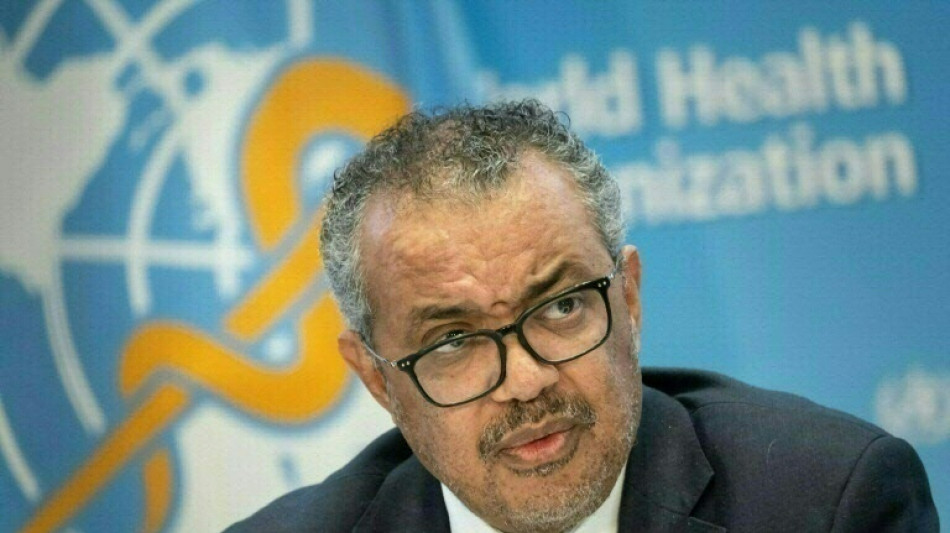
WHO panel in talks on Covid emergency status / Photo: Fabrice COFFRINI - AFP

 El Nino’s Weakening Grip on Tamil Nadu Rainfall Hinges on Potential Cyclone

 South Africa Places 36 Hospitals on Standby for Possible Imported Ebola Cases

 Two A1 Crashes Create Kilometres of Rush-Hour Congestion

 Luxembourg City Plans €13 Million Abrigado Centre for 2029

 Luxembourg Housing Petition Passes Threshold for Parliamentary Consideration

 Raheem Sterling Receives Suspended Sentence After Lamborghini Crash

 Tamil Nadu Secures Rs 58,214 Crore in Investments at Vettri Conclave

 فرنسا تدعو لتجريم "الفصل العنصري القائم على الجنس" دولياً

 أزمة الصواريخ الاعتراضية في البنتاغون: استنزاف المخزونات يفرض تعبئة صناعية حتى 2030

 Huawei Found Guilty of Trade Secret Theft in Landmark US Case

 Indian Markets Set for Gain as Foreign Inflows Offset Tariff Fears
The World Health Organization's emergency committee on Covid-19 was meeting Friday to discuss whether the pandemic still merits the highest level of global alert.
Before the meeting, WHO chief Tedros Adhanom Ghebreyesus suggested that the emergency phase of the pandemic is not over, pointing to the more than 170,000 deaths from the virus in the past two months.
"While I will not pre-empt the advice of the emergency committee, I remain very concerned by the situation in many countries and the rising number of deaths," he told a press conference on Tuesday.
The panel's 14th meeting on the crisis comes nearly three years to the day since it first sounded the WHO's highest emergency alarm, as what was then called the novel coronavirus began to spread outside China.
The independent committee meets every three months to discuss the pandemic and reports to Tedros.
"While we are clearly in better shape than three years ago when this pandemic first hit, the global collective response is once again under strain," Tedros said Tuesday.
He said too few people are adequately vaccinated, while for many people suffering from Covid-19, antivirals are out of reach.
Health systems are still struggling to cope with the additional Covid burden.
In terms of monitoring how the virus is evolving, surveillance and genetic sequencing has dropped sharply, making it harder to track the myriad variants and detect new ones in good time.
Tedros said the virus "will continue to kill, unless we do more to get health tools to people that need them".
The emergency committee meeting, chaired by French doctor Didier Houssin, is scheduled to last one day, with the outcome issued in the following days.
Last time the committee met in October it concluded that the pandemic still constitutes a public health emergency of international concern (PHEIC) -- the WHO's highest level of alert.
M.AbuKhalil--SF-PST

