Academic freedom declining globally, index finds / Photo: FERENC ISZA - AFP/File

 Hotel Blacklist Launches New Accommodation Industry Risk Assessment Tool
 Bangladesh nuclear plant draws hope -- and worry

 US beat Canada 1-0 to wrap up four-win international break

 Turkey, Australia's joint COP31 leadership raises doubts

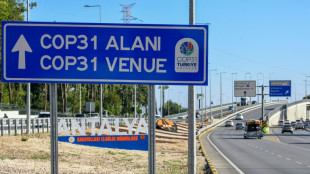 For Turkish NGOs, COP31 offers rare space for action

 Sleep, appetite, gene-editing experts contend for Nobel chemistry prize
 Nobel Peace Prize haunted by the 'spectre' of Trump

 Africa launches own credit agency in bid for cheaper borrowing

 US, China, EU: three paths to regulating AI
 Australia's High Court rules against coal mine in landmark climate case
 Australia touts new funds for Pacific infrastructure at Fiji 'pre-COP'

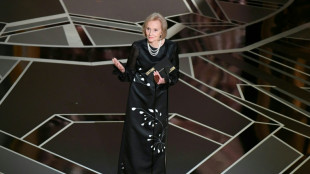 Eva Marie Saint, Oscar winner of Hollywood classics, dies at 102

 Australia probes app used in cheap smart glasses over privacy fears
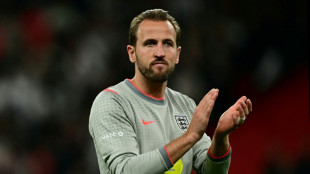
 England needed to 'move on' from World Cup pain, says Tuchel

 O'Neill to stay at Celtic after period of "reflection"

 Kane marks 125th England cap with Wembley Nations League double
 Quebec's incoming separatist leader wants to block Crown from swearing-in

 Emmys gala will now stream its premier television awards

 Paramount completes Warner Bros takeover, creating Skydance
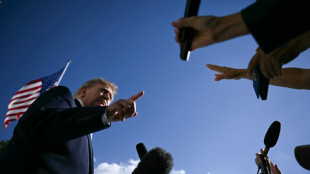 Trump blames France unrest on Islam, migration

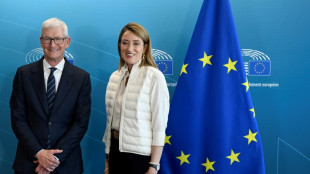 Apple's Cook praises EU over efforts to protect children online

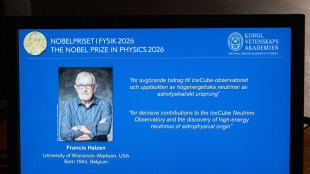 Nobel winner Halzen says years of October 'misery' finally over
 Quebec separatist win rattles Carney's unity push

 'Itching' for change: Shiffrin cuts back slaloms this season

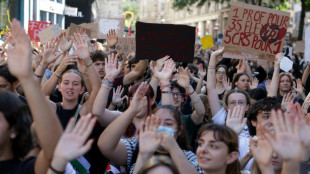
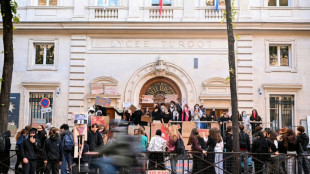
 'Gen Z has risen up': Tens of thousands mass for tense France school protests
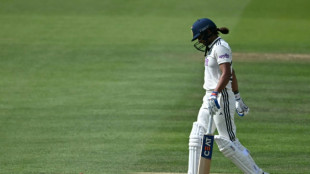
Just one in three people live a nation that guarantees the independence of universities and research, according to an annual index warning that academic freedom is declining worldwide, particularly in Russia, China and India.
Attacks on freedom of expression, interference at universities and the imprisonment of researchers are just some ways that "academic freedom globally is under threat," the index said.
The Academic Freedom Index -- based on input from more than 2,300 experts in 179 countries -- was published last month as part of a report on democracy by the V-Dem Institute at Sweden's University of Gothenburg.
It measures changes in higher education and research over the last half century by looking at five different indicators: freedom of research and teaching; of academic exchange; of academic and cultural expression; of institutional autonomy and campus integrity.
Katrin Kinzelbach, professor at Germany's University of Erlangen-Nuremberg and one of the organisers of the index, told AFP that 171 states have ratified a human rights treaty which commits them to respect the freedom of scientific research.
But because of recent "significant deteriorations" in countries with large populations, "only every third person in the world today lives in a country where research and higher education enjoys a high degree of freedom," she said.
Accounting for the world's growing population, the proportion of people living in nations with academic freedom is comparable to 1973, she added.
"Now, 45.5 percent of the world's population -- 3.6 billion people -- live in 27 countries where academic freedom is completely restricted," the report said.
- 'From bad to worse' -
Significant declines were particularly seen in India, China and Russia -- the first, second and ninth most populous nations -- which Kinzelbach called "clear examples of autocratisation".
"Academic freedom has fallen dramatically" in India since Prime Minister Narendra Modi took power in 2014, she said.
Kinzelbach cited the example of British-Indian academic Nitasha Kaul, a politics professor at the UK's University of Westminster denied entry to India for a conference last month.
In Russia and China, "academic freedom was never great, and it has now deteriorated from bad to worse," Kinzelbach said.
Perhaps more surprisingly, the index found academic freedom had also fallen in the United States since 2019, which Kinzelbach called "a shock for many academics".
She emphasised both society and the political system in the US were "highly polarised".
"University campuses have become arenas where this polarisation unfolds," she said, calling for "calm, evidence-based debates on campus -- including about highly divisive issues."
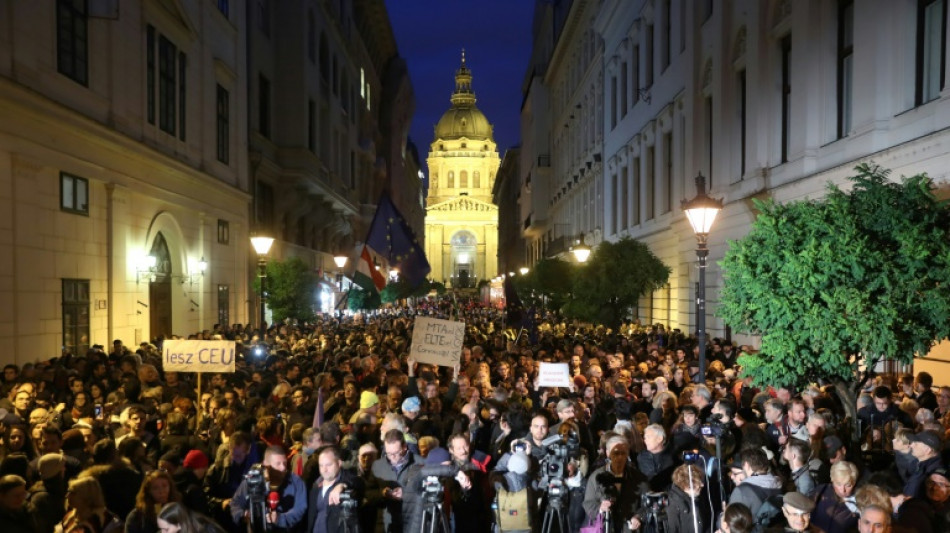
Most European countries had very high academic freedom according to the index, with Hungary scoring the lowest rate followed by Poland.
However Kinzelbach said Poland's score will likely improve under the new government of Prime Minister Donald Tusk.
D.Khalil--SF-PST